Banner
Here's Where Your Backyard Was 300 Million Years Ago

We may use terms like "grounded" and terra firma to mean stability and consistency but geology...

Convergent Evolution Cheat Sheet Now 120 Million Years Old

One tenet of natural selection is a random walk of genes but nature may be more predictable than...

Synchrotron Could Shed Light On Exotic Dark Photons

There are many hypothetical particles proposed to explain dark matter and one idea to explore how...

The Pain Scale Is Broken But This May Fix It

Chronic pain is reported by over 20 percent of the global population but there is no scientific...

User picture.
News StaffRSS Feed of this column.

News Releases From All Over The World, Right To You... Read More »

Blogroll
If you like big scallops for dinner, we have good news - ocean warming, at least in UK waters, has increased stocks of the great scallop Pecten maximus, according to a study published in Marine Biology.

But further rises in water temperatures could have the opposite effect on scallops and better management of these fisheries may be needed to protect sensitive seabed habitats, according to the analysis of 20 years of data by scientists at Bangor University and the Universities of York and Liverpool.
A new thesis from the Sahlgrenska Academy at the University of Gothenburg, Sweden says elite athlete injuries could be reduced if players perform injury-preventing strength training  with supervision.   About half of Swedish elite volleyball players suffer at least one injury per season.
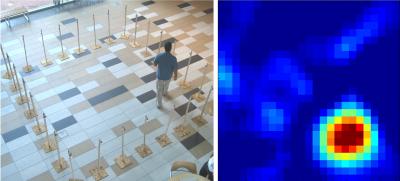
University of Utah engineers have shown off a wireless network of radio transmitters that can track people moving behind solid walls, which may help police grab intruders or rescue hostages and might also help retail marketing and border control.

Their method uses radio tomographic imaging (RTI), which can "see," locate and track moving people or objects in an area surrounded by inexpensive radio transceivers that send and receive signals. People don't need to wear radio-transmitting ID tags.

A company called Yellow Diesel B.V. says they have succeeded in producing biodiesel in a continuous fixed-bed micro plant based on heterogeneous catalysis, which provides pure biodiesel plus a cosmetics/food grade glycerol with much lower waste streams. 

Their process eliminates all the aqueous waste streams that stem from using the conventional homogeneous acid/base catalyst technology.   Combined with integrated process design, they claim the process saves up to 40% of the capital costs and 30% of the operating costs compared to a conventional plant.

Yellow Diesel has produced the biodiesel in its continuous micro plant, and is now scaling up the process to pilot-scale.

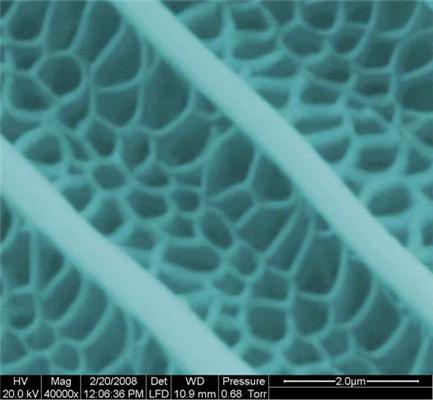
Researchers have developed a technique to replicate biological structures, such as butterfly wings, except on a nano scale and the resulting biomaterial could also be used to make optically active structures, such as optical diffusers for solar panels, they say.

Insects' colors and their iridescence (the ability to change colors depending on the angle) or their ability to appear metallic are determined by tiny nano-sized photonic structures (1 nanometer = 10-9 m) which can be found in their cuticle. Scientists have focused on these biostructures to develop devices with light emitting properties.  Their work was presented in the journal Bioinspiration&Biomimetics.

Can diet make you less likely to develop depression?   A new report from the University of Navarra published in Archives of General Psychiatry. says people who follow 'Mediterranean dietary pattern' heavier in nuts and fish appear less likely to develop depression.

There is lower prevalence of diagnosed depression in Mediterranean countries than northern European ones, for example, though that could also be a cultural issue - a hundred years ago there was almost no diagnoses in the US because doctors did not diagnose it.