Banner
Here's Where Your Backyard Was 300 Million Years Ago

We may use terms like "grounded" and terra firma to mean stability and consistency but geology...

Convergent Evolution Cheat Sheet Now 120 Million Years Old

One tenet of natural selection is a random walk of genes but nature may be more predictable than...

Synchrotron Could Shed Light On Exotic Dark Photons

There are many hypothetical particles proposed to explain dark matter and one idea to explore how...

The Pain Scale Is Broken But This May Fix It

Chronic pain is reported by over 20 percent of the global population but there is no scientific...

User picture.
News StaffRSS Feed of this column.

News Releases From All Over The World, Right To You... Read More »

Blogroll
Lightweight drinkers rejoice, it may be nature that keeps you from pounding shots like Indiana Jones squeeze Marion in "Raiders of the Lost Ark".

Researchers at North Carolina State University have found a genetic 'switch' in fruit flies that plays an important role in making flies more tolerant to alcohol.  If you're reading this site, you will not that doesn't automatically translate to humans but a counterpart human gene contributes to a shift from metabolizing alcohol to the formation of fat in heavy drinkers. This shift can lead to fatty liver syndrome – a precursor to cirrhosis.
It takes two to reproductively tango for humans but even when plants  (or animals) can self-fertilize their offspring have longer lives when a mate is involved in the process, according to over 100 mini-evolution experiments involving nematode worms (Caenorhabditis elegans) at the University of Oregon. Going it alone increases susceptibility to genetic mutations and reduces that adaptability to changing environments, says their report in Nature.
By studying the Y chromosome from human dental remains from the Canary Islands, researchers have determined the origin and evolution of paternal lineages from the pre-Hispanic era to the present day. To date, only mitochondrial DNA had been studied, which merely reflects the evolution of maternal lineages, but a team of Spanish and Portuguese researchers carried out molecular genetic analysis of the Y chromosome (transmitted only by males) of the aboriginal population of the Canary Islands to determine their origin and the extent to which they have survived in the current population.

The results suggest a North African origin for these paternal lineages which, unlike maternal lineages, have declined to the point of being practically replaced today by European lineages.
Infants can correctly identify humans as the source of speech and monkeys as the source of monkey calls even when they are as young as five months old, says a new Proceedings of the National Academy of Sciences (PNAS) study.  

While young children know that humans speak, monkeys grunt and ducks quack, it's not clear when we come to know which vocalizations each of these animals produce.  Much is known about infants' abilities to match properties of human voices to faces, such as emotion, but it is unknown whether infants are able to match vocalizations to the specific species that produces them.

A new groups of exoplanets announced today comprises no less than 32 new discoveries. Including these new results, data from HARPS have led to the discovery of more than 75 exoplanets in 30 different planetary systems.

In 1999, ESO launched a call for opportunities to build the High Accuracy Radial Velocity Planet Searcher, better known as HARPS, a high resolution, extremely precise spectrograph for the ESO 3.6-meter telescope at La Silla, Chile.

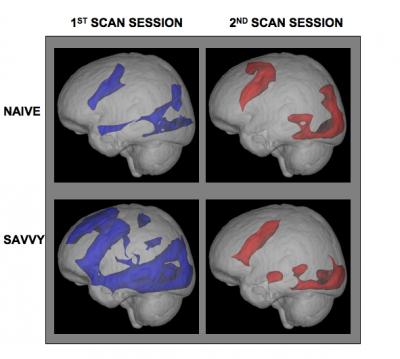
Brain activity considered to be  spontaneous 'white noise' changes after a person learns a new task, according to researchers, and the degree of change reflects how well subjects have learned to perform the task.

The suggestion is that this learning-induced change in the brain's spontaneous activity may reflect  a 'memory trace' for the new skill, which makes it easier to use those parts of the brain together again when the same challenge is presented. 

In addition to helping anatomical connections between different brain regions, the changes in spontaneous brain activity may maintain a record of prior experience that constrains the way the same circuitries are recruited at the time of a task.