Banner
Here's Where Your Backyard Was 300 Million Years Ago

We may use terms like "grounded" and terra firma to mean stability and consistency but geology...

Convergent Evolution Cheat Sheet Now 120 Million Years Old

One tenet of natural selection is a random walk of genes but nature may be more predictable than...

Synchrotron Could Shed Light On Exotic Dark Photons

There are many hypothetical particles proposed to explain dark matter and one idea to explore how...

The Pain Scale Is Broken But This May Fix It

Chronic pain is reported by over 20 percent of the global population but there is no scientific...

User picture.
News StaffRSS Feed of this column.

News Releases From All Over The World, Right To You... Read More »

Blogroll
NASA's Fermi Gamma Ray Space Telescope has captured more than one thousand discrete sources of gamma rays in its first year, including a measurement that provided experimental evidence about the very structure of space and time, unified as space-time in Einstein's theories.
Your Jack-o'-Lantern may scare away more than just birds - the skin of that pumpkin contains a substance that could put a scare into microbes that cause millions of cases of yeast infections in adults and infants each year, says a new study in the Journal of Agricultural and Food Chemistry.

Kyung-Soo Hahm, Yoonkyung Park and colleagues note that some disease-causing microbes are becoming resistant to existing antibiotics so scientists worldwide are searching for new antibiotics. Past studies had hinted that pumpkin, long used as folk medicine in some countries, might have antibiotic effects.

Are accident rates higher for people with a particular gene variant?    Bad drivers may, in part,  have their genes to blame, suggests a new study by UC Irvine neuroscientists.

People with a particular gene variant performed more than 20 percent worse on a driving test than people without it – and a follow-up test a few days later yielded similar results. About 30 percent of Americans have the variant.
The performative and improvisatory aspects of music compares favorably with the temporal, polyphonic aspects of scholarly research,  says University of Illinois professor of education Liora Bresler.

Understanding that could improve both research and education, she says.   Bresler, who studied musicology and was a pianist before becoming an education professor, said that knowing there was an audience to perform for "really intensifies the relationship between the music and the performer." This, she said, is analogous to how a teacher should think of a lecture or a researcher a presentation at a conference.
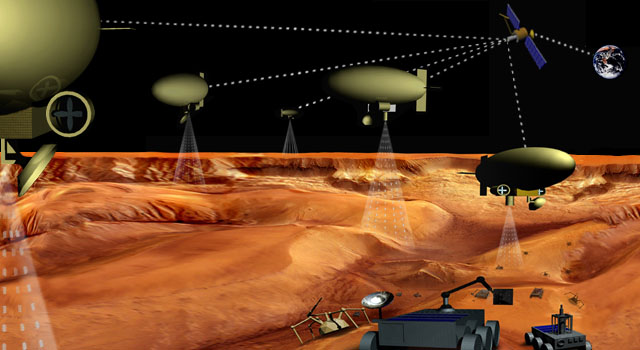
Wolfgang Fink, visiting associate in physics at the California Institute of Technology in Pasadena (Caltech, to you)  says a paradigm shift in planetary exploration is coming - and it involves space robots.

Fink and a team at Caltech, the U.S. Geological Survey and the University of Arizona are developing software along with a robotic test bed that can mimic a field geologist or astronaut - the software, they say, will allow a robot to think on its own. 
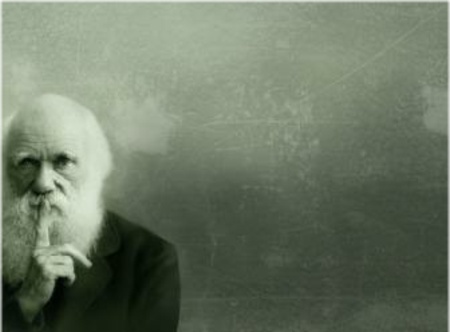
When Charles Darwin published On the Origin of Species by Means of Natural Selection, or The Preservation of Favoured Races in the Struggle for Life 150 years ago next month, he avoided conjecture about the origin of life and "To my mind it accords better with what we know of the laws impressed on matter by the Creator" shows that he had limits on the cultural firestorm he wanted to create in the name of science.