Over one third of American pre-schoolers live in homes where the television is on most of the time, even if no one's watching, and a new study says the effect of background TV on interactions between parents and young children is definitely negative.
The researchers studied about 50 1-, 2-, and 3-year-olds, each of whom was with one parent, at a university child study center. Half of the one-hour session, parents and children were in a playroom without TV; in the other half-hour, parents chose an adult-directed program to watch , like Jeopardy. The researchers observed how often parents and children talked with each other, how actively involved the parents were in their children's play, and whether parents and children responded to each other's questions and suggestions.
A mystery of evolution is why an extra chromosome can be common across plants and animals yet have such drastically different results. A human with an extra chromosome may have Down syndrome while a cat may just be a male Calico. And plants may not only not have a negative effect, it may be downright beneficial
Contrary to short-term consensus beliefs, El Niño has not been getting stronger because of global warming, says Benjamin Giese, a professor of oceanography at Texas A&M who specializes in ocean modeling, but he found a link between El Niño and the severe flu pandemic 91 years ago.
Coincidence? The 1918 El Niño was apparently one of the strongest of the 20th century but how is it relevant to flu?
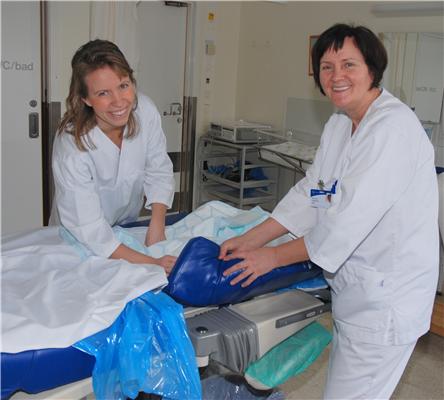
Astrid Skreosen worked for many years as an auxiliary nurse in the maternity ward in Skien Hospital and became fed up with the little mats which were supposed to lie under women who were giving birth that were intended to soak up waste products and fluids so she began to look into the possibility of producing a specially modified super-absorbent bed sheet.
After stumbling around in the dark for a while with inventors’ consultants and patent offices, she rang SINTEF (Skandinavias største uavhengige forskningsorganisasjon) Materials and Chemistry and spoke with Per Stenstad.
An international team of researchers say they have discovered a blueprint for a general understanding of the evolution of the "machinery" of our cells providing more evidence, at the molecular level, in support of one of the key tenets of Darwin's Theory of Evolution.
A non-Darwinian explanation, from believers of Intelligent Design, proposed these complex machines to be "irreducibly complex". In other words they are so neatly complex and complete that they couldn't have evolved but rather must have been designed by an intelligent entity.
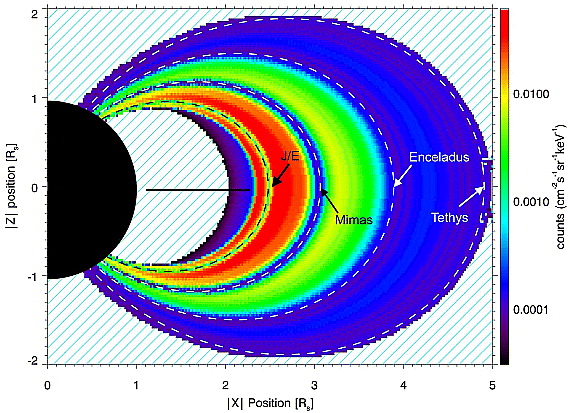
The Cassini spacecraft's Magnetospheric Imaging instrument (MIMI) has detected a temporary radiation belt around Dione, one of the moons of Saturn. The discovery will be presented at the European Planetary Science Congress in Potsdam by Dr Elias Roussos on Monday, September 14th.
Radiation belts, like Earth’s Van Allen belts, have been discovered at Jupiter, Saturn, Uranus and Neptune but it has only been possible to observe the variability of their intensity at Earth and Jupiter. Cassini has been orbiting Saturn for more than five years so it has been possible to assess changes in Saturn’s radiation belts.


 Synchrotron Could Shed Light On Exotic Dark Photons
 The Pain Scale Is Broken But This May Fix It
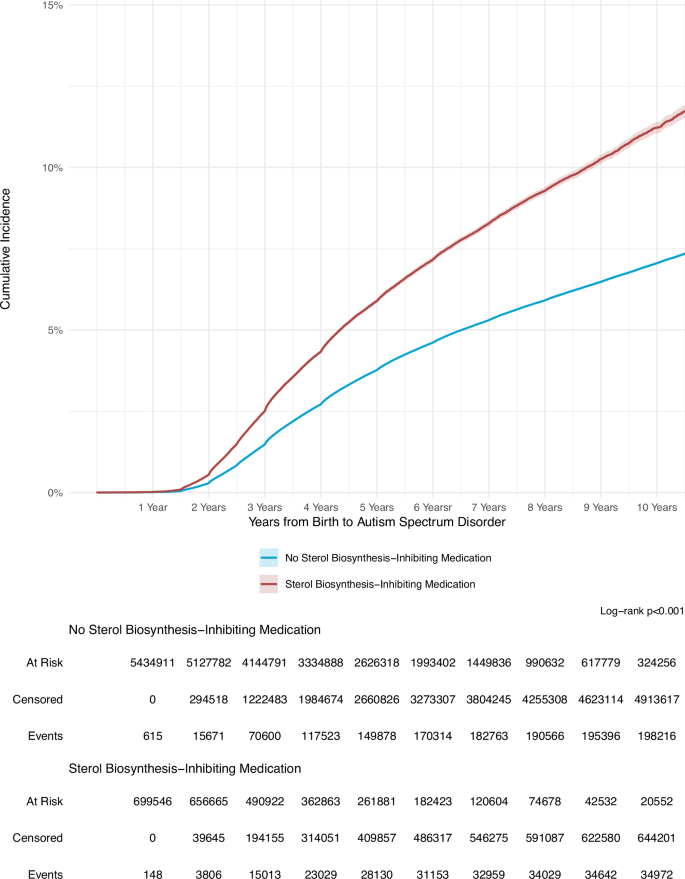 Study Links Antidepressants, Beta-blockers and Statins To Increased Autism Risk
 Pilot Study: Fibromyalgia Fatigue Improved By TENS Therapy