Banner
Synchrotron Could Shed Light On Exotic Dark Photons

There are many hypothetical particles proposed to explain dark matter and one idea to explore how...

The Pain Scale Is Broken But This May Fix It

Chronic pain is reported by over 20 percent of the global population but there is no scientific...
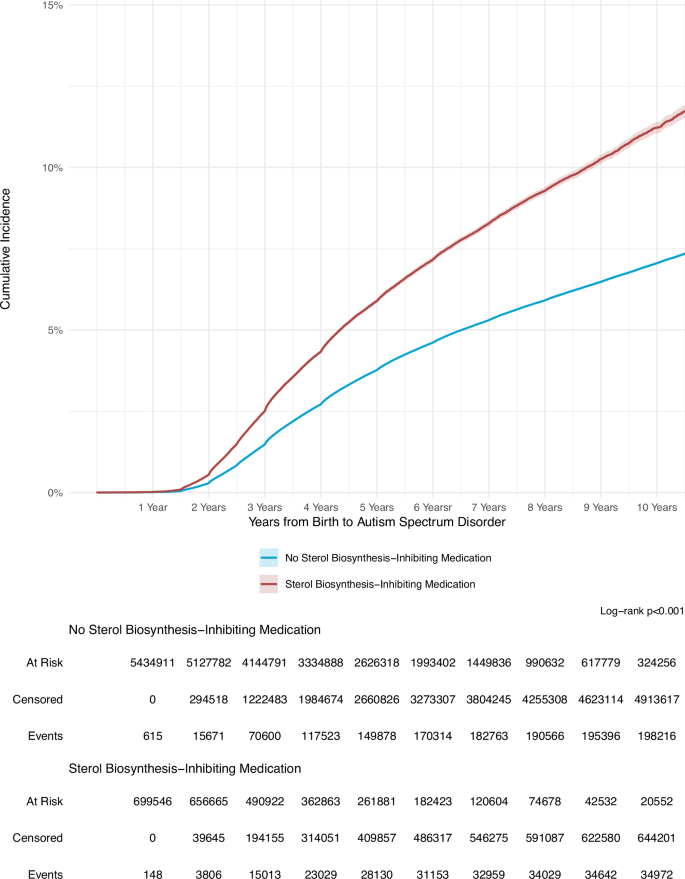
Study Links Antidepressants, Beta-blockers and Statins To Increased Autism Risk

An analysis of 6.14 million maternal-child health records  has linked prescription medications...

Pilot Study: Fibromyalgia Fatigue Improved By TENS Therapy

Fibromyalgia is the term for a poorly-understood condition where people experience pain and fatigue...

User picture.
News StaffRSS Feed of this column.

News Releases From All Over The World, Right To You... Read More »

Blogroll
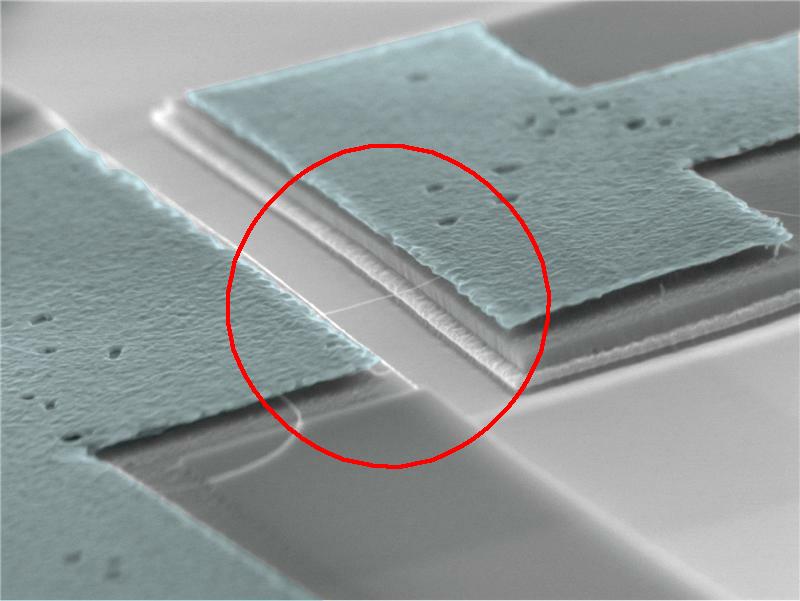
Researchers at TU Delft have succeeded in measuring the influence of a single electron on a vibrating carbon nanotube.   That can be a real milestone on the road to ultra-small measuring instruments.

Researchers in the Kavli Institute for Nanoscience at TU Delft basically suspended a carbon nanotube, comparable in size to an ultra-small violin string, and then applied an alternating electric field to the nanotube using an antenna.
Metabolic conditions and immunologic conditions rarely coincide but a group of papers appearing in Nature Medicine have linked type 2 diabetes with immunology in an intriguing way. 

In the first study, researchers used two common over-the-counter allergy medications, Zaditor and cromolyn, to reduce both obesity and type 2 diabetes in mice. Zaditor and cromolyn stabilize a population of inflammatory immune cells called mast cells.
In America, there is a debate over 'high risk, high reward' independent research versus Big Science - largescale science projects usually being done by taxpayer funded grants to large universities and basic research primarily being done in the private sector.   Germany tries to have government funding for both and prof. Manfred Bayer from TU Dortmund recently got a $2 million grant to do work in ultrafast acoustics.

Ultrafast acoustics first began to get serious research over 20 years ago at General Motors(1).   The basic concept is that sub-picosecond optical pulses generate longitudinal acoustic pulses with frequencies of 100 GHz and up.    As a thin metal film is hit with alaser pulse, it reacts with a “breathing movement”: it expands and then it contracts.
If you were a linguist, how would you accurately describe 'click' sounds distinct to certain African languages?   It's no easy task but in order to accurately preserve a language like N|uu, which has fewer than 10 remaining speakers (and all over age 60) linguists have to be able to document.

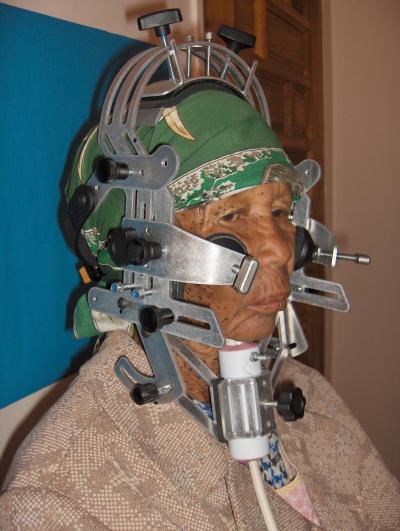
Cornell University professor Amanda Miller and colleagues recently used high-speed, ultrasound imaging of the human tongue to precisely categorize sounds produced by the N|uu language speakers of southern Africa's Kalahari Desert, a step toward understanding the physics of speech production.
Think University of Nottingham students enjoy a pint on occasion?   It's a safe bet, since the school is putting in a fully-functioning brewery, and brewing must be a key contributor to the East Midlands economy since it boasts some 78 small or medium sized micro-breweries.  
Everyone is concerned about dwindling fossil fuel resources and current levels of petroleum consumption but pressure to shift to more sustainable energy sources has led to lobbyists and bigger government programs, not a better environment.

The best approach may be suited to regional conditions - some areas may use solar, some wind or geothermal, some nuclear.   There won't be a knockout technology that is a good fit  for everyone.  

What wind, solar, and geothermal power need to be useful to the masses is conversion into appropriate forms for distributing electricity. Electric power can already be distributed efficiently but conversion is necessary for use in automobiles and large-scale storage is problematic.