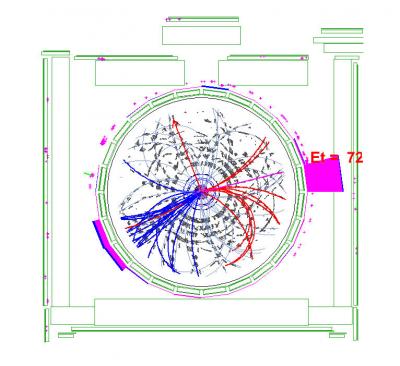
There's no question that employees at Fermi National Accelerator Laboratory have watched with some concern as the LHC got all the press about being the future of physics despite the fact it hadn't actually produced anything. They have also quietly continued setting world records and are once again reminding people that Fermilab's Tevatron, currently the world's most powerful operating particle accelerator, is actually ahead, even in the race to find the as-yet undefined "Higgs particle."
Animals have an astonishing ability to develop reliably, in spite of variable conditions during embryogenesis. New research published this week addresses how living things can develop into precise, adult forms when there is so much variation present during their development stages. A team led by John Reinitz at Stony Brook University, and funded by the National Institutes of Health, shows how fruit fly embryos can "forget" initial incorrect versions of their body plan and develop into recognizable adult flies.
Having a bad 2009? It's only going to get worse when those printing presses they use to make more money finally break down. But there is always a bright spot on dark days; babies.
Each year some 1,500 Swedes decide to end their lives. No one can be sure what the reasons are but they often include mental and sometimes physical issues.
It could also be surroundings, say researchers at Stockholm University and the University of Oxford, though that would seem to be taking a 'Keep up with the Jones'es' mentality a little far. But various types of behavior, feelings, and attitudes are spread in social networks and the researchers have studied whether such a drastic step as taking your life can also be influenced by others. They used register data on all individuals who lived and worked in Stockholm County during the 1990s.
Researchers say they have found the first unambiguous evidence that an animal other than humans can make spontaneous plans for future events. The report in Current Biology highlights a decade of observations of a male chimpanzee calmly collecting stones and fashioning concrete discs that he would later use to hurl at zoo visitors.
While researchers have observed many ape behaviors that could involve planning both in the wild and in captivity, it generally hasn't been possible to judge whether they were really meeting a current or future need, he added. For instance, when a chimp breaks a twig for termite fishing or collects a stone for nut cracking, it can always be argued that they are motivated by immediate rather than future circumstances.
India, the largest and most prosperous nation in south Asia, raised the legal age for marriage to 18 in 1978. In the past 15 years, national policy efforts have been developed to increase educational and economic opportunities for girls and women, reduce child marriage and expand family-planning support. Despite India's economic and educational reform efforts in the last decade, the prevalence of child marriage remains high.


 Synchrotron Could Shed Light On Exotic Dark Photons
 The Pain Scale Is Broken But This May Fix It
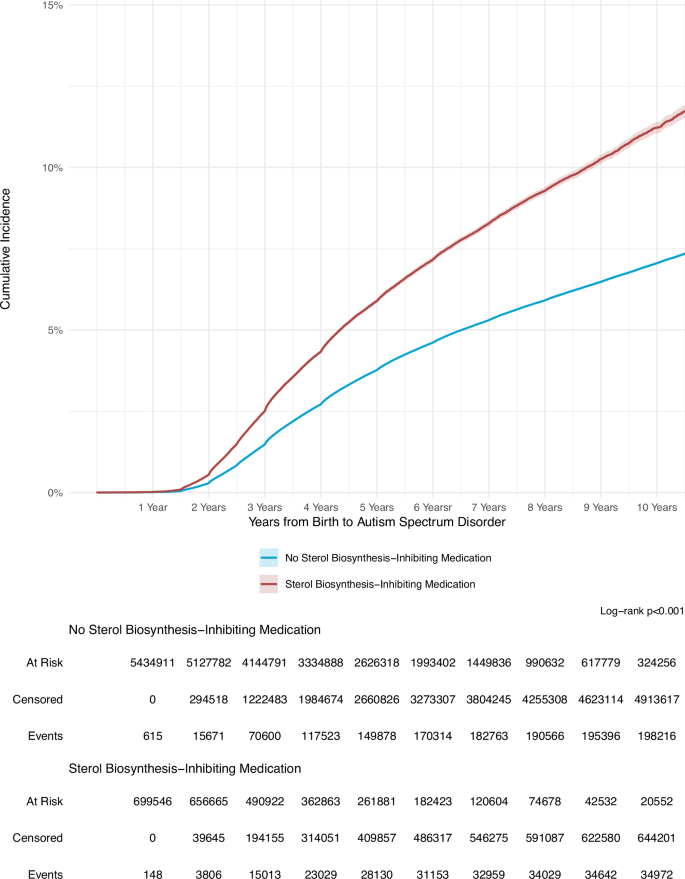 Study Links Antidepressants, Beta-blockers and Statins To Increased Autism Risk
 Pilot Study: Fibromyalgia Fatigue Improved By TENS Therapy