Some stars go ballistic, racing through interstellar space like bullets and tearing through clouds of gas. Images from NASA's Hubble Space Telescope, taken by Raghvendra Sahai of NASA's Jet Propulsion Laboratory, Pasadena, Calif., and colleagues reveal 14 of these young, runaway stars.
The stars are plowing through regions of dense interstellar gas, creating brilliant arrowhead structures and trailing tails of glowing gas. These arrowheads, or bow shocks, form when the stars' powerful stellar winds, streams of matter flowing from the stars, slam into surrounding dense gas. The phenomenon is similar to that seen when a speeding boat pushes through water on a lake.
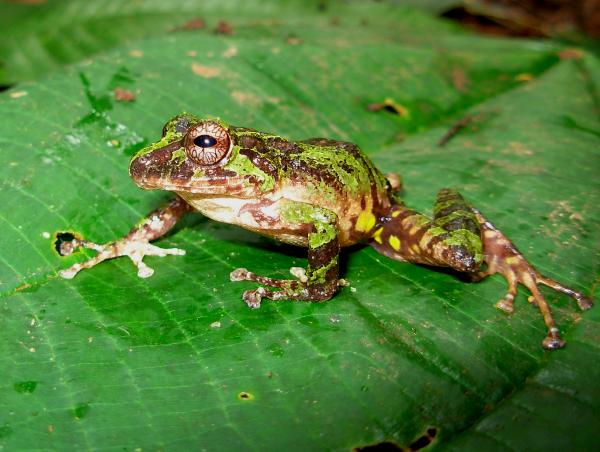
Scientists today announced the discovery of 10 amphibians believed to be new to science, including a spiky-skinned, orange-legged rain frog, three poison dart frogs and three glass frogs, so called because their transparent skin can reveal internal organs.
The species were discovered during a recent Rapid Assessment Program (RAP) expedition in Colombia's mountainous Tacarcuna area of the Darien, near the border with Panama. The expedition was led by herpetologists from Conservation International (CI) in Colombia and ornithologists from the Ecotrópico Foundation, with the support of the local Emberá community of Eyakera.
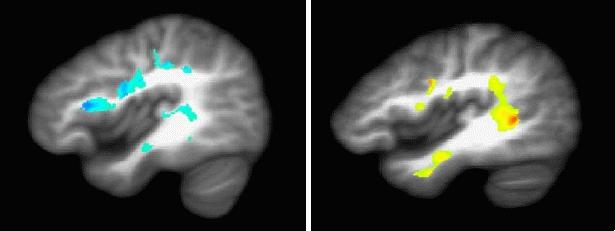
Adolescents and young adults who are heavy users of marijuana are more likely than non-users to have disrupted brain development, according to a new study. Pediatric researchers found abnormalities in areas of the brain that interconnect brain regions involved in memory, attention, decision-making, language and executive functioning skills. The findings are of particular concern because adolescence is a crucial period for brain development and maturation.
In the year of the 200th anniversary of the birth of Darwin, researchers using comparative genomics have uncovered genetic clues about why some strains of the pathogen that causes Q fever, Coxiella burnetii, are more virulent than others.
Relevant? Well, sort of, though genetics came after Darwin, but the evolution of the pathogen makes it relevant and it also gives us a chance to remind you about
Darwin Day here on February 12th.
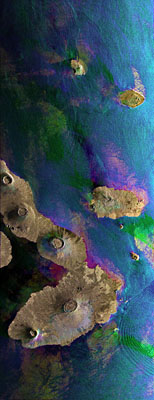
The Galapagos Islands are an archipelago situated some 1 000 km to the west of Ecuador in the Pacific Ocean. They were formed by volcanic activity around 10 million years ago. Out of the 19 islands, two are still active volcanoes. Due to the isolation of the islands, a very unique ecosystem developed and many of the species found there exist nowhere else on Earth. All reptiles, half of the plants and some 40% of the birds are endemic.
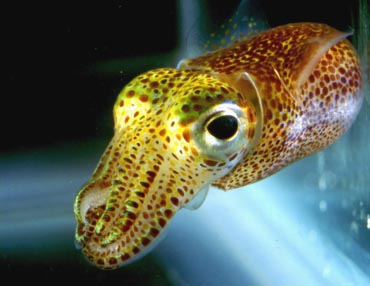
All life depends on peaceful coexistence with a swarm of microbial life inside us that performs vital services from helping to convert food to energy to protection from disease. With the help of a squid that uses a luminescent bacterium to create a predator-fooling light organ and a fish that uses a different strain of the same species of bacteria like a flashlight to illuminate the dark nooks of the reefs where it lives, scientists have found that gaining a single gene is enough for the microbe to switch host animals.


 Synchrotron Could Shed Light On Exotic Dark Photons
 The Pain Scale Is Broken But This May Fix It
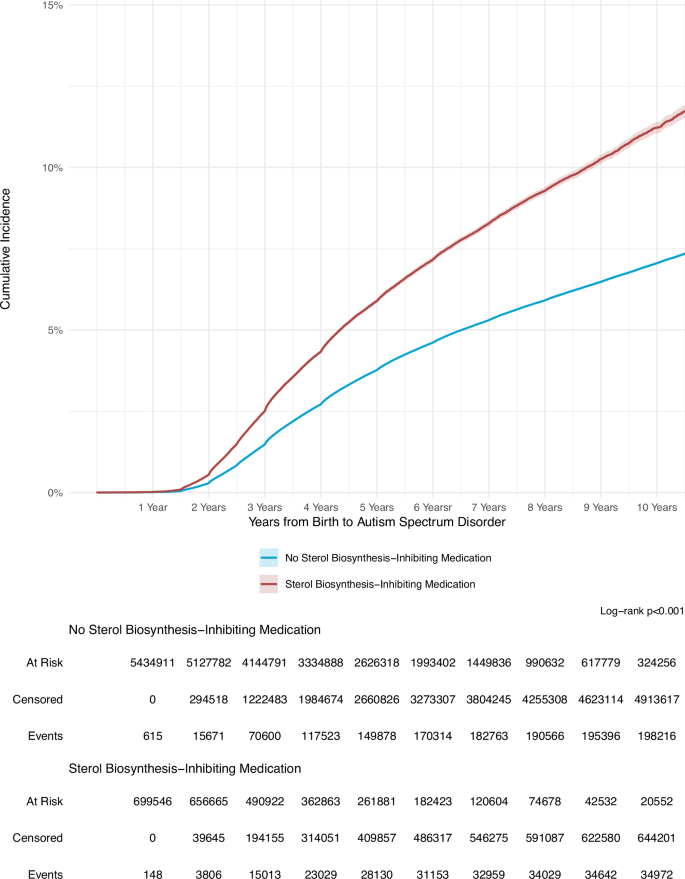 Study Links Antidepressants, Beta-blockers and Statins To Increased Autism Risk
 Pilot Study: Fibromyalgia Fatigue Improved By TENS Therapy