Banner
Social Media Is A Faster Source For Unemployment Data Than Government

Government unemployment data today are what Nielsen TV ratings were decades ago - a flawed metric...

Gestational Diabetes Up 36% In The Last Decade - But Black Women Are Healthiest

Gestational diabetes, a form of glucose intolerance during pregnancy, occurs primarily in women...

Object-Based Processing: Numbers Confuse How We Perceive Spaces

Researchers recently studied the relationship between numerical information in our vision, and...

Males Are Genetically Wired To Beg Females For Food

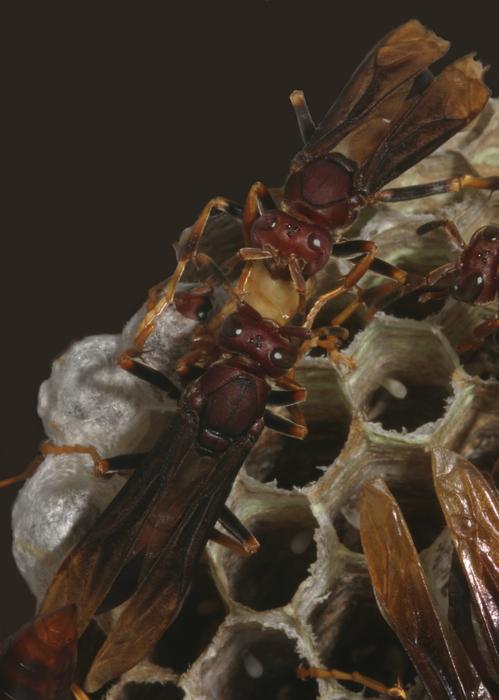
Bees have the reputation of being incredibly organized and spending their days making sure our...

User picture.
News StaffRSS Feed of this column.

News Releases From All Over The World, Right To You... Read More »

Blogroll

Scientists from P&G Beauty announced that they successfully sequenced the complete genome for Malassezia globosa (M. globosa), a naturally occurring fungus responsible for the onset of dandruff and other skin conditions in humans.

Dandruff and seborrheic dermatitis affect more than 50 percent of the human population. Despite the role of Malassezia in these and other common skin diseases, including eczema, atopic dermatitis and psoriasis, little was known about the fungus at the molecular level until this study. In addition, understanding of Malassezia’s genetic make-up may help scientists reevaluate the parameters that have historically been used to classify fungal organisms.

For the past four years, Gabor Forgacs, Professor of Physics at University of Missouri-Columbia, has been working to refine the process of “printing” tissue structures of complex shape with the aim of eventually building human organs. In a new study, the research team led by Forgacs determined that the process of building such structures by printing does not harm the properties of the composing cells and the process mimics the naturally occurring biological assembly of living tissues.

The reason; each year, pharmaceutical companies invest millions of dollars to test drugs, many of which will never reach the market because of side effects found only during human clinical trials. At the same time, the number of patients waiting for organ transplants continues to increase.

Individual brain chemistry and genes could be key to understanding why some people become addicted to nicotine and why the chemical compound's effects appear to diminish at night, University of Colorado at Boulder researchers say.

"The depth of a person's addiction to nicotine appears to depend on his or her unique internal chemistry and genetic make-up," said lead author Jerry Stitzel, an assistant professor in CU-Boulder's department of integrative physiology and researcher with CU-Boulder's Institute for Behavioral Genetics.

He and his team set out to evaluate the effects of nicotine over the course of a day by examining mice that could make and "recognize" melatonin, a powerful hormone and antioxidant, and others that could not.

It doesn't always seem that 'green' agriculture and the productivity improvements necessary to feed developing countries go hand-in-hand, but a group of speakers including Dr.

The eeriest thing about visiting London is knowing you are being photographed 300 times per day yet still have a higher chance than all civilized countries except fellow UK member Scotland of being a victim of violent crime.

Like adults, children and monkeys rationalize their decisions following a tough choice, Yale University researchers report in Psychological Science.

The tendency to rationalize after, for instance, deciding what job to take, which car to buy, or who to marry, is a way to resolve “cognitive dissonance”—a psychological state in which an individual’s beliefs, attitudes, and behaviors are at odds, said Louisa Egan, the lead author and doctoral student of psychology.

The dissonance—the anxiety over an appealing road not taken—is uncomfortable and people are driven to resolve these feelings by rationalizing their choices, she said. One way to do this is by downgrading, or denigrating, the option that wasn’t chosen.