Banner
Social Media Is A Faster Source For Unemployment Data Than Government

Government unemployment data today are what Nielsen TV ratings were decades ago - a flawed metric...

Gestational Diabetes Up 36% In The Last Decade - But Black Women Are Healthiest

Gestational diabetes, a form of glucose intolerance during pregnancy, occurs primarily in women...

Object-Based Processing: Numbers Confuse How We Perceive Spaces

Researchers recently studied the relationship between numerical information in our vision, and...

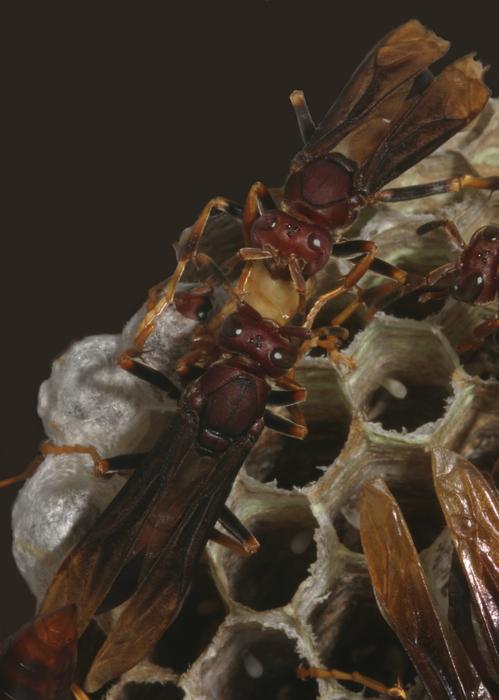
Males Are Genetically Wired To Beg Females For Food

Bees have the reputation of being incredibly organized and spending their days making sure our...

User picture.
News StaffRSS Feed of this column.

News Releases From All Over The World, Right To You... Read More »

Blogroll

In animals with separate sexes, embryos commit to becoming male or female at an early stage. Often this key decision is made by sex determination genes on the sex chromosomes.

The genes involved in sexual development have changed remarkably little during evolution. In contrast, the sex determination genes and the sex chromosomes themselves are among the most rapidly changing features of the genome.

A research team formed by Sander van Doorn (Santa Fe Institute, USA) and Mark Kirkpatrick (University of Texas at Austin, USA) suggests an answer to the puzzle of why sex chromosomes evolve so rapidly. In a theoretical study published in the October 17, 2007 issue of NATURE they demonstrate that sexual conflict can establish novel sex-determining genes and sex chromosomes.

While acne is oftentimes as much a part of being a teenager as dating and Friday night football games, a new study examining the prevalence of acne in adults age 20 and older confirms that a significant proportion of adults continue to be plagued by acne well beyond the teenage years. In particular, women experience acne at higher rates than their male counterparts across all age groups 20 years and older.

In the study entitled, “The prevalence of acne in adults 20 years and older,” published online in the Journal of the American Academy of Dermatology, dermatologist Julie C.

This animation, comprised of images acquired by Envisat’s Advanced Synthetic Aperture Radar (ASAR) instrument, shows the breaking away of a giant iceberg from the Pine Island Glacier in West Antarctica. Spanning 34 km in length by 20 km in width, the new iceberg covers an area nearly half the size of Greater London.

The animation highlights the movement in the area between September 2006 and October 2007. The Pine Island Glacier is visible stretching from the right of the image to the centre. The tongue of Pine Island is shown moving inland between September 2006 and March 2007. Between April and May 2007, the detached iceberg in front of Pine Island moves significantly. Also in May 2007, a crack in Pine Island becomes visible. By October, the new iceberg has completely broken away.

Ancient, light-sensitive cryptochromes occur in corals, insects, fish and mammals - including humans - and are primitive light-sensing pigment mechanisms which predate the evolution of eyes.
New research regarding these genes by an international team of Australian and Israeli researchers has discovered what could be the aphrodisiac for the biggest moonlight sex event on Earth.

In a new paper published in Science today the team, headed by Dr Oren Levy of CoECRS and the University of Queensland, reports its discovery that the Cry2 gene, stimulated by the faint blue light of the full moon, appears to play a central role in triggering the mass coral spawning event across a third of a million square kilometers of Australia’s Great Barrier Reef, one of nature’s wonders.

The first fossil tracks belonging to large, carnivorous dinosaurs discovered in Victoria, Australia show that large dinosaurs were living in a polar environment during the Cretaceous Period, when Australia was still joined to Antarctica and close to the South Pole.

The find is being reported today, Friday, Oct. 19, at the Society of Vertebrate Paleontology meeting in Austin, Texas, by Anthony Martin, senior lecturer in environmental studies at Emory.

Kids place a great deal of value on athletic ability and youngsters deemed unskilled by their peers often experience sadness, isolation and social rejection at school.

In a study published in The Journal of Sport Behavior, researchers at the University of Alberta in Edmonton examined the relationships among perceived athletic competence, peer acceptance and loneliness in elementary school children.