Banner
Social Media Is A Faster Source For Unemployment Data Than Government

Government unemployment data today are what Nielsen TV ratings were decades ago - a flawed metric...

Gestational Diabetes Up 36% In The Last Decade - But Black Women Are Healthiest

Gestational diabetes, a form of glucose intolerance during pregnancy, occurs primarily in women...

Object-Based Processing: Numbers Confuse How We Perceive Spaces

Researchers recently studied the relationship between numerical information in our vision, and...

Males Are Genetically Wired To Beg Females For Food

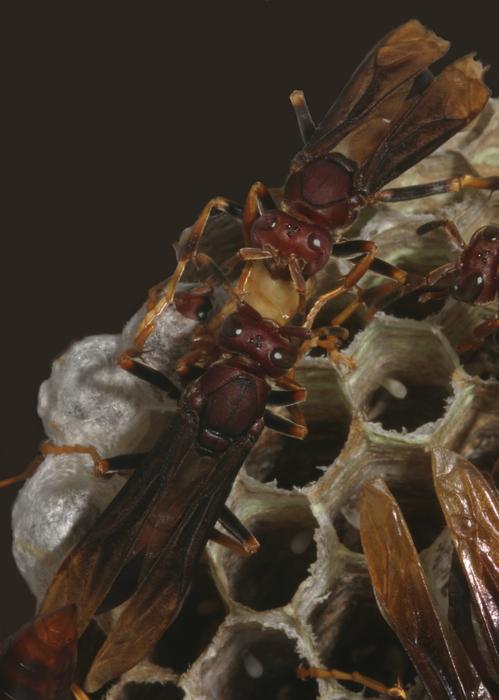
Bees have the reputation of being incredibly organized and spending their days making sure our...

User picture.
News StaffRSS Feed of this column.

News Releases From All Over The World, Right To You... Read More »

Blogroll

Antimatter is made up of antiparticles in the same way that normal matter is made up of particles.

Antihydrogen, for instance, is the simplest atom comprised entirely of antiparticles, with an antiproton as a nucleus and a positron in place of the electron normally found in ordinary hydrogen.

Now a Swansea University physicist is leading a project worth more than £835,000, which could change our understanding of the structure of the Universe. Professor Mike Charlton has been awarded a five-year Senior Research Fellowship by the Engineering and Physical Sciences Research Council (EPSRC). The Fellowship will now enable him to dedicate his time entirely to research, and the project’s aim is to make the first measurements of the properties of antimatter.

Slow or troubled healing processes are one of the many negative outcomes of diabetes and many other human diseases. Diabetes patients not only show deficient tissue healing of sharp wounds but they are also more prone to suffer from chronic wounds, such as ulcers in the lower limbs.

Looking for ways to improve the healing process in diabetes patients, the research group for the Traslacional Investigation of Biomaterials and Tissue Engineering of the “Universidad de Alcalá” managed by Doctor Juan Manuel Bellón and Doctor Julia Buján and working in collaboration with the CSIC have developed an experimental model that releases growth hormone (GH) in a gradual and controlled manner directly over the wounded area.

Are you happy? Well don't try to be happier; you might become less happy. That is the gist of a multi-cultural study published this month in the Journal of Personality and Social Psychology.

The study by University of Virginia psychology professor Shigehiro Oishi and colleagues at three other institutions found that, on average, European-Americans claim to be happy in general – more happy than Asian-Americans or Koreans or Japanese – but are more easily made less happy by negative events, and recover at a slower rate from negative events, than their counterparts in Asia or with an Asian ancestry.

A new clinical trial seeks to predict who is most likely to experience osteoarthritis, and to test whether an experimental treatment can prevent it altogether. Physicians are setting their sights on people who sustain a knee injury, seeking to understand why nearly half of them will later go on to develop osteoarthritis, a debilitating condition that causes pain and disability in more than 20 million Americans each year.

The work is funded by a special class of National Institutes of Health grants awarded to research programs that show promise of quickly translating basic science discoveries into patient treatments. In this case, initial research has shown that an enzyme which controls the response of cells to growth factors may in fact be a major cause of osteoarthritis.

In the October 19, 2007, issue of PLoS-Genetics, a team of academic and commercial researchers (1) show that their "maize mini-chromosomes" (MMC) can introduce an entire "cassette" of novel genes into a plant in a way that is structurally stable and functional. Early results, the study authors say, "suggest that the MMC could be maintained indefinitely."

The production of transgenic plants, including maize, has historically relied on techniques that integrate DNA fragments into a host chromosome. This can disrupt important native genes or lead to limited or unregulated expression of the added gene.

Currently, to add a single gene, plant scientists create hundreds of transgenic plants in which the new gene is randomly inserted into a plant chromosome.

Cryptococcus neoformans is a major cause of fungal meningitis, predominantly in immunocompromised individuals. This fungus has two mating types/sexes, a and α, and mating typically requires two individuals with opposite mating types.

It is mysterious why the α mating type is overwhelmingly predominant in nature and how the capacity for sexual reproduction is maintained in a largely unisexual population. We postulated that same-sex mating between α isolates may occur naturally, as it does under laboratory conditions.

By analyzing natural Cryptococcus diploid hybrid isolates containing two α alleles of different serotypic origins, this study demonstrates that same-sex mating transpires in nature.