Banner
Social Media Is A Faster Source For Unemployment Data Than Government

Government unemployment data today are what Nielsen TV ratings were decades ago - a flawed metric...

Gestational Diabetes Up 36% In The Last Decade - But Black Women Are Healthiest

Gestational diabetes, a form of glucose intolerance during pregnancy, occurs primarily in women...

Object-Based Processing: Numbers Confuse How We Perceive Spaces

Researchers recently studied the relationship between numerical information in our vision, and...

Males Are Genetically Wired To Beg Females For Food

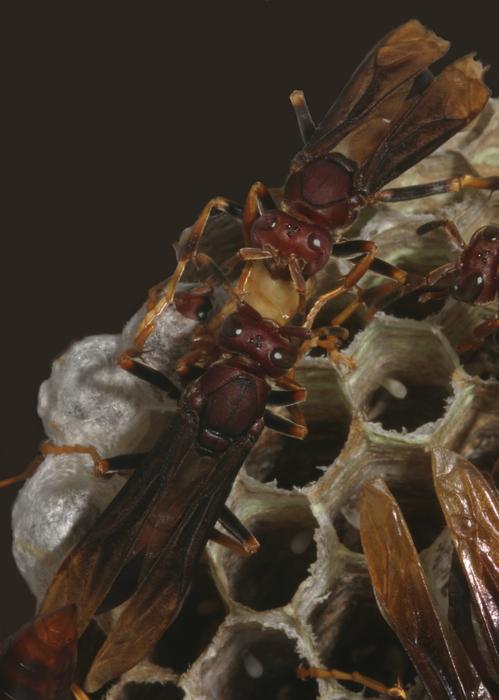
Bees have the reputation of being incredibly organized and spending their days making sure our...

User picture.
News StaffRSS Feed of this column.

News Releases From All Over The World, Right To You... Read More »

Blogroll

Last month, University of Alaska Fairbanks researcher Katey Walter brought a National Public Radio crew to Alaska’s North Slope (actually, the NPR story is a lot better and has video, so you can probablly just go there and read it, but please come back when you are done - Editors ), hoping to show them examples of what happens when methane is released when permafrost thaws beneath lakes.

When they reached their destination, Walter and the crew found even more than they bargained for: a lake violently boiling with escaping methane.

University of Minnesota researchers have discovered that N-acetyl cysteine, a common amino acid available as a health food supplement, may help curb pathological gamblers’ addiction.

In a recent eight-week trial, 27 people were given increasing doses of the amino acid, which has an impact on the chemical glutamate – often associated with reward in the brain. At the end of the trial, 60 percent of the participants reported fewer urges to gamble.

“It looks very promising,” said Jon Grant, J.D., M.D., a University of Minnesota associate professor of psychiatry and principal investigator of the study. “We were able to reduce people’s urges to gamble.”

The medical diagnosis of brain death is at odds with our traditional view of when death actually occurs, says Professor Allan Kellehear from the Centre for Death & Society at the University of Bath, speaking at an international conference on Death, dying & disposal.

A diagnosis of brain death uses factors like fixed and dilated pupils, lack of eye movement and absence of respiratory reflexes but the social understanding of death is that it occurs when the heart stops beating.

This makes decisions that often follow brain death, such as organ removal and the cessation of life support, potentially unsettling for the bereaved.

A way to convert natural gas into raw materials for the chemical industry and generate power as a by-product could lead to more environmental benign manufacturing processes.

Making synthesis gas - a blend of hydrogen and carbon monoxide - is a key step in turning natural gas or biomass into bulk chemicals, such as acetic acid, methanol, oxygenated alcohols, isocyanates, and ammonia, which are the feedstock of the global chemical industry. Synthesis gas can also be converted into synthetic diesel fuel. In the conventional process of synthesis gas production, a catalyst and heat are required, which itself requires energy.

These NASA Hubble Space Telescope images reveal how the glowing gas ejected by dying Sun-like stars evolves dramatically over time.

These gaseous clouds, called planetary nebulae, are created when stars in the last stages of life cast off their outer layers of material into space. Ultraviolet light from the remnant star makes the material glow. Planetary nebulae last for only 10,000 years, a fleeting episode in the 10-billion-year lifespan of Sun-like stars.

The name planetary nebula has nothing to do with planets.

A primary mystery puzzling neuroscientists -- where in the brain lies intelligence" -- just may have a unified answer.

In a review of 37 imaging studies related to intelligence, including their own, Richard Haier of the University of California, Irvine and Rex Jung of the University of New Mexico have uncovered evidence of a distinct neurobiology of human intelligence.