Banner
You Didn't Feel Continental Mantle Earthquakes, But They Happened. A Lot

A 1979 seismic event was a different kind of earthquake, and it is has intrigued scientists ever...

How To Overcome Leadership Battles

In times of social rancor and strife, most will fight each other, but societies are saved by those...

Thousands Of Unpublished Studies Show Why Conservation Efforts Miss The Mark

Europe alone has so much unpublished, un-catalogued biological data that it is challenging to take...

Why Antarctic Sea Ice Stopped Growing In 2015

Though numerical models and popular films like An Inconvenient Truth projected Arctic ice...

User picture.
News StaffRSS Feed of this column.

News Releases From All Over The World, Right To You... Read More »

Blogroll

A simple, cheap treatment using just oxygen could allow growers to store organic produce for longer and go a long way towards reducing the price of organic fruit and vegetables.

Currently UK shoppers have to pay twice as much for some organic products. Organic apples, for example, are around double the price of conventionally grown apples in Sainbury’s, Waitrose and Tesco.

Northwestern University researchers have discovered a drug that slows – and may even halt – the progression of Parkinson’s disease. The drug rejuvenates aging dopamine cells, whose death in the brain causes the symptoms of this devastating and widespread disease.

D. James Surmeier and his team of researchers have found that isradipine, a drug widely used for hypertension and stroke, restores stressed-out dopamine neurons to their vigorous younger selves.

An international study by researchers at Seattle Children’s Hospital Research Institute, the University of Washington School of Medicine, and Radboud University in Nijmegen, Netherlands has identified a new genetic cause for Joubert syndrome (JS).

Joubert syndrome is an inherited condition that affects development of the cerebellum and brainstem, the structures in the brain that coordinate movements and regulate basic functions such as breathing, swallowing, heart rate and consciousness. The study confirms key information about the genetic changes that cause JS and cellular structures called cilia, conclusively placing JS in a class of recently identified ciliopathic conditions.

More than 26 million people worldwide were estimated to be living with Alzheimer’s disease in 2006, according to a study led by researchers at the Johns Hopkins Bloomberg School of Public Health.

The researchers also concluded the global prevalence of Alzheimer’s disease will grow to more than 106 million by 2050. By that time, 43 percent of those with Alzheimer’s disease will need high-level care, equivalent to that of a nursing home.

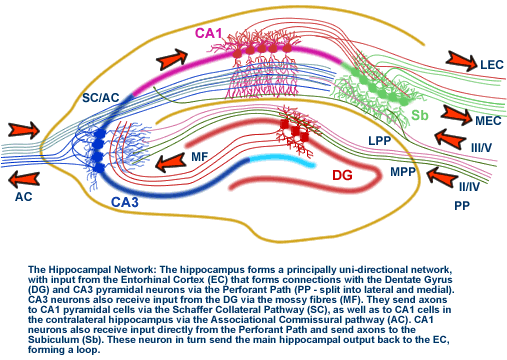
We've all had the feeling we've been somewhere before or had a feeling we've previously had a conversation. It isn't magic or mysticism, the answer is in a set of neurons called your 'place cells.'

Researchers believe these 'place cells' fire to provide a sort of blueprint for any new space we encounter. The next time we see the space, those same neurons fire. Thus we know when we've been somewhere before and don't have to relearn our way around familiar turf. But similar spaces may activate overlapping neuronal blueprints, leaving room for confusion if the neurons are not fine-tuned. Thus happens deja vu.


Source: University of Bristol

It used to be said that men predominantly liked salty snacks and women liked sweets. Food preference, in that sense, was related to chromosomes.

It may go deeper than that. Even your preference for fats, carbohydrates and proteins may be genetic. Researchers have found that the apolipoprotein A-II gene (APOA2) is associated with proportions of fat, carbohydrate, and protein in the diet, total calories and, therefore, with body-mass-index (BMI.


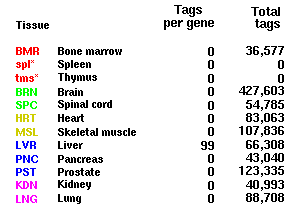
APOA2. Courtesy: genecards.org