Banner
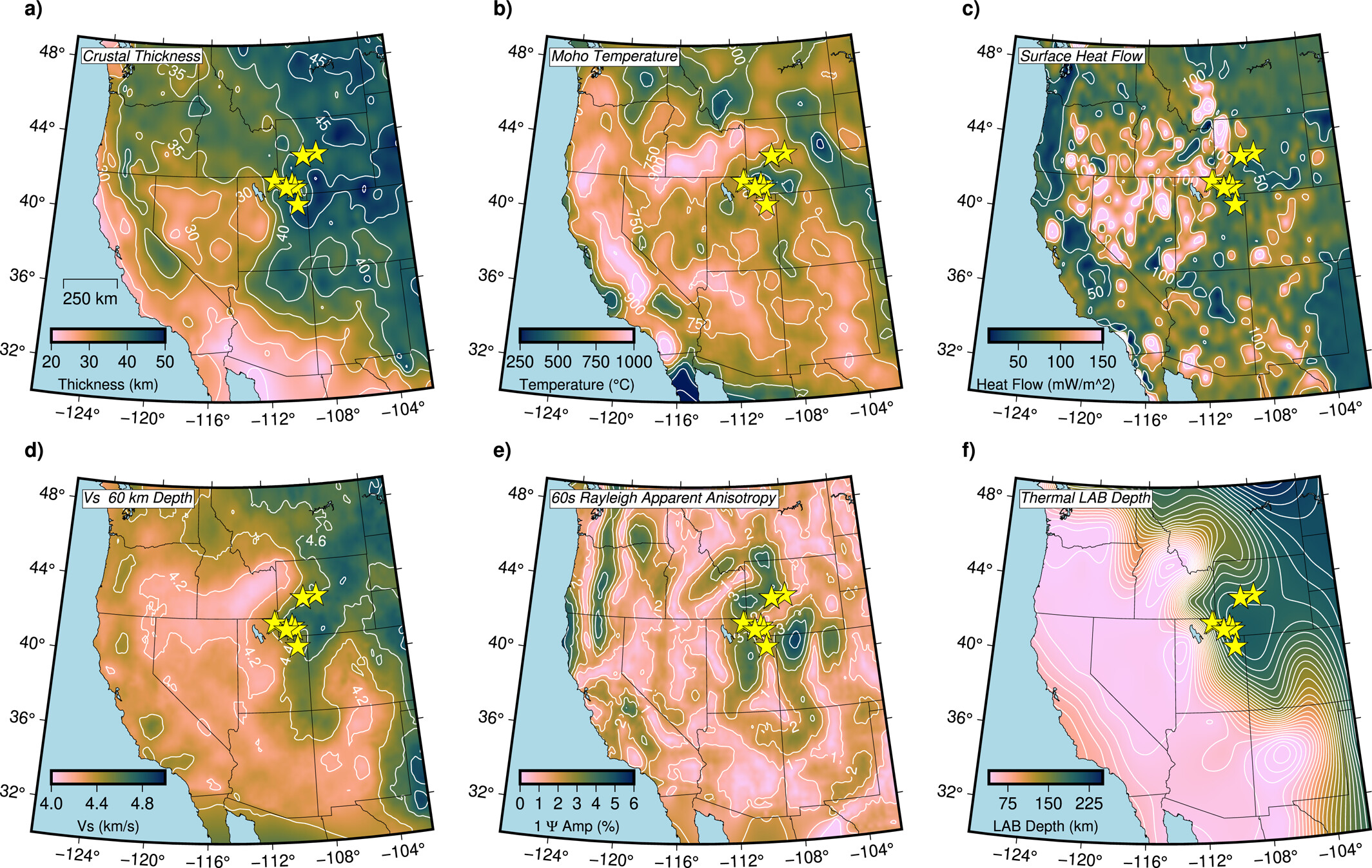
You Didn't Feel Continental Mantle Earthquakes, But They Happened. A Lot

A 1979 seismic event was a different kind of earthquake, and it is has intrigued scientists ever...

How To Overcome Leadership Battles

In times of social rancor and strife, most will fight each other, but societies are saved by those...
Thousands Of Unpublished Studies Show Why Conservation Efforts Miss The Mark

Europe alone has so much unpublished, un-catalogued biological data that it is challenging to take...

Why Antarctic Sea Ice Stopped Growing In 2015

Though numerical models and popular films like An Inconvenient Truth projected Arctic ice...

User picture.
News StaffRSS Feed of this column.

News Releases From All Over The World, Right To You... Read More »

Blogroll

Researchers at the Johns Hopkins School of Medicine and their colleagues have found that mice simply expressing a human light receptor in addition to their own can acquire new color vision, a sign that the brain can adapt far more rapidly to new sensory information than anticipated.

This work, appearing March 23 in Science, also suggests that when the first ancestral primate inherited a new type of photoreceptor more than 40 million years ago, it probably experienced immediate color enhancement, which may have allowed this trait to spread quickly.

A team from the Universitat Autònoma de Barcelona and the University of Almería has completed its second part of the "Proyecto La Puntilla", an archaeological expedition to the Peruvian province of Nazca, where last year it discovered a new type of construction. The latest findings show that a new political power based on the exercise of violence emerged on the south coast of Peru two thousand years ago. There was a State in which an aristocracy, based in Cahuachi, exercised its dominion on other, poorer communities in the Nazca Valley. The team has also observed practices such as cranial deformation.

The 2004 Sumatra-Andaman earthquake and resulting tsunami are now infamous for the damage they caused, but at the time many scientists believed this area was unlikely to create a quake of such magnitude. In the March 23 issue of the journal Science, a geophysicist from Rensselaer Polytechnic Institute urges the public and policy makers to consider all subduction-type tectonic boundaries to be "locked, loaded, and dangerous."

"Seismologists have long tried to determine which subduction boundaries are more likely than others to break," says Robert McCaffrey, professor of earth and environmental sciences at Rensselaer. "Yet, the great earthquake of 2004 ruptured a segment that was thought to be among the least likely to go."

The success of science based management in Alaska is emphasized in a newly released report. “Conserving Alaska’s Oceans,” was prepared by Natural Resources Consultants, a research organization based in Seattle, Washington and released by the Marine Conservation Alliance. The report outlines 30 years of improved ocean conservation in the waters off Alaska with recommendations for future action. The “Alaska Model” has been cited as a leading example of science-based management. In Alaska catch limits do not exceed the harvests recommended by science advisers, and there are no overfished stocks of fish. Alaska produces more than 50% of the nation’s seafood.

Solving a mystery that has puzzled scientists for decades, MIT and Harvard researchers have discovered the final piece of the synthesis pathway of vitamin B12-the only vitamin synthesized exclusively by microorganisms.

B12, the most chemically complex of all vitamins, is essential for human health. Four Nobel Prizes have been awarded for research related to B12, but one fragment of the molecule remained an enigma-until now.

Identification of the oldest preserved pieces of Earth's crust in southern Greenland has provided evidence of active plate tectonics as early as 3.8 billion years ago, according to a report by an international team of geoscientists in the March 23 edition of Science magazine.

The finding pushes back the date of continent-forming processes previously determined as 2.5 billion years ago to a much earlier era considerably closer to Earth's formation some 4.5 billion years ago. Geochemical analysis of rocks has previously suggested an earlier date for plate tectonics, but this is the first study to find physical evidence of tectonics among Earth's oldest known rock structures, according to Hubert Staudigel of Scripps Institution of Oceanography at UC San Diego.