




The protein identified by Joachim Grötzinger, Thomas Bosch and colleagues at the University of Kiel, hydramacin-1, is unusual, and clinically valuable, as it shares virtually no similarity with any other known antibacterial proteins except for two antimicrobials found in another ancient animal, the leech.
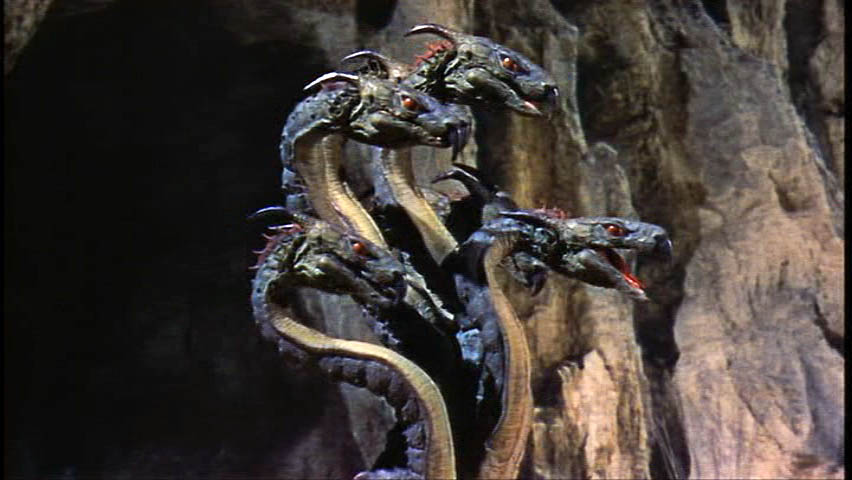
Not this Hydra.
Hydramacin proved to be extremely effective though; in a series of laboratory experiments, this protein could kill a wide range of both Gram-positive and Gram-negative bacteria, including clinically-isolated drug-resistant strains like Klebsiella oxytoca (a common cause of nosocomial infections). Hydramacin works by sticking to the bacterial surface, promoting the clumping of nearby bacteria, then disrupting the bacterial membrane.

Not this Hydra. Copyright and credit Marvel Comics Group.
Grötzinger and his team also determined the 3-D shape of hydramacin-1, which revealed that it most closely resembled a superfamily of proteins found in scorpion venom; within this large group, they propose that hydramacin and the two leech proteins are members of a newly designated family called the macins.

This Hydra. Gratefully lifted from Greg Laden's blog, because he can be funny too.
Article: "Hydramacin-1, Structure and Antibacterial Activity of a Protein from the Basal Metazoan Hydra" by Sascha Jung, Andrew J. Dingley, René Augustin, Friederike Anton-Erxleben, Mareike Stanisak, Christoph Gelhaus, Thomas Gutsmann, Malte U. Hammer, Rainer Podschun, Alexandre M. J. J. Bonvin, Matthias Leippe, Thomas C. G. Bosch, and Joachim Grötzinger,Jung et al. J. Biol. Chem..2009; 284: 1896-1905



Comments