




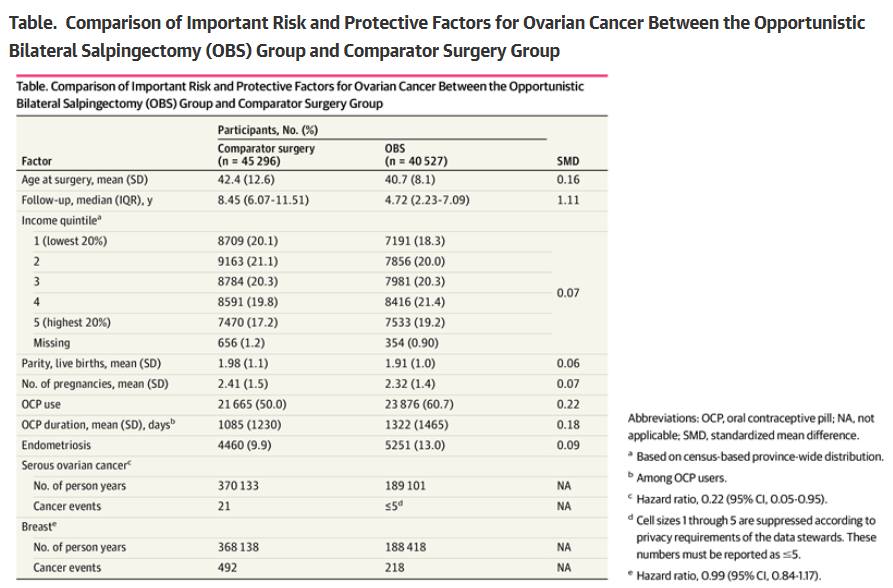
At this time, there is no reliable screening test for ovarian cancer, meaning that most cases are diagnosed at advanced stages when treatment options are limited and survival rates are low. A new statistical analysis in Canada quantified how much reduces the risk of serous ovarian cancer. The data were over 85,000 people who underwent gynecological surgeries in B.C. between 2008 and 2020. The researchers compared rates of serous ovarian cancer between those who had opportunistic salpingectomy and those who had similar surgeries but did not undergo the procedure.
Overall, people who had opportunistic salpingectomy were 78 percent less likely to develop serous ovarian cancer. In the rare cases where ovarian cancer occurred after opportunistic salpingectomy, those cancers were found to be less biologically aggressive. The findings were validated by data collected from pathology laboratories from around the world, which suggested a similar effect.
Opportunistic salpingectomy leaves ovaries intact, preserving important hormone production so there are minimal side effects. Statistical analyses show it is safe, does not reduce the age of menopause onset, and, importantly as wealthier nations increasingly take over health care is cost-effective for government. 24 professional medical organizations now recommended it as an ovarian cancer prevention strategy.
"If there is one thing better than curing cancer it's never getting the cancer in the first place," says Dr. Dianne Miller of Vancouver Coastal Health, who developed the procedure.
Citation: Sowamber R, Mei AJ, Kaur P, et al. Serous Ovarian Cancer Following Opportunistic Bilateral Salpingectomy. JAMA Netw Open. 2026;9(2):e2557267. https://jamanetwork.com/journals/jamanetworkopen/fullarticle/2844597



Comments