
Banner
    How Hard Science Saves Lives
    By Bente Lilja Bye | September 9th 2010 07:36 AM | 37 comments | Print | E-mail | Track Comments
    About Bente Lilja

    Earth science expert and astrophysicist writes about Earth observation, geodesy, climate change, geohazards, water cycle and other science related...

    View Bente Lilja's Profile
    The debate on hard and soft science seems to still be on – also here on Science2.0. As a representative of several hard sciences (mathematics, physics, theoretical astrophysics, geodesy...) I have always been annoyed by variations over the statement 'no, I want to save lives, therefore not do [hard]science' often presented with a moral indignation as toppings.

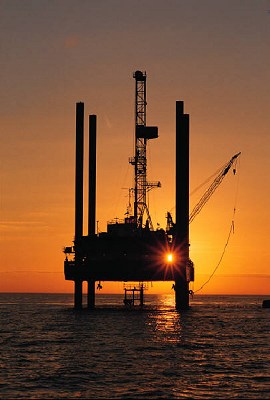
    oil platform

    What a tremendous display of ignorance those statements are. Moreover, that kind of ignorance is not only socially accepted but considered a virtue within a number of non-hard-science groups. It is socially accepted by political scientists, humanists and other soft science groups as well as the general public to be illiterate in physics and mathematics. Whereas the other way around, ignorance in politics, history, culture and social matters are frowned upon.

    In this environment, one of the misunderstandings about hard sciences is that they are completely useless for society and rather kill than save lives. Of course this is a black-and-white description, but for the sake of illustrating my point, black-and-white it is.

    Now, moving on from black-and-white to a more colorful language...

    In your face, softy.
    Oh, the wealth of proof I can choose from and throw in the face of softies. Proof that shows not only how useful hard science is to our society and how much we depend on it in our daily lives, but how it is downright lifesaving. Here comes a tiny selection for your cultural [hard science] education.

    European Synchrotron Radiation Facility - ESRF
    One could say that it is totally irresponsible to just sit around and watch invisible particles accelerate in circles, right? Well, NO! Was it not for those hard, hard, very hard X-rays produced by circling particles at ESRF in Grenoble, France, tons of people would have died. Mind you this is both hard science AND hard x-rays, double disaster according to too many softies. But boy are those softies wrong. The hard x-rays save lives. Pharmaceutical industry is one of the big user groups using ESRF. It is of course used for other medical purposes as well. I don't have to explain how medicine and medical knowledge help saving lives, do I? Read about how tomography is being improved at ESRF.

    Space Exploration
    There are numerous examples of how our space exploration have resulted in life saving knowledge and technology. I'll give just a couple of recent examples to illustrate this fact.

    NASA Search and Rescue Mission has existed in 30 years. Since the Search and Rescue system, which includes technology developed by NASA, began operations, it has saved more than 28,000 lives worldwide and 6,420 in the U.S. That are some very concrete numbers for you.

    Beacon
    A MicroPLB Type GXL handheld device used to transmit distress signals. All 406 MHz emergency beacons like this should
    be registered, and Search and Rescue authorities encourage owners of
    these beacons to do so as registration will help rescue forces find
    persons in distress faster in an emergency. Credit: NASA's Goddard Space Flight Center, Rebecca Roth

    Working on oil rigs can be quite hazardous. One late example of that is the BP accident in the Gulf of Mexico where 11 workers lost their lives in an explosion. One of the things you need to watch out for on oil rigs are dangerous gases. Based on technology developed at ESA, new sensors are produced and installed on oil platforms, reducing the risks.
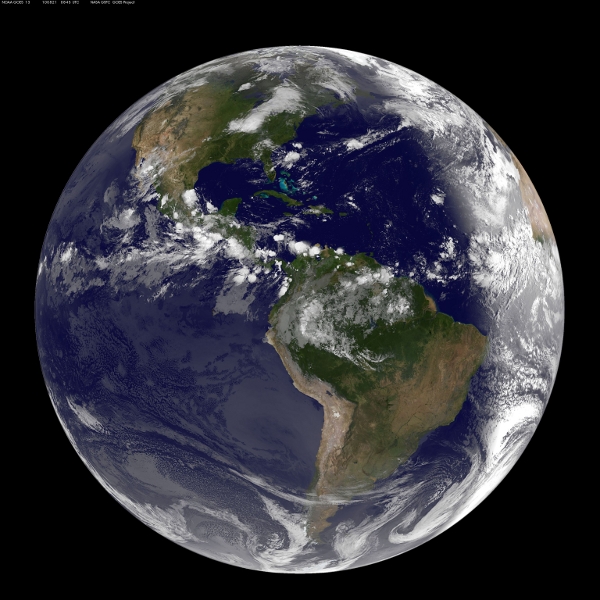
    The Earth
    The Earth by NASA

    Earth observation
    It is not on the basis of analyses of human feelings or studies of our collective behavior that we have developed and enabled satellites to observe our planet. It is hard science. Earth observations from space as well as from the ground are used in all areas of society. GEO, who is set out to construct Global Earth Observation System of Systems, has in fact defined 9 societal benefit areas where Earth observations are being applied and integrated:


    • Reducing loss of life and property from natural and human-induced disasters;


    • Understanding environmental factors affecting human health and well-being,


    • Improving the management of energy resources,


    • Understanding, assessing, predicting, mitigating, and adapting to climate variability and change,


    • Improving water resource management through better understanding of the water cycle,


    • Improving weather information, forecasting and warning,


    • Improving the management and protection of terrestrial, coastal and marine ecosystems,


    • Supporting sustainable agriculture and combating desertification, and


    • Understanding, monitoring and conserving biodiversity.


    Shame on you softy, if you didn't know this!

    Advise to socially responsible rich people

    If I have had a lot of money and wanted to use them to save as many lives as possible pr my dollar, help children in developing countries and so on, I would do as Fred Kavli does, support basic hard science. With his Kavli Foundation and Kavli prizes in Astrophysics, Nanoscience and Neuroscience Fred Kavli regularly gives millions of dollars to basic hard science. Or I would fund the entire GEOSS, speeding up the process of getting an effective global Earth observation tool. Or I would fund a Moon mission program. This would unfortunately deprive me of the joy of having a personal relationship seeing a single child rescued from starvation, going to school and become a healthy happy citizen of a developing country. My reward would be knowing that I had saved and secured lives and improved the quality of life for large communities all over the world. That would be my joy and 'happy child' reward.

    Happy children
    Credit: Children at Risk - CARF

    Sobering Up

    Hard sciences do save lives, but it is on the basis of combining many disciplines that we will be most efficient in improving our society – and therein lies saving more lives. The discussion about hard and soft sciences illustrate how hard it is to combine the knowledge that we have, the various value systems and languages. I have numerous examples of how this prevents us from finding solutions and/or delaying them, but, I will let that lie for now.

    Mutual respect and acknowledgement of strengths, biases and limitations are necessary to succeed with interdisciplinary work.

    Comments

    Very interesting post, thank you.

    I personally think that one issue at work here is lack of dissemination to the general public, or, better, incorrect dissemination to the general public. This problem percolates in every aspect of the society, being average citizen, politician, journalist or soft-science researcher. However, I'd like to clarify my line of thought in more details. There are many points to be considered.

    The first point is general, and is relative to clarify to the general public the "research -> result" production chain, namely, the steps "Hard-science/pure research" -> "Soft-science/applied research" -> "Industrial R&D" -> "Store Product", the timeframe associated to each of these steps, and who organizes the pipeline. Without a clear high-level picture of how scientific progress happens, people won't understand its mechanics.

    The second point is the general misinformation about what hard science research is finalized to, and the difference between the Vision of a hard-science discipline and the Milestones of a project. It's easy to say "the LHC is a huge waste of money" on a big title in the newspaper. Less easy to remember and point out "without the LHC, there would be no World Wide Web (or at least, it would be not what it is today)", among the many other advancements that the LHC promoted. It's easier to criticize X when the many positive results this X produces are not in the initial "research statement". I have the feeling that the general public interprets these positive results not as a victory, but as unexpected accidental results, tiny edible bits in a "rotten" project. They are unable to grasp that without the "useless project", there would be no need for the "small good bits" that become major technological advancement. This is, of course, regardless of the breakthrough that the project Vision will grant in the future, which comes much much later in time.
    It should be priority of any popular science narrator/journalist to reform the point of view on this regard. From the institutions, the "press releases" should be enhanced with scientifically oriented journalists visiting the labs, talking to the researchers, so that they can explain the process and advancements clearly to the general public after a proper peer-review from the interested lab/organization. I've never seen a journalist in my lab, or in any lab for what matters. Glad to be proven wrong on this regard, though.

    The third point is comparison between history and present. Studying science, we see breakthrough as sudden: plastic, penicillin, the radio, going to the moon. They appear suddenly, in a flash when told. What is never told is the tens of years of "useless research" which preceded them. Present research, in comparison, seems slow and full of "useless research" because we are here to see it happens, without the "long story short, they invented penicillin" narrative method. "Researchers discover new drug" is a daily announcement, but from the discovery in the lab to the FDA approval years are needed, and the general public does not know these mechanisms. To them, the mechanism appears a constant joke where new discoveries are announced but they cannot take advantage of them. This blows to incredible proportions when the same line of reasoning is applied to hard sciences, where breakthroughs apparently don't make them live better.

    Finally, the brain management issue. The development of a researcher is a long process, requiring years of investment. Typically, a researcher's career must end into scientific management (i.e. professorship), otherwise the person is thrown out of the academic system. Seldom there's a different direction. It's a big risk, and people tend to shun a life of compromises, political issues, low salaries and satisfaction in favor of a more finalized specialization, closer to better employment possibilities when the project is over.

    rholley
    Ben scritto, Stefano!
    Robert H. Olley Quondam Physics Department University of Reading England
    Stellare
    Thank you Stefano, also for complementing my story.

    I believe we would gain from underlining that science in fact is culture and as such has a right of existence in its very self. There will always be science just for the sake of science. To me that is a completely valid argument.

    Moreover, it is not contradictory to do utilitarian science. Science with a more or less defined purpose and goals. We need both - and everything in between.

    It is rare that philanthropists such as Fred Kavli apply a long term, actually indefinite, perspective of their support. Kavli is investing in the future, confident that basic science will lead to great things - as history tells us it will, we just don't know exactly how and what yet.

    Communicating hard science - often very complicated issues - is not straightforward. It takes a lot of work to do that well. That might be one of the reasons you haven't had too many journalists in your lab.

    Starting out as a scientists I was trained by a former CNN director to produce science news. I believe this approach is a good one when it comes to those tricky subjects...Maybe. :-) It is a field in its own, too. To communicate science, I mean.

    Bente Lilja Bye is the author of Lilja - A bouquet of stories about the Earth
    I had the same issues with soft-science scholars in the past; similar personal experiences, where scientific knowledge is not considered strictly as "culture", or where the fact of not understanding math or chemistry was considered almost like an asset to be proud of, rather than a lack of knowledge to compensate as soon as possible with simple, plain curiosity. While many scientists and hard-science practitioners are generally interested in philosophy, arts, sociology, psychology, behavior, literature, and they actively search for more information on these topics, members of the "other side" seldom search for accessible scientific knowledge, at least from my personal sampling, and further reinforced also by what you stated.

    Communication is fundamental. Much of the chagrin against hard-science arises (as I stated earlier) from improper communication. The fact is that most hard-scientists are unable (either for lack of skills or time) to communicate major scientific facts easily (although, it must be said, there are topics where it's really, really hard). The lack of a "common sharing protocol" exacerbates attitudes from both parts.

    I'd also like to further clarify my previous posted comment. I found the issue at hand to percolate even to scientifically-minded people who still don't go into hard-discipline research, but stay in the "applied research" field. As a quantum chemist and scientific programmer, my discipline seems probably abstruse and useless to a biologist, until he needs to model an enzyme 3D conformation or spectroscopic information about some cofactor, for example. While I can totally agree that finding a gene locus for a pathology carries a strong immediate "life saver" potential, the same life saver potential should (better, must) be granted to those mathematicians and computer scientists deploying efficient sequence similarity search algorithms, down into the deep meanders of statistics and mathematics which may appear as the "ultimate waste of time" to a careless, ungrateful observer.

    To conclude, I personally think that one simple thing should be said to anyone, regardless of their affiliation: provided no false promises are used, as long as you improve the human condition for the better it does not matter what you do. Some disciplines takes minutes, some others take centuries.

    Stefano Borini
    Errata: in "Hard-science/pure research" -> "Soft-science/applied research", "Soft science" should be removed.
    I am also writing a more complex and better stated analysis on the issue on my blog, to be published soon.
    Stellare
    Stefano,

    I sort of did that removal while reading your comment already. :-) Your point is clear I think. That 'noise' doesn't matter. Another way of describing the chain is basic science-applied science-development (and then eventually a product of some sort).

    To explain to outsiders, those who are not at all familiar with the debate within science, I used the term exact sciences in stead of hard sciences. Apparently that made more sense to them.

    I'm looking forward to ready your analysis, too.
    Bente Lilja Bye is the author of Lilja - A bouquet of stories about the Earth
    Stefano Borini
    Hello,

    It took a while, but here are my ramblings on the topic.
    rholley
    Bente,

    Be careful that you do not contract UK Government disease.  One of the symptoms is a chronic conviction that they know better how to spend other people's money.  (I would smile here, but I'm a decommissioned Cyberman.)
    Robert H. Olley Quondam Physics Department University of Reading England
    Stellare
    Robert,

    Oh, but I can do worse than that (contracting UK Government disease) - I used to decide on how other people should use their science money for about a decade (Norwegian Research Council). Now I am merely offering some advise. That's all. :-) (I smile all the time in all kinds of spaces; real, far, near, cyber, virtual, you name it)

    I do understand you have a (UK) government a bit confused as on how they should prioritize their science money these days...
    Bente Lilja Bye is the author of Lilja - A bouquet of stories about the Earth
    Bente,
    We Americans are particularly susceptible to politicians using budget costs as a reason to oppose funding "hard science". Basic research is opposed by questioning the cost, except when there is clear military applications. I hate to say it, but I am quite the cynic when it comes to the mentality of my fellow citizens.

    rholley
    Bente,

    I’m still not sure about your trade-off between hard science and sponsoring third world children.  But with the following recent announcement (from Science Codex):

    When the Earth mantle finds its core


    I am quite happy to say Vive l'ESRF!


    http://www.personal.reading.ac.uk/~spsolley/WX/beamlines.htm
    Robert H. Olley Quondam Physics Department University of Reading England
    Stellare
    It is not a matter of trade-off, Robert, rather a 'yes, thank you, I'll have both' :-)

    Still, I am firm in my beliefs that I am helping a lot more people through my work than any donation would do...

    Grenoble is a great place isn't it. I was heavily involved in the Swiss-Norwegian Beamline and have spent interesting times both at ESRF itself and it's surroundings. Great hiking area - and excellent eating!
    Bente Lilja Bye is the author of Lilja - A bouquet of stories about the Earth
    This page struck me... because I have been reading the 'Nazi Census' which goes into detail about the position of 'soft science', IE, social science, in the Holocaust. Statistics, economics, population studies, studies of ethnicity, Eugenics, and even 'race science' , many of whose practitioners still found employment and academic applause after WWII, but in 'cleaned up' disciplines like 'population statistics' and 'social science'.

    The other book i have been reading that strikes me in relation to your post here is EConned by Yves Smith, arguing that the modern 'science of economics' is not based on empiricism, and is in fact one of the causes of the recession, through adherence to the Efficient Market Theory, the Value at Risk metric, and etc.

    Sometimes I have thought perhaps the soft sciences are angry over things like Werner von Braun, but I don't know, it seems as though many academic discplines, soft and hard, if you dig back far enough, have some relation to the industry of death.

    So you are admitting in this blog that there are two kinds of science and seem to be separating them,this is good.Speculative or 'high risk 'science can be of use,specially to the big money end of society , one just has to read Hanks blog on the current 8.9 japanese earthquake to realize how many lives it saves in areas where there is a high stakes involved in doing nothing,then an educated guess is much better than an uneducated one and just as many good lawyers earn more than judges such research deserves the most finance,but where there are high stakes in doing something ,like neuclear power for instance and producing black holes it is not worth the risk or money.Consider the lives saved in the recent earthquake in japan by 'hard science ' and then set it against the short and long term death and hell following chernovll and now possibly in japan now and you will see how both hard science and absolute[soft]science should be applied in future and why in the minds of the general population the two should be clearly separated.Science 2.0 is a blog to project scientific truth to lay people as well as a cross polination of scientific ideas and data,Lets do it then.

    Stellare
    Thank you for your comment don.

    If you read my article on The Haiti Earthquake: Science, Early Warning And Mitigation, you'll see how the different elements of science and integration in society are linked.

    When I argue that hard science saves lives, it is a response to those who think hard science is either killing people, or are simply for the particularly interested. This is of course completely wrong. It is also wrong to say that hard science ALONE will save lives. A warning system is a very good example of that.

    One of the challenges we encountered when I was contributing to the work on establishing an international tsunami warning system (in the wake of the Indian ocean tsunami), was the fight between the different disciplines that have to be integrated in a warning system. That was very frustrating to observe as it is obviously a combined effort that is needed where no particular element is more important than the other. If you lack one you simply will not have a functioning warning system.

    So I couldn't agree more with you that we need both hard and soft science. Japan has understood this. That is one of the reasons why we see comparatively low casualty numbers. The disaster is unavoidable when the planet's continental plates collide so forcefully, but humans can reduce its effects.
    Bente Lilja Bye is the author of Lilja - A bouquet of stories about the Earth
    logicman
    Science 2.0 is a blog to project scientific truth to lay people as well as a cross polination of scientific ideas and data,Lets do it then.

    An excellent point, don.
    I was surprised Bente at your reasonable tone in your comment when your blog seemed rather fierce.I have always had hard scientists over me in authority but often i have been allowed by them to do my own project.This many times has led me to come up with a much simpler explaination or solution that is v.much cheaper than the 'hard science'one and has made the hard science look foolish.My simpler solutions,though accepted and used seem to provoke supressed hatred in my 'hard scientist' boss this has led to a decline in my carreer.However your tone leads me once again to 'stick my neck out' for the love of my fellow man and give you a much simpler, no cost ,beyond reasonable doubt explaination for the current world climate change,100% reproduceableand repeatable and a projection of where we as a world are heading with this if it keeps on going along the present path that is certain.This explaination is fully scientific and i will include great 'soft scientists ' in my 'project' like charles darwin ,isaac newton and albert einstein to prove this .I don't want to feed 'pearls to pigs' so you will have to invite me to do the project first.Ther will be plenty of work for the hard science later in prepairing for it.

    Stellare
    Hi don,

    I'm not sure what you mean when you say

     "a much simpler, no cost ,beyond reasonable doubt explaination for the current world climate change,100% reproduceableand repeatable and a projection of where we as a world are heading with this if it keeps on going along the present path that is certain"

    Are you talking about an explanation or a solution to climate change issues?

    You call Einstein a 'soft scientist' etc. And I am not sure what your point is by making Einstein a representative of soft science, but I might be a bit slow.

    Decision-makers rarely have a hard science back-ground and need to be reminded that hard science does in fact save lives. More often than not, hard science are discredited in that respect. My article was a response also to a discourse here on Science2.0.
    Bente Lilja Bye is the author of Lilja - A bouquet of stories about the Earth
    I am talking about a scientific explaination for current climate change and a projection of where it is leading us that is beyond reasonable doubt.Sorry, by the way, that i brought love of my fellow man into this,I wanted to keep purely scientific and strayed a bit there.It's just that i think the current 'hard science predictions'are provoking fear wrongly and causing governments to take increasingly desparate and risky measures such as in the fields of taxation which could cause death and sickness by default[many good things come from fossil fuels] and atomic energy [many bad things come from that as we currently can see on our tv screens].Only with enough encouragement and support even prayers all round can i build a lever to lift the world out of the precipice and deadly peril it is falling into and you hard scientists are it[ that idea comes from another soft scientist of greek descent as you should know as a mathermatician] ,you Bente will have the solution once you understand the soft science i can give you.You will see where Einstein comes into it if you invite me to explain.

    The use of hard science saves lives the abuse of hard science can cost many more lives.

    Well Lilja,i have just read some of your 'bouquet of stories' site and now feel you may be more receptive to what i have to explain about climate change and my fears of feeding pearls to pigs have been alaid.So here goes......................That wonderfull supertramp W.H.Davies,who took some time off from a busy life to bum around and take a wormseye view of life,society and the world in general,wrote'What is life if full of care we have no time to stop and stareand stand beneath the leafy boughs and stop,and stare,like sheep and cows.'So lets,in our minds eye go and sit under isaac Newtons apple tree and bring as many hardies scientists with you as you can[a kind of hardies/softies conference]in a garden,and stop and stare like sheep and cows.With us is softies, isaac newton,albert einstein and charles darwin,[who also took time off from a busy hard study of Anglican theology to stop and stare at his environment].''Are we sitting comfortably children?Then we will begin.{this is not a joke,we really must see things like this or we will miss the truth.

    Now you may ask your question Lilja"what is climate change all about and where are we heading with it?"Charles Darwin says"look Lilja,look,can't you see that there is a wonderfull symbiotic relationship between this apple tree and the animals in it?""yes " says Einstein,"relationships,everything in the universe is inter-related,you cannot study anything on it's own without reference to everything else because everything happens relative to everything else.The most important thing in the universe is relationships".Charles Darwin says"Can't you see Lilja that the tree's body works upside down and inside out in an opposite but symbiotic way to the animals body.The tree eats with it's head in the ground [down] but the animals eat with head up.The trees arms,hands and fingers are the feed roots which stretch out and gather it's food and bring it back to its mouth on the inside[the animals bring food on the outside].The trunk of the tree goes up [not down like animals]and the trees legs,feet,and toes are its branches.The fruit forms in the branches toe to toe and the apple is in fact tree poo.

    Stellare
    Hi Don, your writing is captivating - so please, keep it coming. :-)
    Bente Lilja Bye is the author of Lilja - A bouquet of stories about the Earth
    Just then an apple falls on isaac newtons head.We all laugh but newton is serious and says thoughtfully"But why did the apple fall down and not up?".Charles Darwin explains."The apple wasn't meant to fall on your head isaac it was meant to be eaten by the animals,who would use the protein in the tree poo to renew its body and the sugars to give it energy and body heat and it would breath in the bad breath of the tree[oxygen] to live.But then something would form between the animals legs,animal poo and that is what was meant to fall to the ground isaac not on your head,together with the autumn leaves.""So that is what gravity is"says newton"It's the power of the trees digestive system which works on the outside of the tree,inside out to the animals intestines."" Yes "says Darwin"and the insects are the rest of the trees intestines which digest the food before it enters the trees hands and mouth[opposite to the animals]finally ending with the humble worm,there is an environmental counterpart to every part of the animals body which works upside down and inside out in a symbiotic/opposite way to it.""I'm glad it was an apple then that fell on my head''says newton."But what has this got to do with climate change?" you say.

    Stellare
    But what has this got to do with climate change?" you say.

    That is absolutely correct! :-)
    Bente Lilja Bye is the author of Lilja - A bouquet of stories about the Earth
    logicman
    ... and the fleas that freeze in the trees in the breeze
     when the sap goes zap and the wild dogs yap
      as the mice cross a slice of thin ice -

    do you remember an inn, Miranda?    ;-0

    Stellare
    What a fun verse - or what it is. And you are cruelly pointing to my lack of cultural education (shame on a hard scientist, right? ;-)) I suffer from. Because, I have no idea where those words stem from...hahahaha
    Bente Lilja Bye is the author of Lilja - A bouquet of stories about the Earth
    logicman
    Bente: it's a sort of doggerel, a 'stream of consciousness' parody of Tarantella
    Stellare
    Patrick! You are making things worse! :-) I had not heard about this poet. I know, I didn't have to tell you that, but I need to establish a 'softer' image, so here it goes...:-)

    I actually have read some of the other author/poets on that list in your link...in my meager defense. :-)
    Bente Lilja Bye is the author of Lilja - A bouquet of stories about the Earth
    "Well" i say,"If there is an environmental counterpart to every part of the animals body in the garden then what is the environmental counterpart to the animal's skin?""It would have to work inside out and upside down and in a symbiotic/opposite way to your skin",says Darwin."My skin",i quiery."Yes"saysDarwin,"because your body is animal too , your body evolved from the animals.""My skin is a temperature regulator which uses 'evaporation causes cooling principle' externally to sweat and cool my body down ,so in the garden environment i'm looking for something that uses condensation causes warming principle to warm the garden up.The only thing i know of that does that is fog,low level cloud that gives off its latent heat when cold and warms the garden up ,watering it with dew at the same time,which also protects the garden from desease and infection{another function of my skin]because its the rain that splashes up desease on the underside of leaves and dew does not do this.

    The cloud also would act as an insulator to external heat on the garden[opposite to mine] and my skin has a layer of fat on the inside to increase its insulating properties.The cloud has a layer of environmental equivalent fat called greenhouse gasses ,increasing the insulating properties of the environmental skin[inside out and upside down to mine.Where has 90% of the gardens environmental skin gone then?Because the garden burns in hot weather and freezes in cold.Sometime in the earths past.all gardens on earth must have lost there environmental skin.Wait a minute ,fossil fuels are plants and animals that once took out greenhouse gasses out of the air and then didn't put them back again but were locked away in the ground.Since we know that an increase in greenhouse gasses causes warming then a decrease must have caused cooling,which would have caused the condensation of the environmental skin[cloudband]around the earth which would have caused a reduction in its insulating properties which would have caused a further condensation until all the cloud had fallen to earth.The poles would have frozen and the equator would get hot and a wind system would have been set up and some of the cloud would have been restored by evaporation.Now we are taking those fossil fuels out of the ground and restoring our environmental fat layer{greenhouse gasses]which should again restore our environmental skin the cloud band around the earth.The equator will cool and the poles will melt in the process ...

    Now Lilja if you had lost 90% of your skin,your life expectancy would be reduced from say80yrs to a few minutes and if a plastic surgeon had offered to restore your skin it would have extended your life enourmously.Do you think we are heading for bad things in having our environmental skin restored or good things and should we be stopping it or hastening it.We will certainly need to plan and prepare for it socially,in commerce and politically,otherwise chaos will reign.This is where you hard scientists will be needed.Obviously if temperatures moderate accross the earth the wind powered by the sun will stop,our environment will be insulated by our environmental skin so we will need some internal circulation .The thing that circulates oxygen in my body is my heart and the only thing i can see in my environment that circulates co2 internally is fire/heat maybe there will have to be some relationship between the cities and country where the heat of the city circulates co2 to the country and draws cooler higher o2 from the country i leave it to you hard scientists to work out.I feel i have unburdened myself of this truth the ball is in your court.

    THE GARDEN continued.............There is one other very important thing we can see from under our apple tree,it is the principle of recycling,absolutely 100%reproduceable and repeatable,beyond reasonable doubt.everything goes in a circle.It dies away and then is reborn like going back into our mothers womb and being born all over again.this is the new dawn of day,the new birth of spring the "WOW"factor that waters the garden of our hearts with the crystal clear waters of the love of the truth,that caused archimedes to run through the streets naked crying ureka[not the poluted self righteous waters of fanatical religeon as someone who innocently said " was it because he had had a bath and was saying to everyone else you stink"but because he had felt the "WOW"factor watering his heart.I suppose this is the area physchologists are into so i think it should be o.k. to talk about this without abusing hospitality..What is at the end of winter,a new spring whatis at the end of a black hole a super nova what is at the end of the minutest particle that disappears,a new particle that appears there is never any end to anything in the universe all things simply turn a corner in the circle of life and come out the other side of the circle.Lets look then at the consequences of this in the world we live in.

    I am very concerned for the world in how we are moving towards this future restoration of our environmental skin.I have discovered [and have commented on it on another blog on earthquakes],from the hard science that the land based glaciers in greenland and antarctica as they melt the land under them that has been compressed thousand or so feet by there weight is rebounding and is causing earthquakes and new fault lines that had previously been held shut by their weight are opening up this means we could be getting earthquakes in unexpected unpredictable places throughout the rest of the world.Furthermore ,glacial movement is stopping and then accelerating causing tremours in the land mass of 6to seven on the richter scale.Since we live in a boomerang environment this speading up and slowing down of the melting process represents a delayed reaction to a speading up and slowing down of global warming caused by a speading up and slowing down of heat of industry and the economy.This politically and socially represents a "shake to the right then turn around and a shake to the left".We have gone from boom to bust ,from money splashed around on war{the heat given off by dropping twice the bombs dropped in ww2 on iraq and then all those burning oil wells in kuwait really heated the atmosphere up]as well as a surge in fossil fuel co2.Lives will b e saved by earthquake predictions but not if they come in unexpected places and are of such magnitude [as with recent newzealand and japanese earthquakes]as to be impossible to cope with.If we are to move to our new environment more safely we need a moderating of the economic,social and political forces in the world,a moderating of the greed of the unseemly rich and a moderating of the politics of envy by raising their living standards,a kinder society,not an enforced communism but a voluntary one .Don't rock the boat of the environment we have to live in and we will have a smoother more predictable transition. to our new world.

    The recent swing to bust has had a much swifter effect on the extra clouds formed by global warming a sudden slowing of which has brought a big increase in flooding accross the world.We need to water the gardens of our hearts as helen barrat points out build up [make]loving kindness not war,co-operation for the good of all not competion,and in a voluntary way like Bill Gates.

    The link concerning antarctic rebound and earthquakes research is www.terrapub.co.jp/journals/EPS/pdf/5202/52020133.pdf "March25 1998 Antarctic earthquake

    See also antarctic earthquakes at 5thnov 2007 john search.com/?p=226

    Add a comment

    The content of this field is kept private and will not be shown publicly.
    • Allowed HTML tags: <sup> <sub> <a> <em> <strong> <center> <cite><TH><ul> <ol> <li> <dl> <dt> <dd> <img> <br> <p> <blockquote> <strike> <object> <param> <embed> <del> <pre> <b> <i> <table> <tbody> <div> <tr> <td> <h1> <h2> <h3> <h4> <h5> <h6> <hr> <iframe><u><font>
    • Web page addresses and e-mail addresses turn into links automatically.
    CAPTCHA
    If you register, you will never be bothered to prove you are human again. And you get a real editor toolbar to use instead of this HTML thing that wards off spam bots.
