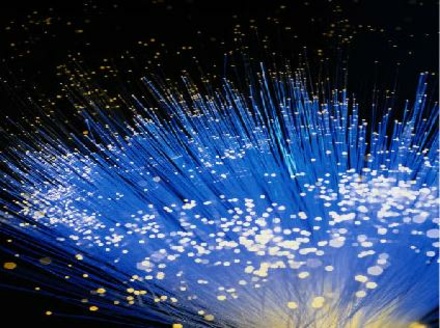


Researchers are reporting the construction of what they term "artificial molecules" and say they can use the technology to engineer a new generation of nanomaterials that control and direct the energy absorbed from light.
Including an antenna that can build itself.
Traditional antennas increase the amount of an electromagnetic wave – such as a radio frequency – that is absorbed, and then funnel that energy to a circuit. These nanoantennas instead increased the amount of light that is absorbed and funneled it to a single site within their molecule-like complexes. This concept is already used in nature in light harvesting antennas, constituents of leaves that make photosynthesis efficient.
The Many Worlds Wiener Sausage is the first step in understanding the Einstein-Podolsky-Rosen (EPR) paradox. However, there are still three steps missing until we can resolve the EPR paradox correctly. One important step: Although it is a many-worlds model, with parallel universes and all that, and although it can reproduce certain quantum factors, it is not yet a quantum world!
While other sources (voluntarily not linked here, to avoid pissing off my collaborators) choose to be "on the news" these days, with a brand new exclusion plot of the Higgs boson obtained using almost one full inverse femtobarn of collisions which is not yet public but was made accessible by mistake on a Fermilab site, I will meekly point you out today to another result, which is by all means public and freely reproducible here (no reproach to Phil intended here -he acted in good faith and the fault is not his).
Sex is costly. Yet it is widespread throughout the animal kingdom, so there must be some advantages to it. And still, it seems easier to list disadvantages. Sexual reproduction is complicated, requires more time and uses more energy than its asexual counterpart. Partners have to find each other and coordinate their activities to produce the next generation. Another problem is the so-called ‘cost of meiosis’, meaning that, in sexual reproduction, only half of the genome is passed on. Compared to an asexually producing individual which passes on its entire genome, this is a high cost indeed. Another cost is the production of males that will not all succeed in reproducing, and thus waste resources.
This short story is about a surprising effect: you put something on the web without much advertising for it - and it might find perhaps more users than if you publish it in a traditional Journal. Here I talk about scientific or educational text. I often find similar cases the other way - things I am looking for might be at private pages and not in Journals. Often because some pieces of information which really are useful do not fit policies of any Journal, or the "referees" throw such trivial information away. This might be a long discussion, so let us rather go to my own little story.
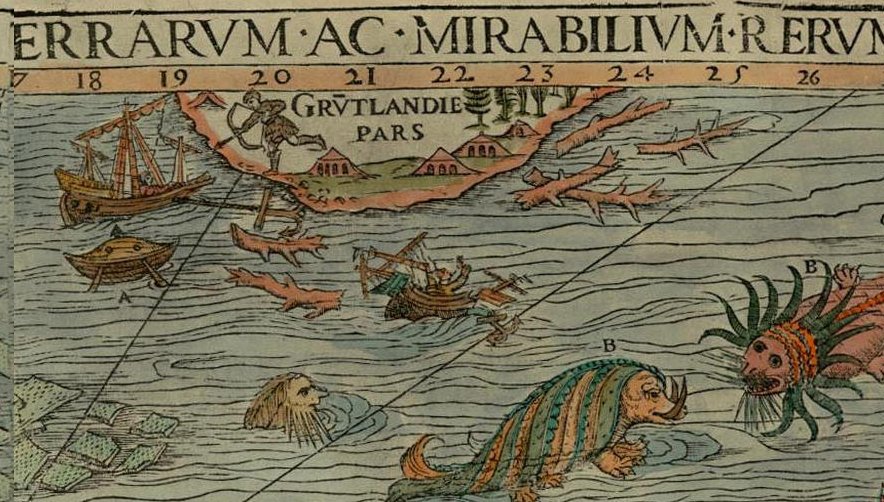
According to Peter Freuchen, writing of his travels in Siberia, circa 1936, the tundra coast near Tiksi in the Lena Delta was fringed with logs and the sea bottom contained "hundreds of thousands of years of sawdust". To the best of my knowledge, this remarkable phenomenon - a Siberian 'sawdust coast' - has never been studied scientifically.
Peter Freuchen
Peter Freuchen was a scientist. However, for much of his life he was known to various people according to the various talents which make him seem like a character from a work of fiction.
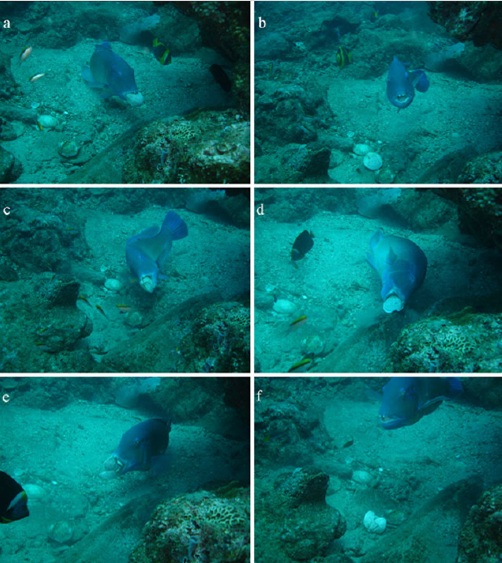
Once upon a time, tool use was considered to be a uniquely human feature, setting us apart from the rest of the animal kingdom. But, when Jane Goodall observed chimpanzees using sticks to ‘fish’ for termites (see video 1) in the 1960’s, this idea received a serious blow. Since then, tool use has been observed in a variety of animals, ranging from the usual primate suspects, to less expected critters, such as crows, dolphins, elephants, otters and even octopuses (see video 2).
Video 1: Chimpanzees using tools to 'fish' for termites.
Life is hard when you're cutting edge. Coming up with a good topic and title for a Science 2.0 article is not easy. Today I tried to conceive of a unique and insightful piece about a little-talked about topic. Specifically, the topic of the last space shuttle flight, which just occurred today.
But what title could really capture this epic yet unreported event? 'The Day America Cried'? Or maybe 'The Day America Shrugged', or perhaps 'The Day America Clicked on FB for, like, the 50th Time Today' might work better. But perhaps that issue itself is too niche. In the end, I abandonded that topic in favor of a new article. But what to write about?
Just as struggling calculus students wonder if they will ever actually use their new proof-finding skills in real life, developing athletes may be curious if their endless practice drills will ever serve them off the field or court? Well, researchers at the University of Illinois have found at least one real life task that will benefit from an athlete’s unique cognitive abilities; crossing the street.

