

Some stereotypes are self-reinforcing.   If someone tells you over and over that you are oppressed, if you hit an obstacle and fail, like all of us do at some point in our lives, a convenient excuse is that you are discriminated against.(1)

There is zero data showing women are discriminated against in science, math or engineering - none.   But because there used to be far more men and those men were not lined up against the wall and shot to make room for women in faculty, the claim is that science academia is still prejudiced against women.
With an oil issue that is pinching us on two fronts, cost and pollution, alternative energy research is going fuel speed ahead, including on solutions that have tried and failed in the past, like ethanol.

But ethanol was not flawed as a concept, it was just pushed by activists who ignored the science and wanted it rushed to market - using food as inefficient fuel was not a great idea but bio-ethanol made from biomass, like left over cornstalks or weeds instead of fuel, might work to improve pollution issues.

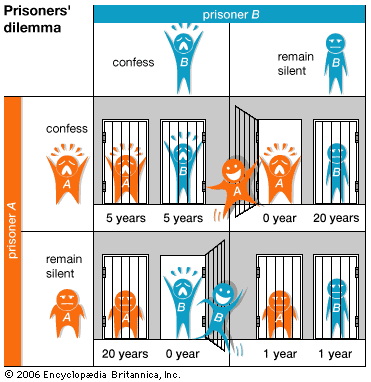
In both biology and economy, game-theory models are used to understand human behavior, mainly concerning cooperation. These models usually incorporate gains, benefits, and reciprocity. And this reciprocity seems to be very important. Basically, if you do something for me, I’ll return the favor (in such a way that the benefits for me outweigh the costs). But human beings also show generosity towards complete strangers in one-shot encounters. How, then, can this be explained?

As with everything, my insatiable curiosity leads me to adventures.  This past week I went on a hike to one of the remote areas of Trinity River Audubon Center to view a pond that I hadn't seen before (because you have to hack your way through a lot of brush to get there, and I'd never gotten around to it.)  It's been hot here in Texas (you may have noticed) but the sight of the pond itself was eerie.  The shores had receded nearly 40 feet in some areas and there were dead carp (skeletons) strewn on the shoreline and at least 40 large dead mussels.  Wading birds were wading in the water, but it wasn't very deep water.
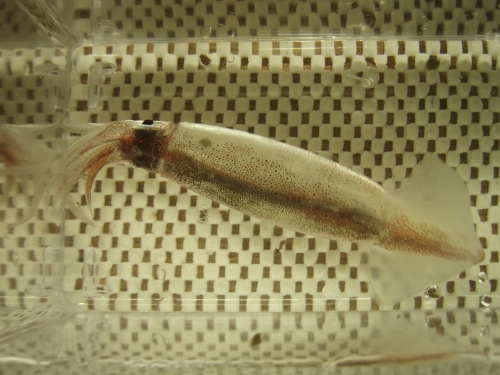
I thought I'd write a compelling story about Humboldt squid and one of their favorite prey items, the lightfish Vinciguerria. These two creatures are quite the dynamic duo: one flashing like a red-and-white strobe, the other studded with glowing photophores. They clearly belong at some kind of deep-sea rave.

But I'm riding a train, and I keep getting distracted by the scenery. I can't help it; I love the California hills!

By the fifth false start, I realized that if I wanted to post anything today, it would have to be light and fluffy. So here is a picture I took of a juvenile Humboldt squid in an aquarium:


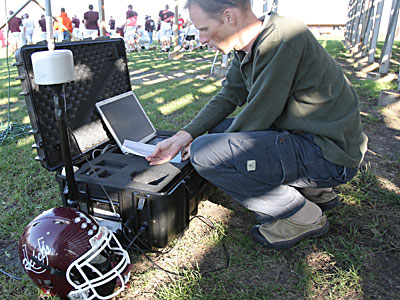
For the crowd watching an Illinois high school football game last fall, it was a sickening feeling watching one of their Unity High School cornerbacks collapse to the ground after delivering a heads-down tackle on an opposing running back (see video here.) 

For Steven Broglio, an assistant professor of kinesiology at the University of Michigan, it was a mixed feeling of concern and curiosity as to the extent of the injury.  Since 2007, Broglio has been collecting data on the violent collisions that occur in high school football and their contribution to concussions and other head injuries.
The Posthumous Memoir of Ignaz Venetz


This memoir was published by the Swiss Natural Sciences Society, shortly after the death of Ignaz Venetz, to honor his great contribution to science.

For background information, please see part 1 of this article -
The Posthumous Memoir Of Ignaz Venetz
 and 
Ignaz Venetz - Climate Change Pioneer.

As with the 1821 paper, my plain ASCII transcription retains the original pagination, using rows of dots as page breaks.

The transcription of the memoir begins below this page break >>
The Posthumous Memoir of Ignaz Venetz

My  three part article on Venetz's prize-winning 1821 paper began with some facts tending to prove that he was the first person to discuss climate change scientifically.  Since beginning my researches concerning Venetz, I have discovered many more facts.


The discovery of climate change.
Science 2.0 favorite Lawrence Krauss of ASU tackled the James Webb Space Telescope issue on the Richard Dawkins website and a commenter there linked to my rationalization that canceling it might be okay, with the hasty disclaimer that he does not agree with what I write - the Dawkins site moderators, and perhaps Dawkins himself, have made their distaste for anyone outside the echo chamber well known so perhaps his rapid disavowal was necessary, though it seems odd Krauss would have the same conce

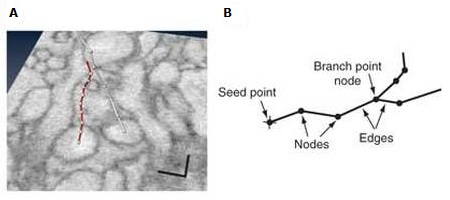
The brain is quite complex (talking about an understatement), with its billions of neurons with many connections between them. These neurons and their connections form an intricate three-dimensional structure which forms the seat for cognition, awareness and much more. Its intricacy, however, also makes mapping it a daunting challenge. Nevertheless, there are some research groups that have put themselves to the task (for example, the Human Brain Project).


