








Old age is the biggest risk factor for most diseases, but if you have solid nutrition your health is likely to be better throughout all periods of life. Including during the COVID-19 pandemic. Yet the USDA dietary guidelines produced every five years won't tell you how to optimize nutrition for where you are at in life. They are one size fits all for broad swaths of age and gender, and that needs to change

The dietary guidelines were created to make sure consumers are kept in touch with the latest science and that taxpayer-funded programs like school lunches are properly feeding developing brains.

Advocates for proposed crab gear legislation in California, AB 534, often cite misleading information in support of policies that would destroy California’s iconic and sustainable trap fisheries, while doing noth

Animals can cause diseases in humans. That won't surprise you. What may surprise you is to read that these diseases can be prevented by eating less meat. 
In the early days of agriculture, everyone was somewhat equal. While one farmer could work harder or longer than another, it wasn't by an order of magnitude. Oxen and other beasts of burden changed that. A farmer with an ox was doing the work of 7 humans, and that meant a huge advantage over someone who didn't agree with progress - that the old ways were the only way to have "real" food. Thus began economic disparity, as did modern civilization. When not everyone had to hunt and grow their own food, they didn't. They could become craftsmen and priests and mathematicians. Culture was born.
The Tibetan plateau covers nearly 1,600,000 square miles. With an average altitude of nearly 14,000 feet, Tibet is called the Roof of the World for good reason. It contains the world's two highest peaks, Mount Everest and K2, and the vast Himalayan mountain range towers higher than anywhere else on Earth.

Some researchers contend it has been that height for most of its existence while others argue the roof of the world has gotten higher.

Experts got it catastrophically wrong, according to Dominic Cummings, UK prime minister Boris Johnson’s former chief adviser. Cummings has argued that the UK government’s official scientific advice in March 2020 hugely misunderstood how the pandemic would play out, leading to a delay in locking down that cost thousands of lives.

According to Cummings, it was certain specialists with less knowledge of pandemics or medicine – such as data scientist Ben Warner, artificial intelligence researcher Demis Hassabis of DeepMind, and mathematician Tim Gowers – who gave more accurate forecasts at this point.

The CMS Collaboration submitted for publication last week a nice new result, where proton-proton collisions data collected by the experiment during the past run of the Large Hadron Collider were scanned in search of very peculiar events featuring a weak boson (W or Z) along with two energetic photons. The rate of these rare processes was measured and found in good agreement with predictions of the Standard Model of particle physics.

The Swedish government might ban the sale of new combustion cars in 2030 - and a new paper wants to get even more Draconian. Their computer estimate suggests that banning all combustion cars, even older ones already in use, might be the only way they will meet their climate targets. The replacement: electric vehicles.

It could work.
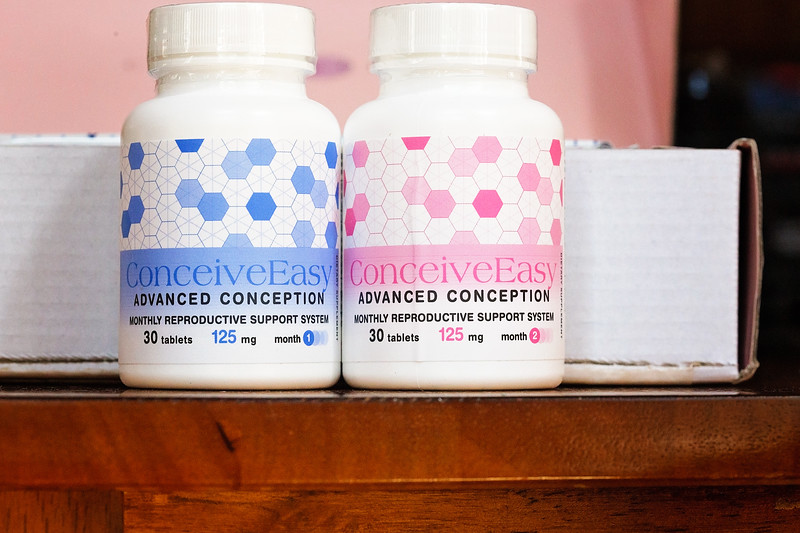
LeRoche Benicoeur/ConceiveEasy; EU Natural Inc.; Fertility Nutraceuticals LLC; SAL NATURE LLC/FertilHerb; and NS Products, Inc. have received warning letters from the US FDA due to their selling fraudulent treatments that claim to help with infertility.

Though dietary supplements are mostly exempt from FDA scrutiny due to the Clinton administration giving them a free pass if they put a small disclaimer on the packaging, companies still can't do things like claim to treat cancer, or anything that legitimate medicine does. They can only use marketing to suggest they might make you feel better and other claims that allow naturopaths and homeopaths to make money.

In a recent study, scholars did a prospective review of charts of nearly 300 adult patients hospitalized for COVID-19 at Michigan Medicine during the pandemic's first wave between March and April 2020. They analyzed discharge locations, therapy needs at the time of release and if they needed durable medical equipment or other services..

The investigators found that 45 percent of patients hospitalized for COVID-19 experienced significant functional decline after being discharged.

