At the turn of the 20th century Carrie Nation smashed up a saloon in Kansas, gold was discovered in Alaska, and New York City's boundaries became set with the inclusion of Queens and Staten Island.
America had five new states and they had a big problem.(1)
Water.
Homesteaders wanted to move out west, and government wanted to help, but there was a water issue. When rain was happening things were fine but nature is fickle. Weather was less predictable then and even if you lived near a river, there was no guarantee you'd have water.
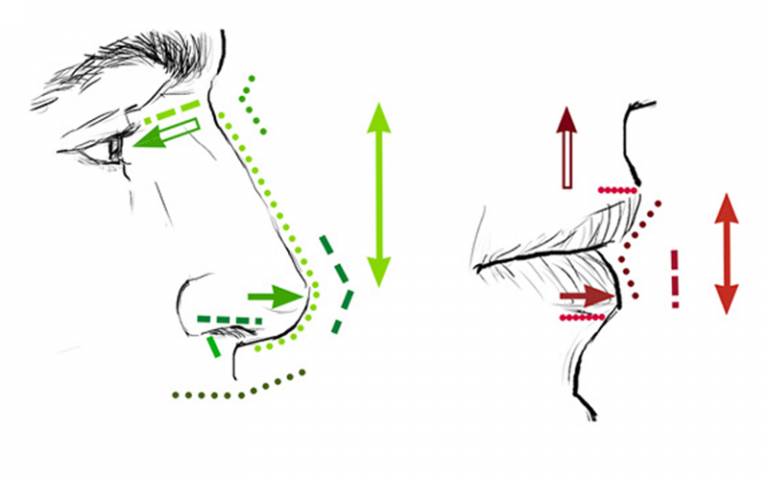
A new study has identified nine new regions that influence facial features such as nose, lip, jaw, and brow shape
The analysis of genetic data from more than 6,000 volunteers across Latin America was designed to find genes that determine the shape of a person's facial profile but also learned that one of the genes appears to have been inherited from the Denisovans, an extinct group of ancient humans who lived tens of thousands of years ago.
The Global Trends in Renewable Energy Investment 2019 report stated that in the previous 10 years the world had spent $2.6 trillion on solar and wind power subsidies - which they framed as a good thing. Since we need to get billions off wood and dung, the largest sources of pollution, that so much money only led to 1,650 gigawatts(GW) of energy should have environmentalists concerned.
Instead of focusing on how we can get energy, and therefore water and sanitation. to the poorest, activists continue to create propaganda about natural gas and nuclear while claiming solar and wind are ready.
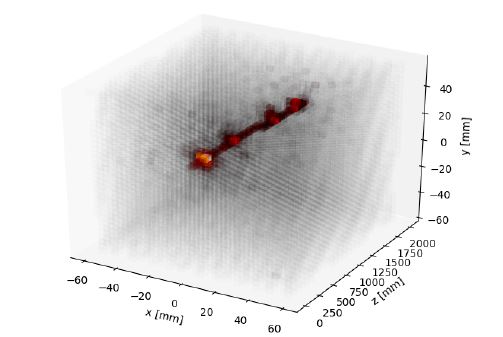
Today I wish to offer you, dear reader, the chance to contribute to scientific research in particle physics. And I claim you can do that by only leveraging basic high-school knowledge in mathematics and geometry. Let me explain what the problem is, first of all, and then I'll put you in the conditions of contributing!
Muons are subnuclear particles of high interest in collider physics. I could write about muons for ages, but it would not be of relevance for our problem of today, so let's just say they interact feebly with matter, so they traverse thick layers only depositing in them small amounts of energy (mainly in the form of electromagnetic radiation).
The Doomsday Clock, a marketing gimmick of the anti-nuclear group Bulletin of the Atomic Scientists, gets an unreal amount of attention from political allies in journalism in a way that scientists can't understand any more than how Environmental Working Group's so-called "Dirty Dozen" list of foods (that strangely exempts organic food pesticides their corporate donors sell) gets so much corporate media coverage.
The mosquitoes that carry zika, like Aedes aegypti, are considered by all but the most activist ecologists to be useless disease vectors. There is nothing they do in nature that isn't easily done by other mosquitoes and they can safely join the 99.999999999% of species that have gone extinct without causing a cascade of doom.
Seriously, Send me your hate mail, @ me on Twitter, try to cancel me, I don't care, that is absolutely correct. They are ecologically useless and have survived despite that, because evolution is not always fair.
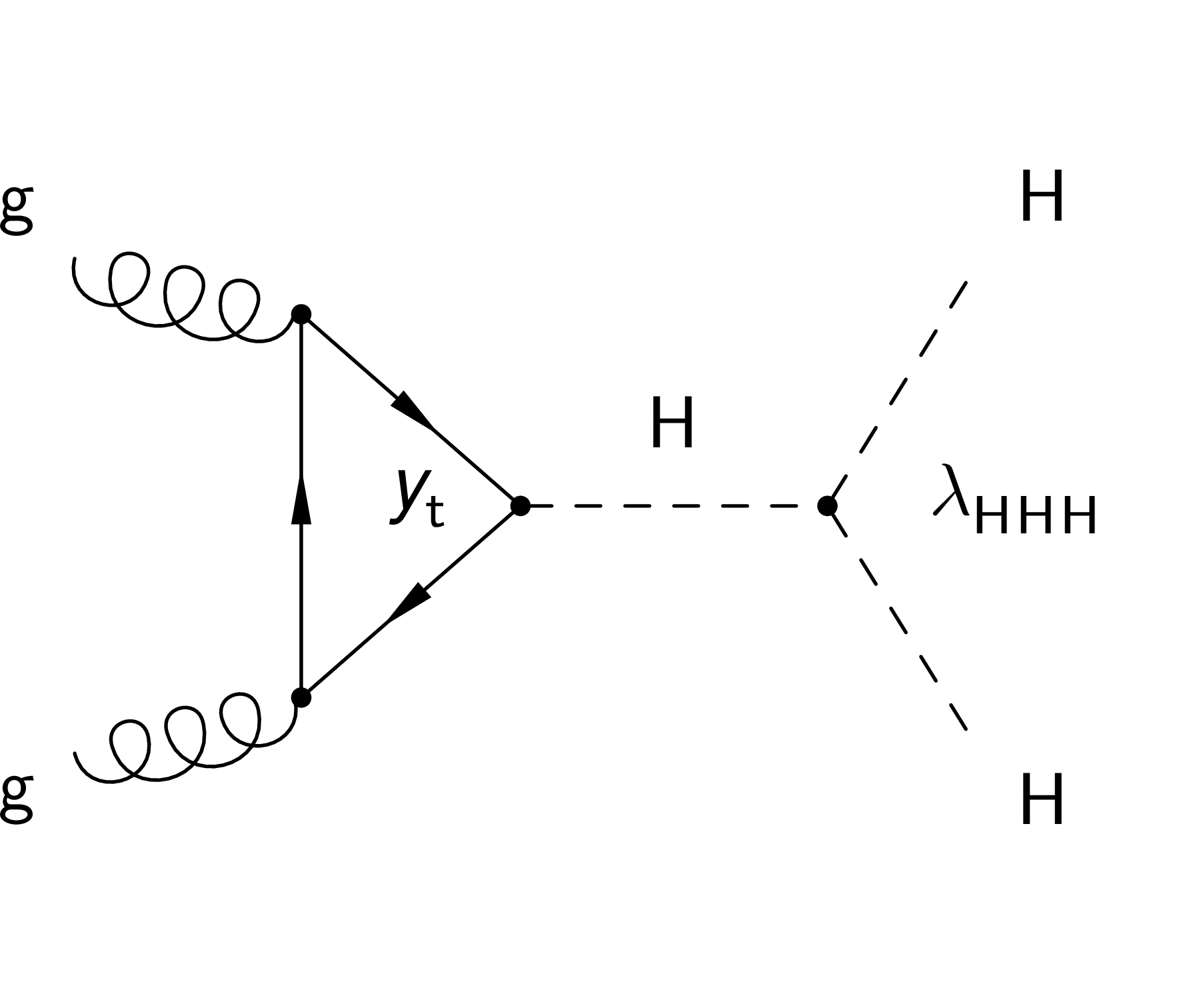
Eight years ago the CMS and ATLAS experiments, giant electronic eyes watching proton-proton collisions delivered in their interior by the CERN Large Hadron Collider (LHC), discovered the Higgs boson. That particle was the last piece of the subnuclear puzzle of elementary particles predicted by the so-called "Standard Model", a revered theory devised by Glashow, Salam and Weinberg in 1967 to describe electromagnetic, weak, and then strong interactions between matter bodies. The Higgs boson itself is even older, having been hypothesized by a few theorists as far back as 1964 to explain an apparent paradox with massive vector bosons, particles that had to be massless in order to not violate a symmetry principle that could in no way be waived.
If you are thinking you might buy a Creality 3-D printer to save money making stuff at home, a new MLS listing may make you change your mind. It is the first 3D-printed home to get a government permit in the United States and is on sale for a whopping $299,999.
The house is $213 per square foot, and you are so far from Manhattan you might as well live in Scranton, but whether it sells right away or not is less important than the proof-of-concept. The hook is that it was printed on site using SQ4D's Autonomous Robotic Construction System (ARCS) and they want to get a patent to have robots print houses.
Most dog owners will say that dogs understand tone, and interpret that rather than words, and that most dogs do not learn words (i.e. names of objects), unless extensively trained, but a new analysis shows that is not always the case.
Some dogs have some exceptional abilities and can learn new words after hearing them only four times. A new study by the Family Dog Project is just what it sounds like; investigating dogs who seem to learn words in the absence of any formal training by simply being exposed to playing with their owners in the typical way owners do, in a human family.