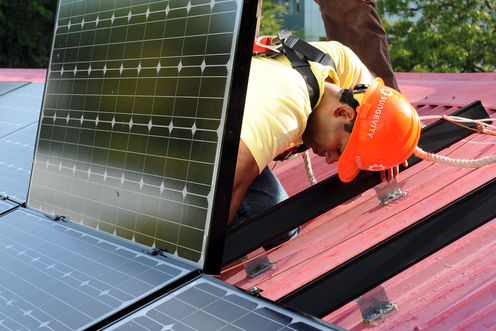





Roof-top solar panels are just one part of the micropower revolution. Presidency Maldives, CC BY-NC

By Morgan Saletta, University of Melbourne

There is no shortage of shouting and dire warnings about the state of the climate and our need to phase out fossil fuels. But there is a more silent revolution happening too — in micropower.

In metals like copper and aluminium, conduction electrons move around freely, in the same way as particles in a gas or a liquid.

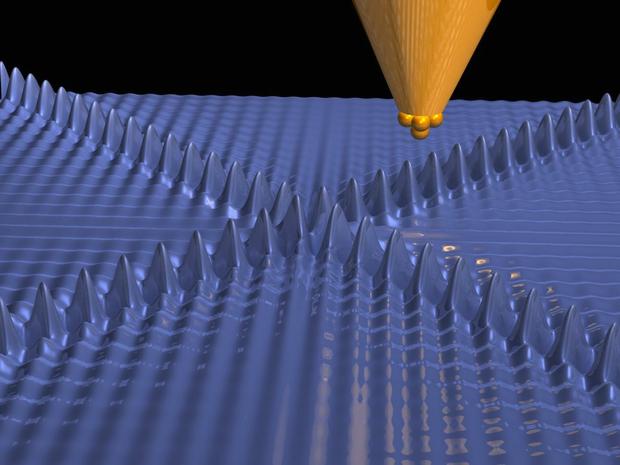
But when impurities are introduced into the metal's crystal lattice, electrons cluster together in a uniform pattern around the point of interference, resembling the ripples that occur when a stone is thrown into a pool of water. Scientists have now discovered how to strengthen these Friedel oscillations and focus them, almost like using a lens, in different directions.

They've discovered (Nature Communications, DOI: 10.1038/ncomms6558) that at a range of 50 nanometers, these "giant anisotropic charge density oscillations" are many times greater than normal.

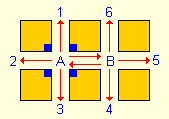
In a famous mathematical thought experiment, the goal is to make randomness deterministic by closed-form equation, so mathematicians tried to determine the path of a 'drunken sailor' staggering around a town. 

If there are street lamps, he will run into them, change his direction and keep moving until he gets out of the city. Logically, the time he spends in the area depends on the number of street lamps but the surprising answer is that the number of streetlamps are not the big factor.

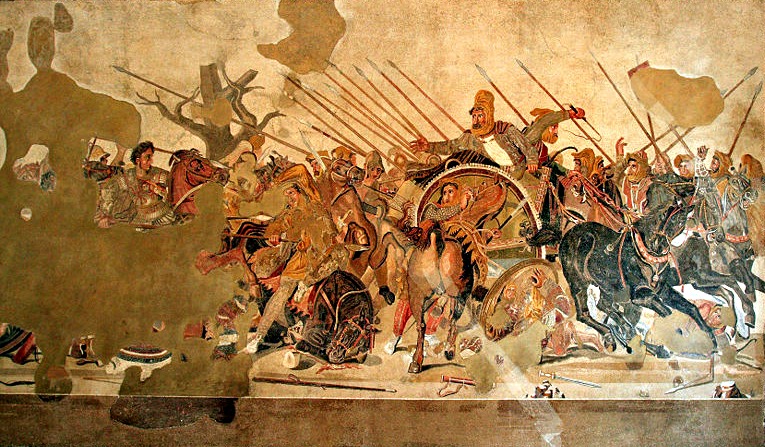
Necessity may be the mother of invention, at least if war is a necessity. And perhaps it is.

In the early days of humanity, survival was a combination of hardiness, keen engineering and intelligence - and nothing spurred on technological progress and vast social changes like the need to work together to kill other people, according to a new paper in Journal of the Royal Society Interface.


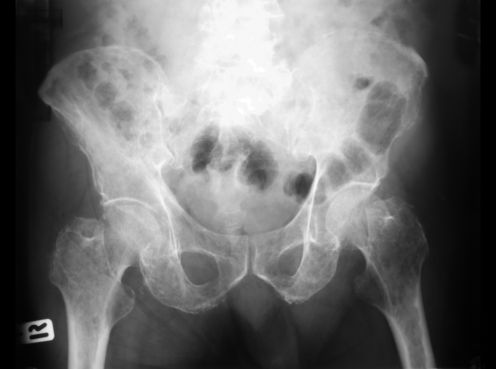
It's not in the bones, but it might not be in the brain either. X-ray image by Shutterstock

By Andreas Goebel, University of Liverpool

For a short window, it appeared that bees were dying off. Environmentalist were quick to blame a new kind of pesticide, Neonicotinoids, known in short form as neonics, but then it turned out that the die-offs were in just one geographical area, which would not be the case if it were due to a pesticide.

Instead, it was likely a combination of environmental changes and perhaps a different sort of pest may try to kill them in the future; the exotic parasite Nosema ceranae and its original native relative Nosema apis. The exotic honey bee parasite may become more common not only due to its superior competitive ability, but also because of climate, according to a new study in Proceedings of the Royal Society B.


If you don't put a piece of tape over your webcam, get used to being watched. adafruit, CC BY-NC-SA

By Gordon Fletcher, University of Salford

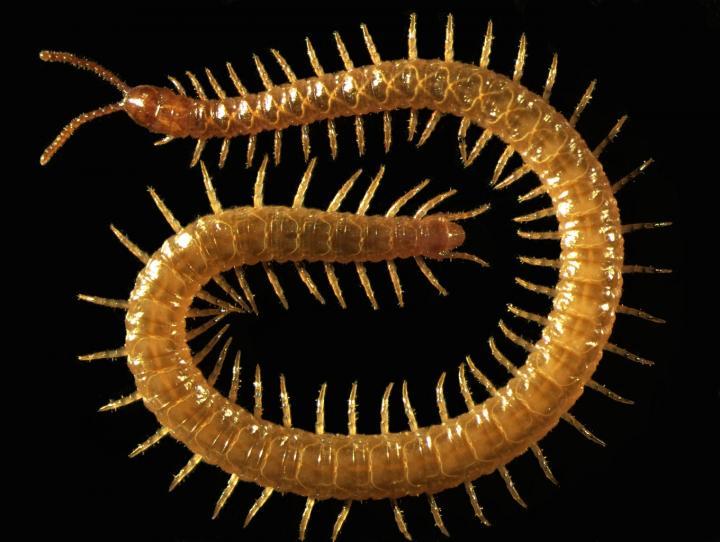
Usually blind sages revealing the secrets of the universe are Asian. Scotland doesn't get enough respect that way but a centipede is defying the stereotype.

Arthropods are one of Earth's real success stories, with more species than any other animal phylum. Genome sequencing has been skewed towards the more popular insects, and even an arachnid and a crustacean, and now finally the myriapods (centipedes and millipedes) are emerging from the dark.

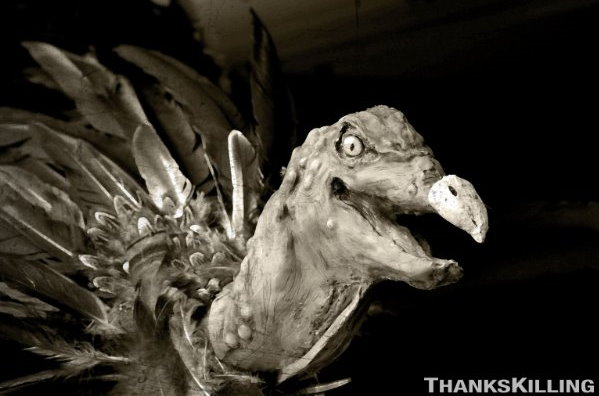
While an alarming number of wealthy people think organic food contains no chemicals, the opposite is true. Not only is everything chemical, the most organic of organic Thanksgiving meals is stuffed full of mutagens and carcinogens, at least in environmental toxicology studies on rats.

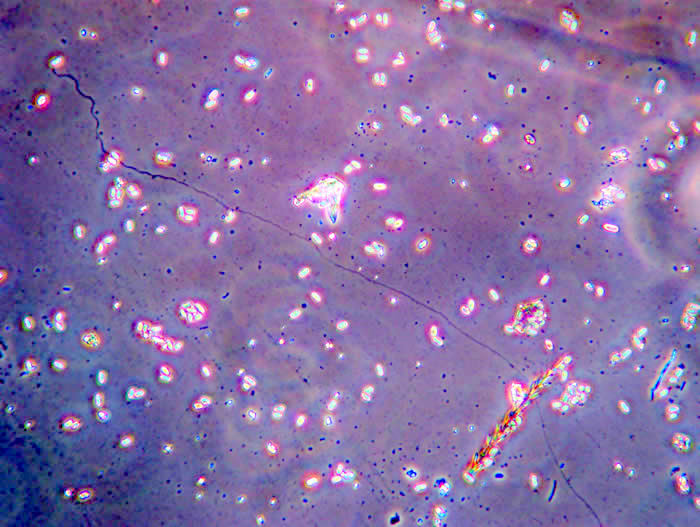
But in the real world, outside environmental fundraising, Thanksgiving dinner is not only harmless, it might even be beneficial. The turkey Americans eat on Thursday contains Strain 115, which produces the MP1 antibiotic that targets staph infections, strep throat, severe gastrointestinal diseases and roughly half of all infectious bacteria.


People know that antibiotics won't help viruses. So why ask doctors for antibiotics? Subbotina Anna/Shuttstock

By David Broniatowski, George Washington University; Eili Klein, Johns Hopkins University, and Valerie Reyna, Cornell University

