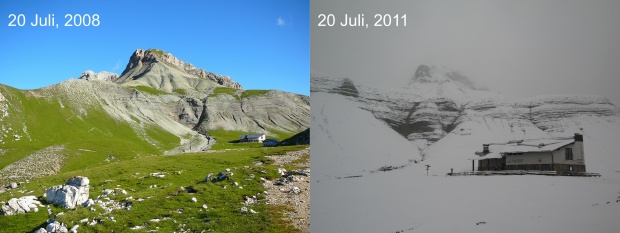



Mountains sure aren´t what they used to be. Take  the Dolomites in the Veneto Region of Italy and Austria; 140 to 90 million years ago, they were part of the sea floor rather than mountains. 

Over millions of years, deposits were then formed from calcareous shells of marine life from the Mesozoic era. Tectonic forces later caused these sediments to rise upward to the mountaintops of today´s well-known and popular Southern Alps. The mountain range contains one of the most complete and most accessible geological records - also being one of the richest in fossils - from the Cretaceous period in Europe. This record was scientifically analyzed in-depth for the first time within the framework of a project supported by the Austrian Science Fund FWF.
In Physics Today's 'We love you, you're perfect, now edit', three editors give advice to potential science writers.  Their advice includes the 3 holy rules:

  1) know who you are writing for
  2) meet your deadlines
  3) be polite


... and expands on it a bit.  Am I to steal another's writing instead?  No, so go read the piece.  That's what links are for.

Bias in science academia is a big topic, but it's selective.  If there are fewer women, it is regarded as a hostile environment but if there are no Republicans that is their choice.  

Penn State researchers have added something new into the mix - hormones.  If you are a woman who wanted to be a physicist, you may have been fighting your own sex hormones to do it, they say.  They did it by looking at people's interest in occupations that exhibit sex differences in the general population and are relevant to science, technology, engineering and mathematics (STEM) careers.

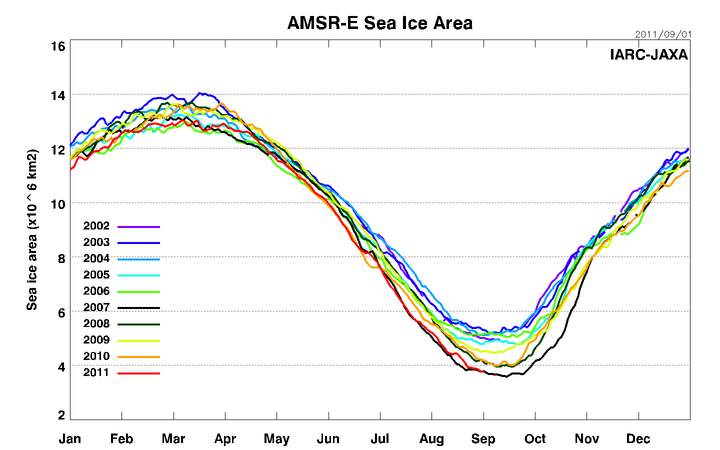
Arctic Ice September 2011

My March 2011 forecasts were quite wide of the mark.  For the first part of the Arctic summer much of the western Arctic saw lower than expected temperatures.  Despite the low temperature start-off, the Arctic is about to see either the lowest ever end of season extent, or the 2nd lowest since 2007.

In June, I wrote:
Much depends on the Arctic weather, but it looks likely that the September ice minimum will be amongst the three lowest.  If the melt in July and August proceeds as it has done on average over the last decade, then the 2007 record minimum may well be beaten.
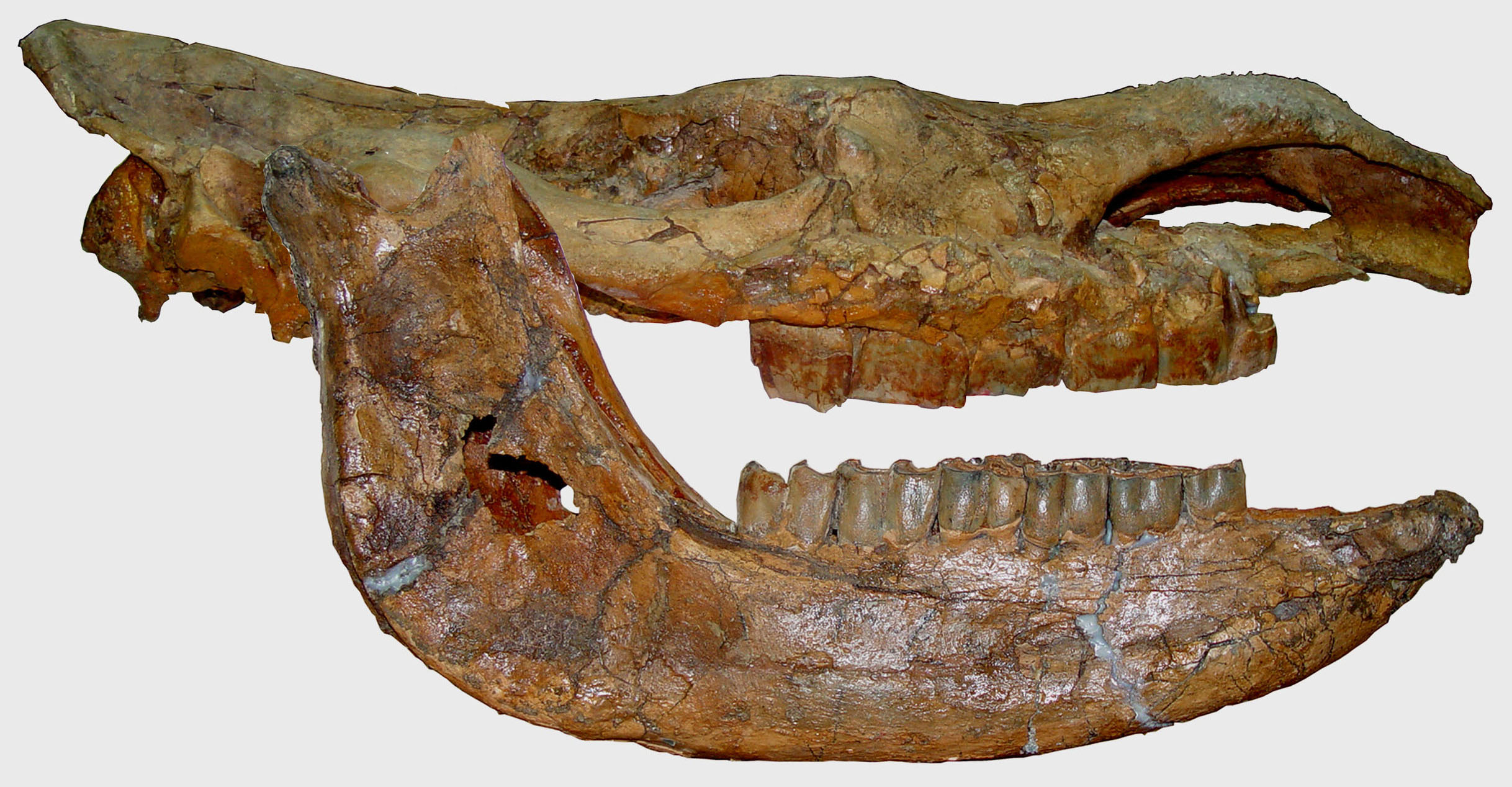
A new oldest woolly rhino fossil in Tibet suggests some giant mammals evolved there before the beginning of the Ice Age, but it leaves a lot of questions about where these giants came from and how they acquired their adaptations for life in a cold environment.

A team of geologists and paleontologists led by Xiaoming Wang from the Natural History Museum of Los Angeles County (NHM) and Qiang Li of Institute of Vertebrate Paleontology and Paleoanthropology, Chinese Academy of Sciences, uncovered a complete skull and lower jaw of a new species of woolly rhino (Coelodonta thibetana) in the foothills of the Himalayas at the southwestern Tibetan Plateau.
Have a telescope?   Heck, do you have a pair of binoculars?

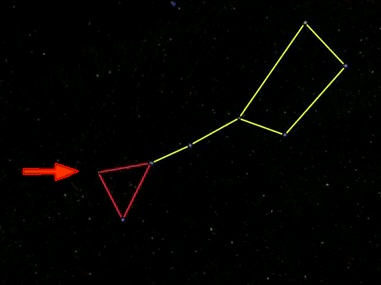
If so, head outside the city and take a look at a Type 1A supernova.  It's 21 million light-years away, which sounds like a lot, but to astronomers and modern optics that's actually pretty close.  So close that over the next few weeks you can even spy it with a pair of good binoculars (25x100), a short while after sunset.

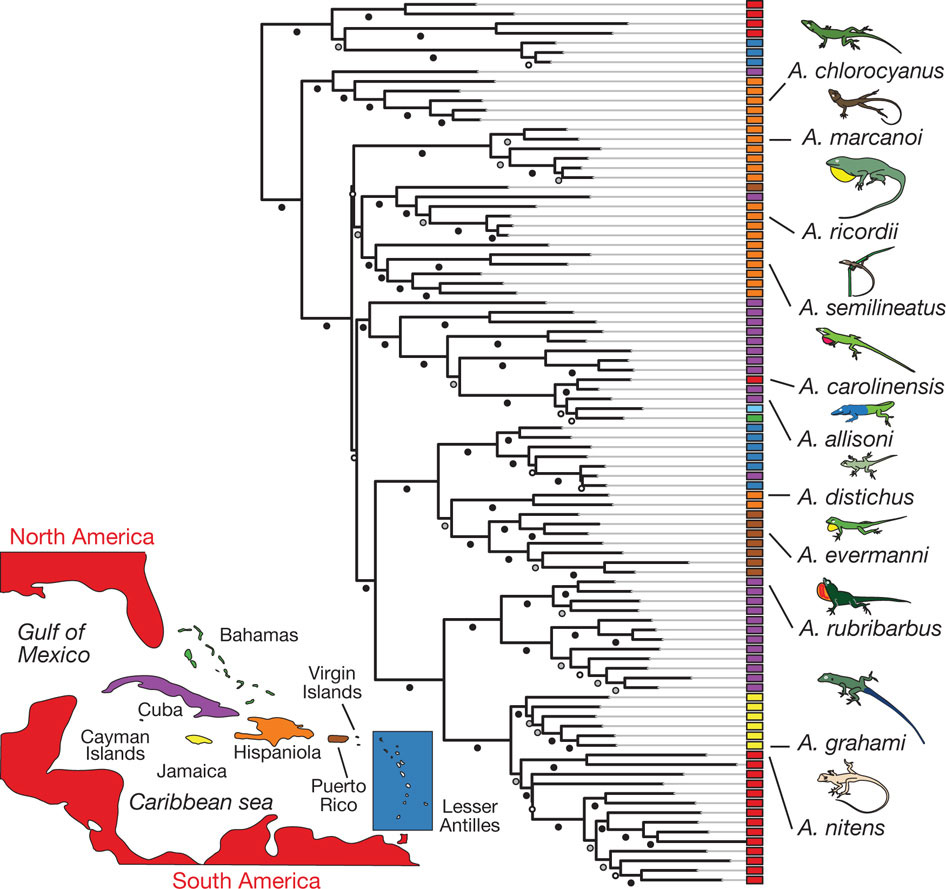
As the genome sequencing technologies progress, and the costs per genome sequenced go down, the number of genomes sequenced increases. So far, several hundreds of genomes have been sequenced, with many more on their way. Now, the first lizard genome has been sequenced. The genome of the green anole (Anolis carolinensis) is the first non-bird reptile genome sequenced, and, as such, an important ‘gap’ in the vertebrate genome record is beginning to be filled.

Already, some interesting observations have been made.

Note: I have discussed today's topic in one of my best articles here some time ago, and I also gave even more technical insight in another piece. I decided to revisit the topic once more under the stimulus of a online HEP magazine, which is going to feature a text of mine soon. They do not care if I use the same text here too, so you get to read it here first.
A non-invasive disease detection facility has been unveiled  for use in Leicester Royal Infirmary's A&E department.  It will detect the "sight, smell and feel" of disease without the use of invasive probes, blood tests, or other time-consuming and uncomfortable procedures.

If you're thinking that sounds like Dr. McCoy's tricorder on the "Star Trek" television series, you are right.  But right now it's more like his sick bay than a portable device.

The University of Leicester have three different types of cutting-edge technology in combination under a range of situations. All the methods are non-invasive and could speed up diagnosis.

