





Science 2.0 is all about making a difference in a positive way, bringing lots of people in the world together to talk with each other about science.    We're the only open science site of decent size, meaning you don't have to be famous or bring a large audience to get invited, you just sign up and write science, so participation and communication are key to the Science 2.0 concept.
The Posthumous Memoir of Ignaz Venetz #3

... the voice of a faithful disciple of science is entitled to be heard.
My continuing researches on the discovery of climate change show that prior to Ignaz Venetz's 1821 prize-winning paper, the most commonly held views on the earth's climate were either that it had changed once, briefly, as a result of the noachain flood, or that the earth has been continually cooling since it was formed.  It was also held by most geologists that all rocks which were not obviously of volcanic origin were formed in or by water.
    Modern life is full of hassles, deadlines, frustrations, and demands. For many people, stress is so commonplace that it has become a way of life. Stress isn’t always bad. In small doses, it can help you perform under pressure and motivate you to do your best. But, when you’re constantly running in emergency mode, your mind and body pay the price. Alpha waves are the brain waves you feel when you're alert yet relaxed. Decreased alpha wave activity is shown in a variety of psychological disorders and even during stress or anxiety. The brain produces five main types of brain waves as shown below:

1. Delta Waves: 0 - 4 Hz Delta waves are the slowest range of brain waves. They are seen in deep sleep typically during stage 3 and 4 sleep.

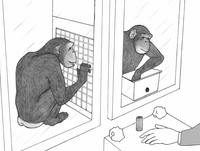
In general, human beings tend to be quite generous. As such, it is not a big step to question whether the same is true for our close evolutionary cousins, the chimpanzees (Pan troglodytes). A new study indicates that it might.

When it comes to chimp sharing behavior, there has long been a discrepancy between studies in the field, and those in laboratory settings. In the field, chimpanzees have been known to share food, console each other and lend support during a fight. In lab experiments, however, chimps don’t really share, and are viewed as ‘reluctant altruists’, sharing only when prompted by solicitation and other forms of pressure.


The strong equivalence principle is a stately beauty queen of an idea. In the simplest of dresses, she refuses to dance with any theory except general relativity. The mundane reason for mass is beyond her concern. My call own effort at unifying the symmetries found in the standard model with gravity "GEM" for Gravity and EM, not to be confused with gravitomagnetism which sometimes goes by the same acronym. A duality between metric and 4-potential theory extends a hand between a metric explanation of gravity and Newton's scalar theory moving up to a 4-mansion.

An obligatory cancellation in the GEM Lagrangian provides a field theory justification for the strong equivalence principle.
Rocks collected from the Franklin Mountains in West Texas and Coats Land in Antarctica have the exact same composition of lead isotopes, according to new research, the strongest evidence yet that parts of North America and Antarctica were connected 1.1 billion years ago, long before the supercontinent Pangaea formed.

Earlier analyses showed the rocks to be the exact same age and have the same chemical and geologic properties. The new work in Geology strengthens support for the so-called SWEAT hypothesis, which posits that ancestral North America and East Antarctica were joined in an earlier supercontinent called Rodinia.
Our more militant brethren in the science and science media community paint all religious people as intellectually immature but AAAS surveys show nearly 40 percent of AAAS members are religious and a new University of Nebraska-Lincoln study challenges the common belief that more intelligent people are less religious.

Instead, the article in Review of Religious Research contends, education has a positive effect on Americans' churchgoing habits and their emphasis on religion in daily life.
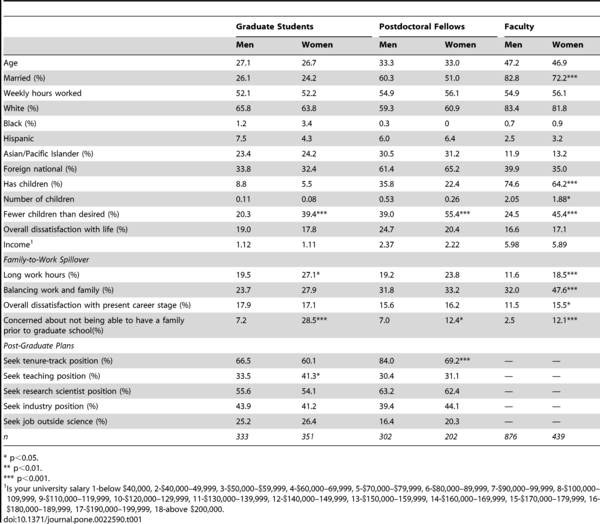
Almost 50% of female scientists and 25% of male scientists at the nation's top research universities say career kept them from having as many children as they wanted, something they might do over given the chance.

As the saying goes, no one on their death bed ever says they wish they had spent more time at the office.

Sociologists Elaine Howard Ecklund of Rice and Anne Lincoln of SMU  spent three years asking what junior and senior scientists in physics, astronomy and biology think about discrimination, family life and the state of their careers. They found that both men and women say having a science career means they will have fewer children than they wanted.

Anisogamy (see figure 1), or sexual reproduction in which two different gametes fuse to produce a new individual, leads to an inequality between female and male organisms. After all, females produce a limited supply of costly egg cells, while males produce a virtually endless supply of cheap sperm cells (this is the case in the vast majority of animals, and is known as oogamy (see figure 1), in which a large, non-motile egg cell is fertilized by a small, motile sperm cell (see figure 2)) . So, females best carefully choose the male they mate with, while males best copulate as much as possible, with as many females as possible. Females are choosy, males are promiscuous. Of course, there are exceptions, but still, this holds true in many cases.


René Descartes’s theory of mind-body dualism suggests the existence of a material body and an immaterial mind - parallel to one another, but capable of communication via a metaphysical LAN line. 

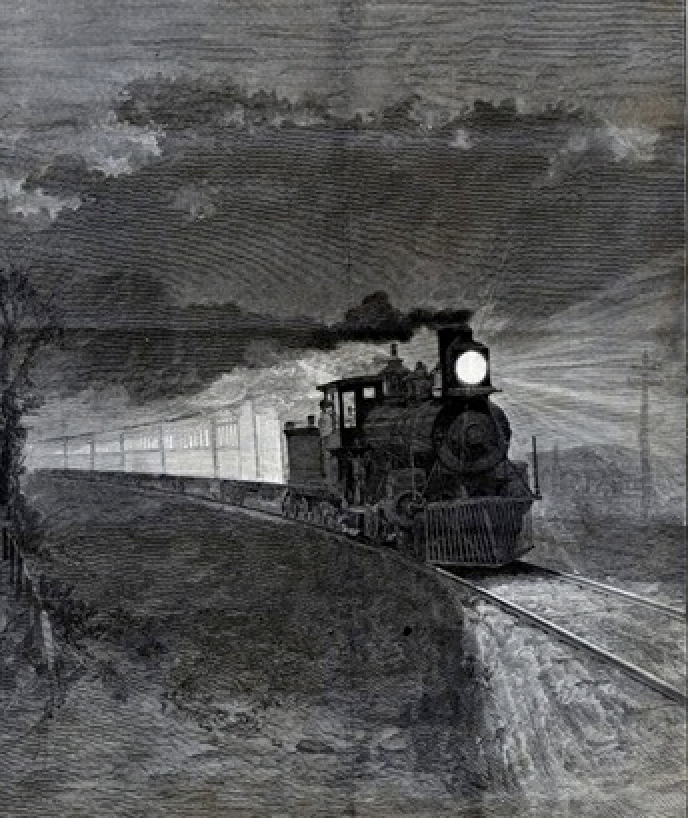
Descartes envisioned our bodies as biological locomotives, operated by otherworldly phantoms.  This concept of an immaterial realm, which somehow holds sway over the physical, is almost ubiquitous among cultures.

