






It used to be said that men predominantly liked salty snacks and women liked sweets. Food preference, in that sense, was related to chromosomes.

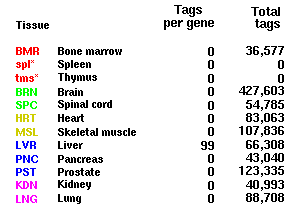
It may go deeper than that. Even your preference for fats, carbohydrates and proteins may be genetic. Researchers have found that the apolipoprotein A-II gene (APOA2) is associated with proportions of fat, carbohydrate, and protein in the diet, total calories and, therefore, with body-mass-index (BMI.


APOA2. Courtesy: genecards.org

It may not sound like a great thing for your backyard festivities but scientists have figured out how to make the fruit fly live longer. Luckily, humans will get something out of the deal -namely the discovery that a single protein can inhibit aging means we might live longer to be annoyed by insects.


Not this Superfly. A super fruit fly. © Warner Bros.

Though the dense humid forests of Central Africa have been regarded as among the most pristine on Earth, the expansion of industrial logging and the accompanying proliferation of road density are threatening the future of this important ecosystem.


Logging concessions and road distribution in Central Africa: Cameroon (1), Central African Republic (2), Equatorial Guinea (3), Gabon (4), Republic of Congo (5), Democratic Republic of Congo (6). Credit: Woods Hole Research Center (whrc.org)

Have you ever been trying to solve a Sudoku puzzle and been gripped by a sinking feeling that maybe you were stuck with a lemon? That maybe the puzzle you are struggling with actually has no solution at all and, if you do find a solution, how can you be sure it's the only one? What if half an hour ago you had written 5 instead of 3---would you then have gone down a path to a completely different solution?

The authors of a new study use tools from the branch of mathematics called graph theory to systematically analyze Sudoku puzzles.

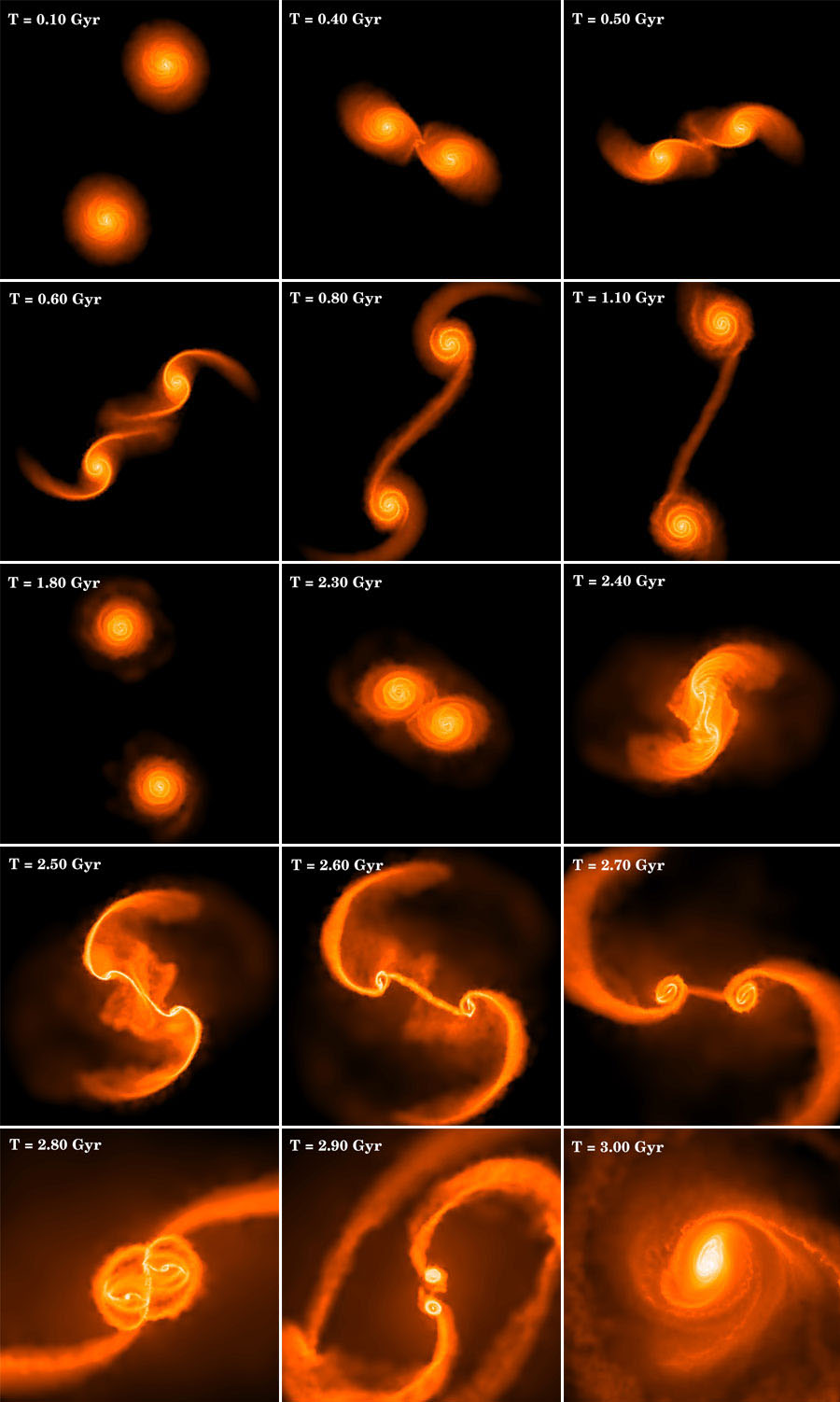
The Milky Way's total mass is about 100 billion solar masses - enormous to us but average among galaxies. It spirals around a black hole that is about three million solar masses, say cosmologists.

Imagine it meeting an identical twin. Were they to merge they would produce a galaxy that's even greater. Cosmologists think that's how galaxies grow; through a complex process of continuous mergers.


CLICK ABOVE FOR FULL SIZE. Composite black hole. Credit: Standford.

Egon has just posted about Nature Precedings, which looks like a no-brainer as an additional publication outlet for UsefulChem. I've requested an account and we'll see how it works. In my view, producing knowledge in a Science 2.0 world is about communicating through redundancy, making it easy to prove who-knew-what-when. That is difficult to do with the traditional scientific publication system of giving away copyright. (Not impossible, because concepts and results can be rewritten using different words, but still difficult). This should be interesting.

Much cooler than a flaming Optimus Prime, more practical than Big Guy and Rusty The Boy Robot - they're rescue robots, and they're here to help.

NIST engineers are organizing the fourth in a series of Response Robot Evaluation Exercises for urban search and rescue (US&R) responders to be held on June 18-22, 2007, at Texas A&M’s “Disaster City” training facility in College Station, Texas.


An urban search and rescue robot moves across a rubble pile in a recent NIST/DHS exercise. The next rescue robot exercise will be held on June 18-22, 2007, at Texas A&M's "Disaster City" training facility. Credit: NIST

This week's issue of Science has a book review (subscription required unfortunately) of Michael's Behe's latest effort to defend Intelligent Design Creationism. Michael Behe's latest book, The Edge of Evolution, contains Behe's latest incarnation of his idea of irreducible complexity. A few years ago he put forward this latest argument in a paper in Protein Science (a journal which one of my mentors dismissed, maybe a little unfairly, as a "junk journal"), and he elaborates on this argument more extensively in his new book.

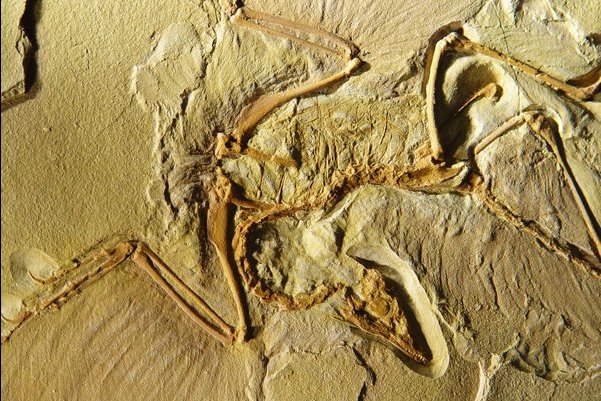
The peculiar pose of many fossilized dinosaurs, with wide-open mouth, head thrown back and recurved tail, likely results from the agonized death throes typical of brain damage and asphyxiation, according to two paleontologists.

A classic example of the posture, which has puzzled paleontologists for ages, is the 150 million-year-old Archaeopteryx, the first-known example of a feathered dinosaur and the proposed link between dinosaurs and present-day birds.

In the internet age, when 120,000,000 smart people on Digg can see an article about your technology, it takes some real courage to use the term "unbreakable", but the guys at NIST are doing just that.

They say they have built a prototype high-speed quantum key distribution (QKD) system that can perform a theoretically unbreakable “one-time pad” encryption, transmission and decryption of a video signal in real-time over a distance of at least 10 kilometers.


Detection stage of the NIST prototype quantum key distribution system: Photons are "up-converted" from 1310 to 710 nm by one of the two NIST-designed converters at right, then sent to one of two commercial silicon avalanche photo diode

