



What is it about keeping lab mice that continually seems to conjure images of World War II? Is it the obvious:that, in the case of lab mice, we are all Col. Klink, the hapless commandante of Stalag 17, doomed to dominance ohne respect? Or is it domething else in the increasingly murky relationship between the muridae and you and I?

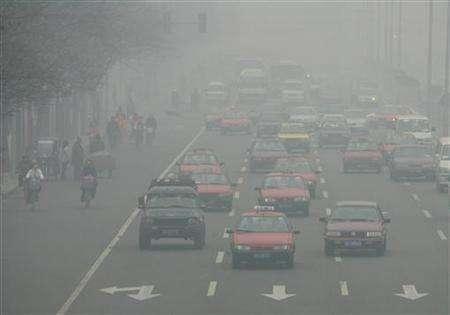
If you're a communist dictatorship, the solution for pollution is simple - you ban driving.

They did just that during the Summit of the Forum on China-Africa Cooperation from Nov. 4-6, 2006 and it might be an indicator for what they will do during the 2008 Summer Olympics.


Chinese commuters make their way in heavy smog in Beijing in this December 14, 2004 file photo. REUTERS/Reinhard Krause/Files

Harvard University researchers Michael B. McElroy, Yuxuan Wang, and K. Folkert Boersma used data from the Dutch-Finnish Ozone Monitoring Instrument (OMI) to assess the impact in more rapid fashion than is usually possible.

Dinosaur tracks, once neglected, are now considered a key source of scientific information on dinosaur behavior and ecology.

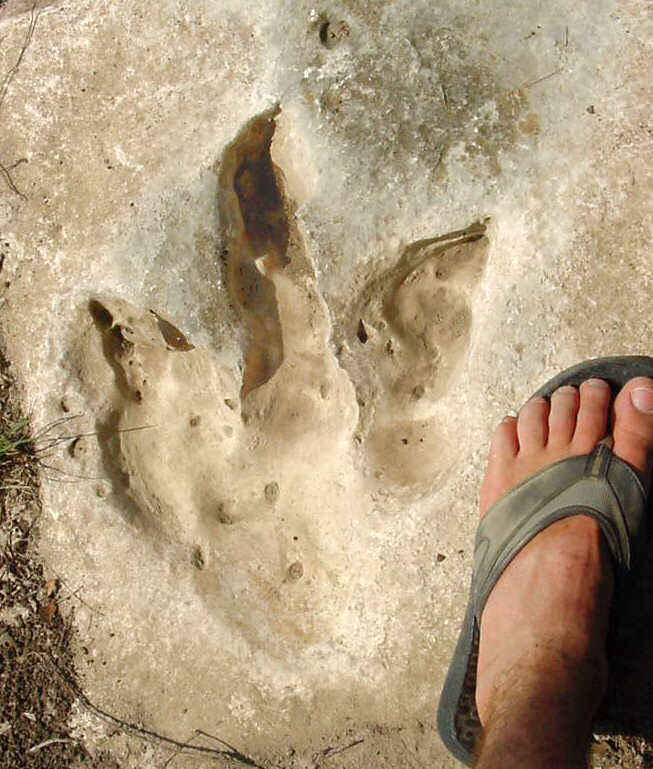
A new study appearing in the May issue of The Journal of Geology provides fascinating insight into the factors geologists must account for when examining dinosaur tracks. The authors studied a range of larger tracks from the family of dinosaurs that includes the T. Rex and the tridactyl, and provide a guide for interpreting the effects of many different types of erosion on these invaluable impressions.


Theropod dinosaur track from central Texas
Edwards formation, Lower Cretaceous. (C) 2002, Glen J. Kuban


A recent column discussed the historical context for the emergence of intellectual property as the new and most important valuation of a company.  While this point of view is becoming more main stream every day the current problem is that there is no liquid market that can help determine actual valuations.

Researchers at the Yerkes National Primate Research Center, Emory University, have found bonobos and chimpanzees use manual gestures of their hands, feet and limbs more flexibly than they do facial expressions and vocalizations, further supporting the evolution of human language began with gestures as the gestural origin hypothesis of language suggests.


Now we know where we got it from.

Working with two groups of bonobos (13 animals) and two groups of chimpanzees (34 animals), Yerkes researchers Amy Pollick, PhD, and Frans de Waal, PhD, distinguished 31 manual gestures and 18 facial/vocal signals.

Researchers at The University of Warwick and Leicester University have used an artificial snot (nasal mucus) to significantly enhance the performance of electronic noses.

The researchers have coated the sensors used by odour sensing "electronic noses" with a mix of polymers that mimics the action of the mucus in the natural nose. This greatly improves the performance of the electronic devices allowing them to pick out a more diverse range of smells.

Scientists at the Salk Institute for Biological Studies have identified an enzyme that pumps up a cell’s ability to maintain healthy muscle and restores normal muscle function in genetically engineered mice with weak muscles. The study, published online in Nature Medicine, is the first to explore the part this enzyme plays in a cascade of events triggered by exercise-induced hormones and other signals.

After completing a two-year pilot phase, scientists at the Woods Hole Research Center are expanding the scope of the "National Biomass and Carbon Dataset" for the year 2000 (NBCD2000), the first ever inventory of its kind, by moving into the production phase.


To date, 5 of the 66 mapping zones have been completed in the NBCD2000 project. The remaining 61 will be completed at an approximate rate of one every seven working days. Credit: Wayne Walker/Greg Fiske. Woods Hole Research Center.

Want to know if the International Space Station is over you right now? You can view the location of ESA's Earth-orbiting spacecraft and other ESA-related missions in real-time via a new tracking site.


Credits: ESA

Research shows that adolescents who engage in one form of risky behavior, like drug or alcohol use, are likely to engage in other risky behaviors like self-harm, or having unprotected sex, but often times these behaviors are not discussed during a medical or mental health exam. Now, a new study shows that a simple and brief screening measure called the adolescent risk inventory (ARI) can quickly identify the broad range of risk behaviors found among adolescents.

