Fake Banner
Healthcare In Space - The First Medical Evacuation From The ISS

For the first time in 25 years of continuous crewed operations, an astronaut has been medically...

I Earned It, You're Privileged - The Paradox In How We View Achievement

The concept of “hard work v privilege”, and what either one says about someone’s social status...

Not Just The Holidays: The Hormonal Shift Of Perimenopause Could Be Causing Weight Gain

You’re in your mid-40s, eating healthy and exercising regularly. It’s the same routine that...

Anxiety For Christmas: How To Cope

Christmas can be hard. For some people, it increases loneliness, grief, hopelessness and family...

User picture.
The ConversationRSS Feed of this column.

The Conversation is an independent source of news and views, funded by the academic and research community and delivered direct to the public. The Conversation launched in Australia in March 2011.... Read More »

Blogroll

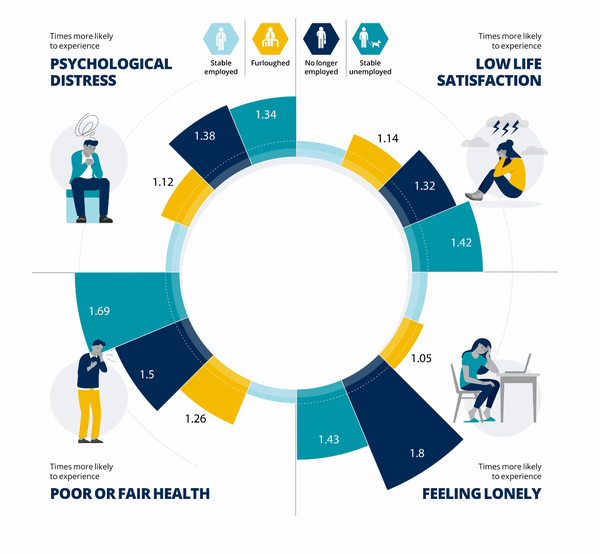
In March 2020, a few days before lockdown was introduced, the UK government launched the Coronavirus Job Retention Scheme, widely referred to as “furlough”. This scheme provided employees who were unable to work due to the pandemic with 80% of their pay (capped at £2,500 per month).

During the pandemic we have all become familiar with a lot of epidemiological concepts.

One that was introduced to us early in 2020 is the “basic reproductive number”, or R0. This tells us about the intrinsic contagiousness of a virus, or its inherent capacity to be spread from one person to another in a particular population.

We also learned about the “effective reproductive number”, or Reff. This tells us about the rate at which a virus is actually spreading through that population.

With the emergence of BA.4/5, there has been some confusion around how these concepts help us to understand why one variant spreads faster than another.

The omicron subvariant known as BA.5 was first detected in South Africa in February 2022 and spread rapidly throughout the world. As of the second week of July 2022, BA.5 constituted nearly 80% of COVID-19 variants in the United States.

We often think of babies as blank canvases with little ability to learn during the first few weeks of life. But babies actually start processing language and speech incredibly early. Even while in the womb, they learn to discern voices, along with some speech sounds. At birth, they already prefer speech sounds over other types of non-language sounds.

But exactly how the baby brain learns to process complex language sounds is still a bit of a mystery. In our recent study, published in Nature Human Behaviour, we uncovered details of this mindbogglingly speedy learning process – starting in the first few hours of birth.

Happy the elephant’s story is a sad one. She is currently a resident of the Bronx Zoo in the US, where the Nonhuman Rights Project (a civil rights organization) claims she is subject to unlawful detention. The campaigners sought a writ of habeas corpus on Happy’s behalf to request that she be transferred to an elephant sanctuary.

Historically, this ancient right which offers recourse to someone being detained illegally had been limited to humans. A New York court previously decided that it excluded non-human animals. So if the courts wanted to find in Happy’s favor, they would first have to agree that she was legally a person.

Sweden is often lauded for its gender equality. The gender gap in unpaid (house)work is narrow.