Fake Banner
Not Just The Holidays: The Hormonal Shift Of Perimenopause Could Be Causing Weight Gain

You’re in your mid-40s, eating healthy and exercising regularly. It’s the same routine that...

Anxiety For Christmas: How To Cope

Christmas can be hard. For some people, it increases loneliness, grief, hopelessness and family...

The Enceladus Idea In The Search For Life Out There

A small, icy moon of Saturn called Enceladus is one of the prime targets in the search for life...

Deontological Decisions: Your Mother Tongue Never Leaves You

Ιf you asked a multilingual friend which language they find more emotional, the answer would usually...

User picture.
The ConversationRSS Feed of this column.

The Conversation is an independent source of news and views, funded by the academic and research community and delivered direct to the public. The Conversation launched in Australia in March 2011.... Read More »

Blogroll

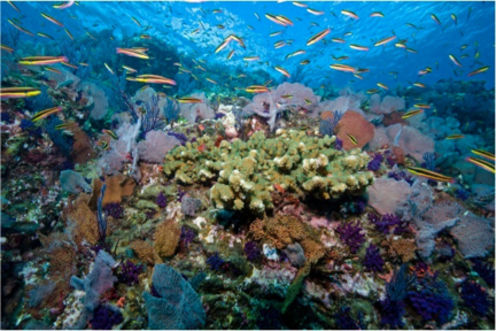
Fish vision just got more complex. Janderk, CC BY-SA

By William Feeney, University of Cambridge


Climate science is right – but it isn't winning. NASA, CC BY

By Mathis Hampel, University of East Anglia

Scientists tell us the world is warming and that a climate catastrophe is imminent.

They’re probably right.

Yet climate change framed by scientists, politicians and economists as a straightforward pollution problem will neither convince skeptics nor advance the difficult decision-making process.


Put innovative farming techniques in the right hands. CGIAR Climate, CC BY-NC-SA

By Sayed Azam-Ali, University of Nottingham

Africa will be able to feed itself in the next 15 years.

That’s one of the big “bets on the future” that Bill and Melinda Gates have made in their foundation’s latest annual letter. Helped by other breakthroughs in health, mobile banking and education, they argue that the lives of people in poor countries “will improve faster in the next 15 years than at any other time in history”.


The Patriots ran away with the AFC Championship. What did deflated footballs have to do with it? USA Today Sports / Reuters

By Chad Orzel, Union College


Credit: Don Davis

By Claire Belcher, University of Exeter and Rory Hadden, University of Edinburgh

The asteroid that wiped out the dinosaurs set off an intense heat wave that briefly boiled the Earth’s atmosphere – but it didn’t burn off all the plants.