Fake Banner
Deontological Decisions: Your Mother Tongue Never Leaves You

Ιf you asked a multilingual friend which language they find more emotional, the answer would usually...

Mummy Mia! Medicinal Cannibalism Was More Recent Than You Think

Why did people think cannibalism was good for their health? The answer offers a glimpse into the...

Inflammatory Bowel Disease May Accelerate Dementia

You have probably heard the phrase “follow your gut” – often used to mean trusting your instinct...

RFK Jr Is Wrong About MRNA Vaccines - They Make COVID-19 Less Deadly

US health secretary Robert F. Kennedy Jr has announced he is cancelling US$500 million (£374 million)...

User picture.
The ConversationRSS Feed of this column.

The Conversation is an independent source of news and views, funded by the academic and research community and delivered direct to the public. The Conversation launched in Australia in March 2011.... Read More »

Blogroll

Baron Manfred von Richthofen, the Red Baron, with other members of his unit. Credit: Germany Army.

By Ingrid Sharp, University of Leeds

The idea of a war hero is still strong in the UK and in the other Allied countries.

War memorials are a central feature of the regular commemoration services, Churchill is regularly rolled out in biographical and fictional form, and there are soon to be a total of 888,246 ceramic poppies for 888,246 war heroes adorning the Tower of London.


Country music's soaring popularity in the Northeast isn't so much a novelty as it is a rebirth. Image: US Navy

By Clifford Murphy, University of Maryland, Baltimore County


There are four factors to making the perfect cup of coffee. Credit: Andy Ciordia/Flickr, CC BY-NC-ND

By Don Brushett

It’s hard to get a bad coffee these days.

Plenty of baristas have fine-tuned the process of making espresso, but really there are only a handful of variables they can control:


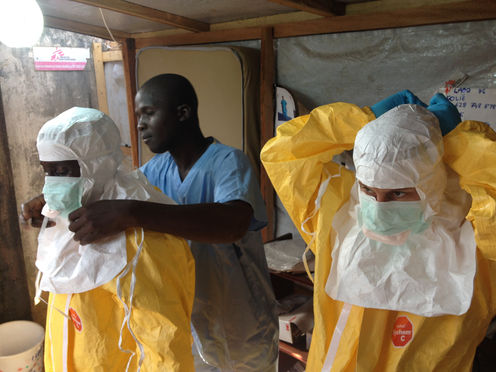
How much risk can health workers be asked to take on? Mike Segar/Reuters

By Catherine Womack, Bridgewater State University

Taking care of sick people has always involved personal risk.

From plague to tuberculosis to smallpox to SARS, health-care workers have put themselves in danger in the course of fulfilling their duties to care for others. Many have lost their lives doing just that.


A recent study shows plants may absorb more carbon than we thought. Jason Samfield/Flickr, CC BY-NC-SA

By Pep Canadell, CSIRO

Through burning fossil fuels, humans are rapidly driving up levels of carbon dioxide in the atmosphere, which in turn is raising global temperatures.


Remember the big, somewhat bulky Mercedes Benz cars of the early 1990s?