On TVO's The Agenda with Steve Paikin,
yesterday's topic was "The Anti-Science Left" and it starts off with a quote from my book with
Dr. Alex Berezow, called
"Science Left Behind", about the feel-good fallacies that anti-science progressives (and science media pundits who have to defend their political positions) use in order to claim to be on Team Science...but in reality are engaged in the scientization of politics.
As American culture becomes more polarized, with various constituencies aligning themselves on left-right graphs, religious groups are not going to win with a subset of people, even among rational scientists who should be immune from motivated reasoning. If the Catholic church wants to hold a conference on stem cells but doesn't include the controversial and, to-date, wildly overhyped human embryonic stem cell research among its discussions of adult and induced pluripotent stem cell breakthroughs, it's all yelling about Galileo and bans and general political theater on blogs only read by people who need a new shot of confirmation bias.
NASA is hosting a news teleconference to announce black hole observations from its newest X-ray telescope, the Nuclear Spectroscopic Telescope Array (NuSTAR), and the European Space Agency's XMM-Newton X-ray telescope.
This is obviously big news and has been hinted at for a while. Check it out.
The briefing participants are:
-- Fiona Harrison, NuSTAR principal investigator, California Institute of Technology, Pasadena, Calif.
-- Guido Risaliti, astronomer, Harvard-Smithsonian Center for Astrophysics, Cambridge, Mass., and the Italian National Institute for Astrophysics
-- Arvind Parmar, head of Astrophysics and Fundamental Physics Missions Division, European Space Agency
I'm generally critical of raw milk, along with just about every microbiologist and all of the scientists in the CDC and FDA. The reason is simple; it has no beneficial value and foodborne illness plummeted once we started pasteurizing milk and other things.
I drank raw milk as a kid. I lived on a farm. As a result there were lots of things I was exposed to that would make a city dweller sick. For that reason, and because my anecdote is not evidence, I think raw milk is a bad idea, especially in the hands of those weird fad food people, who are putting kids at risk. We won't let parents harm kids in lots of ways so anyone giving raw milk to a child should be under the same ethical microscope as anyone buying their child cigarettes.
Because I signed a petition asking for increased open access of studies, I got an email from White House Science Czar Dr. John Holdren today - don't get excited, after all of the mean things I have said about him he is not suddenly writing me personally, it was a mass email - saying they had 'listened' and were making some changes, a letter we all knew was coming.
It reads, in part:
I believe in the wisdom of crowds.
If I take one PhD in science and ask them to guess the number of pennies in a jar, it's not going to be close, but if I ask 1,000 regular people to guess, the mean average of their answers is going to be eerily accurate.


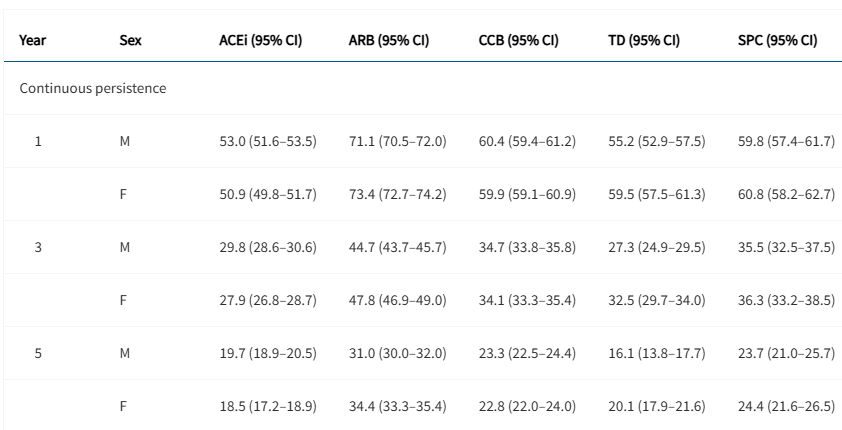 Blood Pressure Medication Adherence May Not Be Cost, It May Be Annoyance At Defensive Medicine
 On January 5th, Don't Get Divorced Because Of Hallmark Movies
 Does Stress Make Holidate Sex More Likely?
 To Boomers, An AI Relationship Is Not Cheating