




And by 'best' I mean weirdest, like haggis, caber-tossing and 3,000-year-old mummies that turn out to be Frankenstein monsters.
Well, at least we know the ancient Celts weren't anti-science. I mean, they created a Frankenstein monster and they figured out that high-acid, low-oxygen peat bogs are the perfect way to insure that future generations could enjoy their abominations of nature. That's pro-science.
Cladh Hallan, a prehistoric village on the island of South Uist in the Outer Hebrides, is more than just a cool-sounding Dungeons and Dragons name. It's the only place in Great Britain where prehistoric mummies have been found. Even better is that isotopic dating and DNA experiments revealed that the two mummies, a male and a female, were actually assembled from various body parts of six people.
And it was done 600 years after they died.
Why? Who cares why? Did you not just read that ancient weird people in some quirky remote island east of Scotland assembled 'bog mummies' and then buried them. I'm hooked. This is way better than "Crossing Guards" or "Ghost Pets" or whatever new reality show Nat Geo wants to foist off on us next.

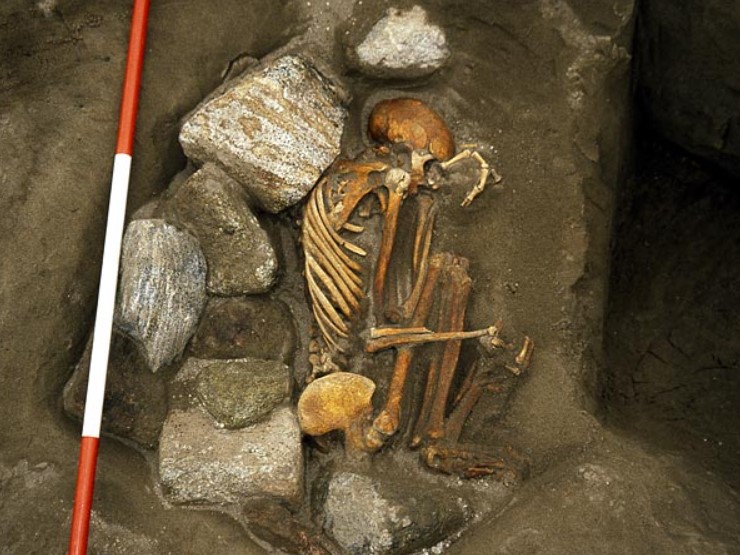
Photo:Mike Parker Pearson, University of Sheffield.
The female mummy parts all died around the same time - but were not related. At least they didn't have the same mother. But the male parts were from hundreds of years apart. What was the goal? That they were buried where they were found hundreds of years after they actually died is another part of the puzzle.
The why is a mystery for anthropologists to make up stuff about. Speculation is that it was some kind of symbolism. No kidding.




Comments