Fake Banner
Misinformation Common Among Women With Breast Cancer

Vaccines are getting American media attention now that Republicans are engaging in misinformation...

Even With Universal Health Care, Mothers Don't Go To Postnatal Check-Ups

For decades, health care costs have been a political topic in America. Advocates argue it is the...

Happy Twelfth Night - Or Divorce Day, Depending On How Your 2026 Is Going

Today is, in Christian observance, Twelfth Night, the end of The 12 Days of Christmas in that song...

Blood Pressure Medication Adherence May Not Be Cost, It May Be Annoyance At Defensive Medicine

High blood pressure is an important risk factor for developing cardiovascular disease and premature...

User picture.
picture for Tommaso Dorigopicture for Fred Phillipspicture for Hontas Farmerpicture for picture for Patrick Lockerbypicture for Ilias Tyrovolas
Hank CampbellRSS Feed of this column.

I founded Science 2.0® in 2006 and since then it has become the world's largest independent science communications site, with over 300,000,000 direct readers and reach approaching one billion. Read More »

Blogroll
Prof. Jean-Claude Bradley, a true open science pioneer, has passed away.

Many people worked with him, he was willing to challenge the status quo and that means a lot of people wanted to be around him - he was one of the earliest scientists to sign up to help Science 2.0 after this first component launched. I don't know how he heard of us, he was just in tune with the broad science community that way.
If you're like me, you always throw a little Pabst Blue Ribbon on meat. Some people use whiskey in their marinade.

At the Templeton Rye Distillery in Templeton, Iowa they are cutting out the middleman - they are trying to create pork that already tastes like whiskey. 
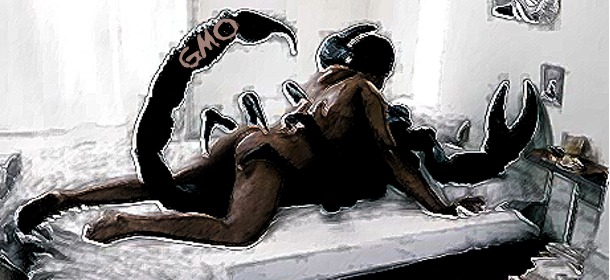
Vermont is still milking the slavery thing.

Yes, yes, you were first to ban it. It's easy to ban something you never had in the first place. That does not mean you are right in everything you ban and, let's face it, comparing GMOs to slavery is a little weird, even for Vermont.

Nonetheless, “We’re first again,” gushes organic farmer Will Allen in The Economist, which makes the rest of the country wonder if it is the organic farming or the Vermont air that makes people goofy.
American Council on Science and Health is an advocacy group consisting of hundreds of scientists, doctors and policy experts devoted to science outreach. They've been around since the 1970s, when the core of their original group, including Nobel Laureate Norman Borlaug, the "father of the Green Revolution", wondered why there were no science groups that offset the wonks promoting fear and doubt about researchers.

Since then, they have gone where the data takes them. Co-founder Dr. Elizabeth Whelan has been attacked by both food fetishists and Big Tobacco for promoting inconvenient truths about science. Bipartisan disdain means they are probably right where they need to be.
Richard Somerville and Susan Hassol have some recommendations for how to improve science communication.
I'll tell you up front, I am not a big fan of chemicals.

It's not that I have chemophobia, or any science-phobia, I instead have that special sort of elitism that is available to people who have just been lucky enough to not need chemicals. I don't even like to take aspirin and I have that luxury because I haven't needed to take any drugs for a recurring condition, so it's really easy for me to embrace such naturalistic posturing.