Less than 8,000 years ago, evidence shows modern people suddenly appeared en masse outside Africa, on the shores of the Persian Gulf. An odd event, to be sure.
Jeffrey Rose, writing in Current Anthroplogy, now says the reason is that the land that brought them there more gradually is now under the Gulf itself.
It makes sense as a hypothesis - you don't just go from sporadic hunting camps to dozens of archaeological sites without a trail, unless the trail is underwater. Rose believes the that humans may have inhabited a fertile land mass where the Gulf now is for up to 100,000 years and it gradually became flooded by the Indian Ocean.
Economics is called the dismal science for a reason - things are never very good to economists. Heck, economists have been over the moon about the economic downturn because it gives them something to talk about ("Economy booming, inflation low without any help from economic theory" is not exactly going to be a fun article for economists to write) and
they get to be more optimistic than the people with no jobs again this year.
Poor nations aren't going to be thrilled about a new paper showing that even peasants under the feudal system had a better standard of living than they had. Dismal, indeed.
Like puzzles? Who doesn't?
Long-time Science 2.0 contributor
Garth Sundem - and by long time I mean loooong time, since 2006, during the beta period - is in the
New York Times Science section during their theme on puzzles.
We know that light has mass and that beaming enough light at something can push it away - solar sails that will move a craft through the cosmos are based on this idea and NASA tested that concept earlier today
when it launched NanoSail-D, a nanosatellite (cubesat) which will unfold to a 100 square foot polymer sail and travel in low earth orbit for a few months. Sails? We don't need no stinking sails. Credit: NASA
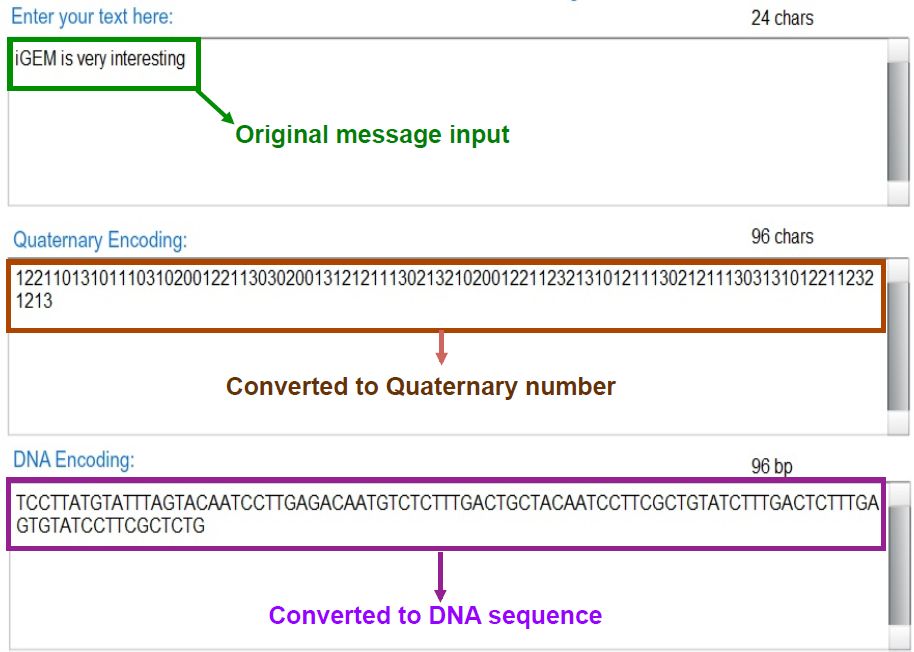
DNA computing and storage has been on the horizon for most of this decade but never gone beyond the intellectual exercise stage. Storage limitations were far too small to merit applied science efforts so it was clever but that was the extent of it.
That may not be the situation for much longer.
GenomeWeb reports that
a research team from the Chinese University of Hong Kong has encrypted and stored a hefty 90GB of data in one gram of bacteria, creating what they are calling a "massively parallel bacterial storage system."
It was hard to miss the
arsenic microbe news last week. Heck, I was in the woods of Pennsylvania with no cell phone access much less Internet and I knew about it. The NASA hype machine and mass media's need to sell eyeballs made sure of that.


 Blood Pressure Medication Adherence May Not Be Cost, It May Be Annoyance At Defensive Medicine
 On January 5th, Don't Get Divorced Because Of Hallmark Movies
 Does Stress Make Holidate Sex More Likely?
 To Boomers, An AI Relationship Is Not Cheating