










PARIS, April 30 /PRNewswire/ --

- Note: 1st Quarter 2008 Reported and Adjusted Profit and Loss Statement is Enclosed in Annex (lien vers http://www1.alcatel-lucent.com/1q2008/pdf/annex_E.pdf)

Key Highlights for the Quarter

- Revenues of Euro 3.864 billion, up 6.3% year-over-year at Euro/USD constant currency - Adjusted(ii) gross profit of Euro 1.399 billion or 36.2% of revenues - Adjusted(ii) operating income(i) of Euro 36 million or 0.9% of revenues - Adjusted(ii) net loss (group share) of Euro (95) million or Euro (0.04) per diluted share - Reported net loss (group share) of Euro (181) million or Euro (0.08) per diluted share - Net debt of Euro (30) million versus a net cash position of Euro 271 million at end 2007

Research by Yale scientists shows that males and females have essentially unisex brains — at least in flies — according to a recent report in Cell designed to identify factors that are responsible for sex differences in behavior.

The researchers showed that a courting “song and dance” routine that only male flies naturally perform — one wing is lifted and wiggled to make a humming “song” — can also be triggered in female flies by artificially stimulating particular brain cells that are present in both sexes. It isn’t what you’ve got — it’s how you use it, the authors say.

“It appears there is a largely bisexual or ‘unisex brain.’ Anatomically, the differences are subtle and a few critical switches make the difference between male and female behavior,” said senior author Gero Miesenboeck, formerly of Yale University and now at the University of Oxford.

Scientists at The Australian National University are a step closer to understanding the rare Hartnup disorder after discovering a surprising link between blood pressure regulation and nutrition that could also help to shed light on intestinal and kidney function.

The team from the University’s School of Biochemistry and Molecular Biology together with colleagues from the University of Sydney set out to study nutrient uptake in the intestine and discovered an essential role of a protein called ACE2 in the process. ACE proteins cut off a small part of a precursor molecule generating a hormone, which regulates blood pressure. ACE inhibitors are widely prescribed drugs that reduce the risk of heart failure and protect against the long-term effects of diabetes.

A group of scientists from the Nutrition and Food Science Department from the Faculty of Pharmacy of the University of Granada have reported the beneficial effects of extra virgin olive oil on human health, determining in vitro and in vivo the antioxidant power that the examined extra virgin olive oil samples present. With this work, researchers have found a more effective method to establish the antioxidant capacity of extra virgin olive oil.

Research has been directed by doctors M. Carmen López Martínez, Herminia López García de La Serrana and José Javier Quesada Granados, and its main author is Cristina Samaniego Sánchez. The scientists have prepared four methods that let us know know the antioxidant capacity and the beneficial effect of the extra virgin olive oil obtained from olives of the Picual variety.

PARIS and SUNNYVALE, California, April 30 /PRNewswire/ --

ILOG(R) (Nasdaq: ILOG; Euronext: ILO, ISIN: FR0004042364) today announced its results for its fiscal third quarter ended March 31, 2008 with revenues of US$46.1 million compared with revenues of US$40.0 million in the same quarter last year. U.S. GAAP earnings per share (EPS) for the third quarter were US$0.01 (diluted) compared with a diluted EPS of US$0.04 for the third quarter last year.

"The strength of our business model, which relies on geographic and channel diversity, helped license revenue growth in Europe, but was not enough to offset the impact of the U.S. economic slowdown on the sales cycles in this region," said ILOG Chairman and CEO, Pierre Haren.

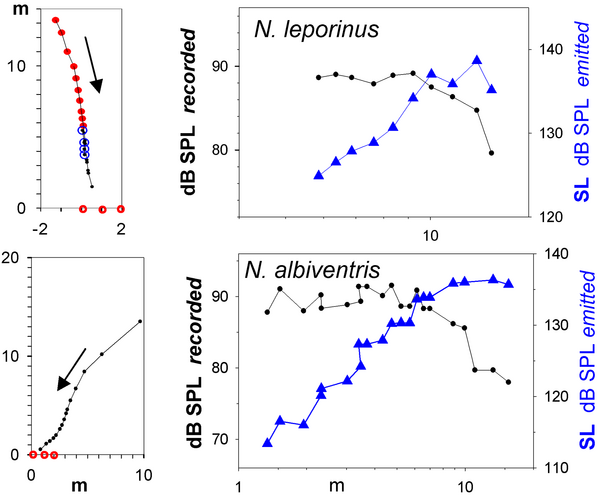
Using microphone arrays and photographic methods to reconstruct flight paths of bats in the field when they find and capture prey in air using their sonar system, Annemarie Surlykke from the Institute of Biology, SDU, Denmark, and her colleague, Elisabeth Kalko, from the University of Ulm, estimated the emitted sound intensity and found that bats emit exceptionally loud sounds exceeding 140 dB SPL (at 10 cm from the bat's mouth), which is the highest level reported so far for any animal in air.

For comparison, the level at a loud rock concert is 115-120 dB and for humans, the threshold of pain is around 120 dB.(1)

Metastasis, the spread of cancer throughout the body, can be explained by the fusion of a cancer cell with a white blood cell in the original tumor, according to Yale School of Medicine researchers, who say that this single event can set the stage for cancer’s migration to other parts of the body.

The studies, spanning 15 years, have revealed that the newly formed hybrid of the cancer cell and white blood cell adapts the white blood cell’s natural ability to migrate around the body, while going through the uncontrolled cell division of the original cancer cell. This causes a metastatic cell to emerge, which like a white blood cell, can migrate through tissue, enter the circulatory system and travel to other organs.

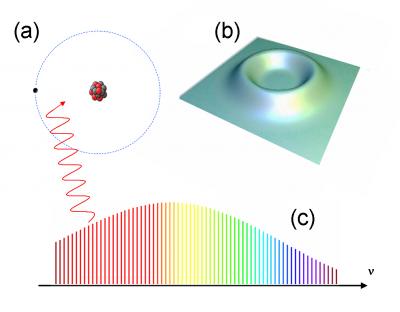
Researchers at the National Institute of Standards and Technology (NIST) and the Max Planck Institute for Physics in Germany believe they can achieve a significant increase in the accuracy of one of the fundamental constants of nature by boosting an electron to an orbit as far as possible from the atomic nucleus that binds it. The experiment could put the modern theory of the atom to the most stringent tests yet.

It could also mean more accurate identifications of elements in everything from stars to environmental pollutants.

The physicists’ quarry is the Rydberg constant, the quantity that specifies the precise color of light that is emitted when an electron jumps from one energy level to another in an atom. The current value of the Rydberg constant comes from comparing theory and experiment for 23 different kinds of energy jumps in hydrogen and deuterium atoms.

CSIRO researchers have discovered a new class of fatty acids -- alpha-hydroxy polyacetylenic fatty acids -- that they say could be used as sensors for detecting changes in temperature and mechanical stress loads.

CSIRO Entomology business manager, Cameron Begley, said researchers believed the discovery opened up an entirely new class of chemistry. “Some of these alpha-hydroxy polyacetylenic fatty acids act as indicators for a range of different conditions, such as mechanical stress or heat, and display self-assembling properties. Others display anti-microbial properties,” he said.

New findings suggest that the ancient human “cousin” known as the “Nutcracker Man” wasn’t regularly eating anything like nuts after all.

A University of Arkansas professor and his colleagues used a combination of microscopy and fractal analysis to examine marks on the teeth of members of an ancient human ancestor species and found that what it actually ate does not correspond with the size and shape of its teeth. This finding suggests that structure alone is not enough to predict dietary preferences and that evolutionary adaptation for eating may have been based on scarcity rather than on an animal’s regular diet.


