Though it is common to see environmental videos of birds caught in plastic, less well known is that, like cats, seabirds love to eat it.
Paracelsus famously noted that the dose makes the poison but in the 1990s some activist scientists began claiming that any dose is a poison, so even if birds excrete the plastic, chemicals can "bioaccumulate" and cause harm.
I believe oceans of ink were spent, ever since pens were a thing, writing on the mentor-student relationship, its do's and don'ts, and the consequences of deviations from proper practice. And rightly so, as the balancing act required for a proper, effective teaching action is entirely non trivial. The fact that our didactical systems and academia are in constant evolution, that rules and courses formats change over time, and that as humans we tend to forget what has been learnt in the past (on good practice, I mean), require us to keep thinking about the topic, and continue to keep the discussion alive.
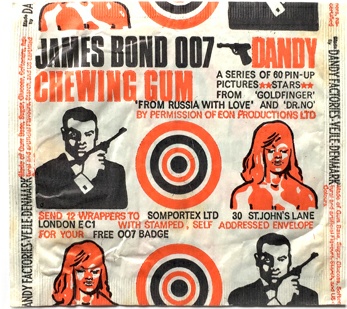
When Daniel Craig was announced as the new James Bond, he took a lot of criticism. I will be honest, I was among the critics. I have read every book, seen all the films, I wear both Charvet and Turnbull & Asser shirts for no other reason than they were in the books (the French brand for villains, naturally, and then Turnbull for the man himself) and I was firmly on Team Clive Owen for the role.
Craig was clearly a Sean Connery and not a Roger Moore, who was most like the Eton-schooled Bond in the books. He was too short but author Ian Fleming was creating an idealized version of himself, much like Dan Brown fictionalized himself as an Indiana Jones for art history majors, yet I conceded there is no reason all spies had to be 6 feet and up.
I very much would like to write about the Nobel prize in physics here today, but I realize I cannot really pay a good service to the three winners, nor to my readers, on that topic. The reason is, quite bluntly, that I am not qualified to do that without harming my self-respect. Also, I never knew about the research of two of the winners.
As for the third, I do know Giorgio Parisi's research in qualitative terms, and I happen to know him personally; well, at least we are Facebook friends, as maybe 500 of his contacts can also claim - plus, he once invited me to a symposium at the Accademia dei Lincei, of which he his vice-president. And I did write about his scientific accomplishments in the past here, on two occasions.
In the modern environmental era, activists are mostly among a political tribe that opposes activities like hunting but they should not be. Hunters, fishers, and others are terrific stewards of nature and a natural world humans are banned from experiencing is a natural world that loses funding. Activists should want people experiencing nature.
Hunters are terrific allies. A new estimate (
https://www.nature.com/articles/s41598-021-98282-4) finds that hunting also reduces CO2 emissions.
And it could earn people over $180,000. Getting paid to hunt while saving the planet? It sounds wonderful.
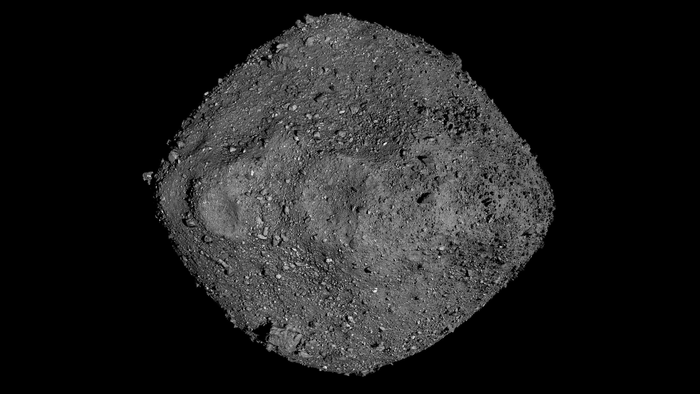
Telescopes and inference told scientists that the asteroid Bennu was covered in large swaths of fine regolith, smaller than a few centimeters. What they found when OSIRIS-REx arrived at Bennu was something else: A surface covered in boulders.
The surprise lack of fine regolith became even more interesting when mission scientists observed evidence of processes capable of grinding boulders into fine regolith. Yet they had not.
The animal rights activist group Physicians Committee for Responsible Medicine
has an op-ed in
American Journal of Medicine claiming that if you want the COVID-19 vaccine to work 'better', whatever that is supposed to mean, adopt a vegetarian diet.
It's easy to dunk on people taking ivermectin, they are dumb Republicans according to science-y Twitter, but this kind of nonsense is just as reckless if we want the public to trust in decision-making. I certainly would not want to visit Rutgers New Jersey Medical School, where the lead author of the opinion piece teaches.
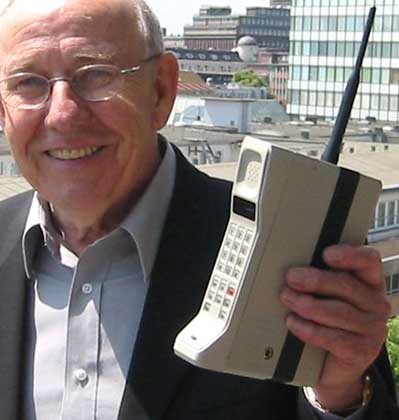
A certain demographic have long had concerns about vaccines causing autism, along with fears about GMOs and cellphones causing cancer.
That last one has been the least active. Rich people have always been able to afford organic food and to count on poor kids getting enough vaccines to create herd immunity for their special snowflakes, but cell phones are more challenging because they are individual - and getting a new iPhone was a status symbol. Due to their omnipresence, signals are everywhere, just like TV and radio and cosmic rays before them, so most elites give up and recognize that unless Jimmy Choo makes a hat lined with tinfoil, they are stuck.
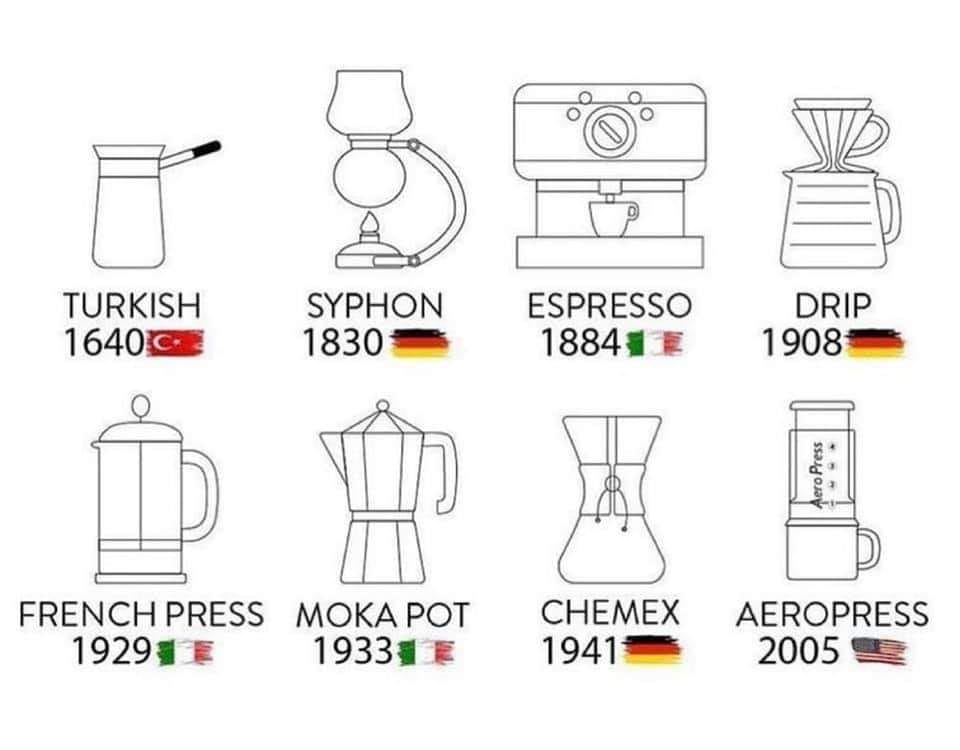
Coffee may be about to get its first significant upgrade in 600 years. That's not to say there haven't been efforts to modernize coffee production since its earliest days in Sufi shrines, but that has been mainly in technology. The pan, like you use in delicious Turkish coffee, gave way to a syphon, which used the awesome power of heat-created vacuum physics, then gave way to its opposite, using good old brute force for espresso, but since then it has been all refinement to make brewing easier. If you have ever used a syphon or a truly old espressso machine you know it can be an artistic endeavor getting it right.
Pancreatic cancer tends to develop from chronic inflammation that happens when a mutation has caused digestive enzymes to digest the pancreas itself.
What if we could go 'back in time' and reverse that process?
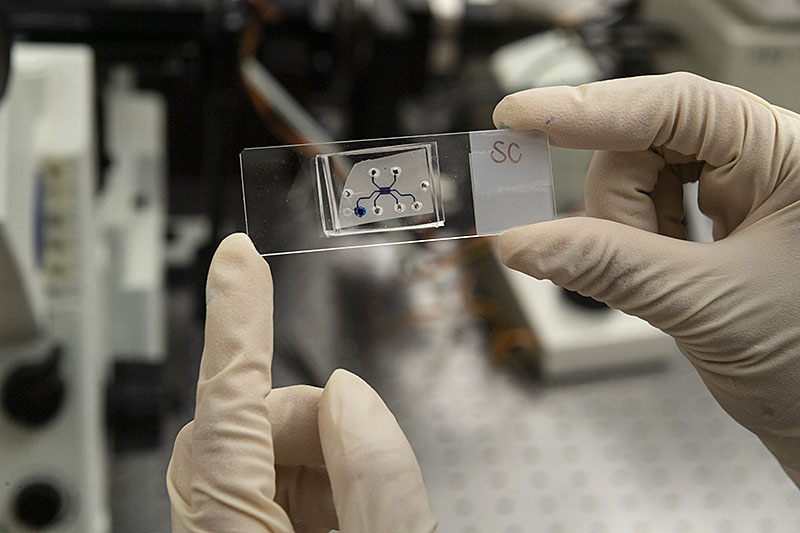
Purdue University Professor Bumsoo Han and his team built is a lifelike reproduction of a pancreatic structure called the acinus, which produces and secretes those digestive enzymes into the small intestine. The goal is reprogram the cancerous acinar cells that produce those enzymes, and perhaps completely reset the pancreas.