Deb Haaland is the U.S. Representative for New Mexico's 1st congressional district since 2019. Predictably, she is a lawyer. Less common is that she was a casino executive.
If you are wondering if any of those count as qualifications to run the Interior Department, you are not alone.
In the Washington Examiner today, I outline some of the science concerns that people on the left and right who care about wildlife refuges should have when it comes to someone with a fringe political agenda handling public land.
Is it more sustainable to have 2 billion people burning wood and dung for energy than to have centralized coal? Any objective look at the science says coal, while not perfect, is better for emissions, public health, and quality of life than individual fires but the U.S. government, guided by lobbyists,
refused to provide World Bank funding for developing nations to create centralized energy - unless it was wind or solar.
All those countries could afford to maintain was coal. Instead of giving them centralized energy we put the sustainability buzzword as a mandate.
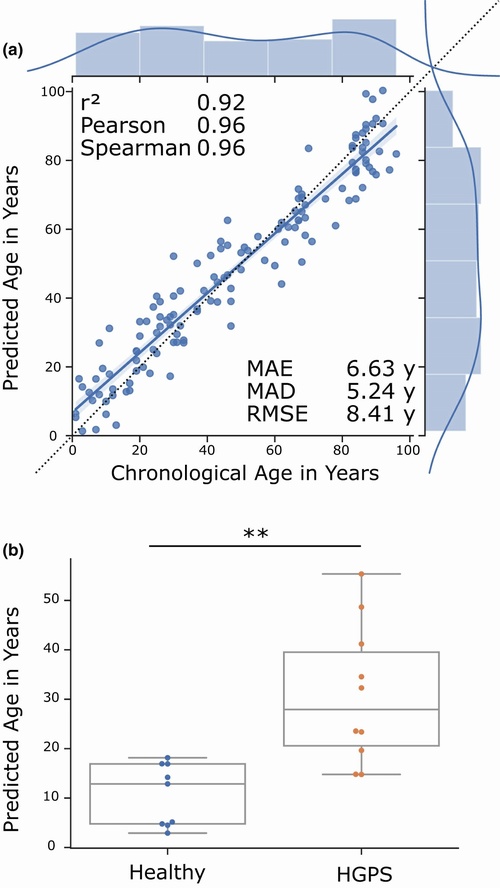
We all have an age but we also know time is a relative abstract construct based on real dimensions in the physical world; a day is different on Mars than it is on Earth. We know our birthdays and how old we are but it does not tell us how long we might live.
Some people age faster than others and
a new study hopes to be able to measure the transcriptome, gene expression, and create a true way to read biological clocks. This study was with the model organism
Caenorhabditis elegans, and worms are not little people, but for the last four decades it has become vital for studying DNA and genomes.
Outside extreme temperature environments, our body temperatures remain around 98.6 degrees Fahrenheit, no matter how hot or cold the. For most people, the sugar levels in our blood remain fairly constant even after drinking a glass of orange juice, which is essentially a vitamin-fortified sugar-filled soda. Most of us keep the right amount of calcium in our bones and out of the rest of our bodies.
Our bodies are good at that kind of self-regulation, known as homeostasis, and scientists have a good handle on the biological reasons why that regulation happens: Certain systems in our bodies have to remain constant in order to function and keep our bodies alive.
I have put this post under the "psychology" category, although it discusses a chess game, for one important reason. Chess is a game, an art, a sport - you can categorize it in many different ways. However, what characterizes chess the most, in my opinion (an educated one, as I am an amateur with a long past of chess tournaments) is the chance it gives to the players to mess up with each other's mind.
With the climate crisis being a consideration at the forefront of energy generation today, it's no surprise that solar power is receiving so much good press. However, despite that, there's very slow adoption of the alternative energy source. In the US, the Office of Energy Efficiency and Renewable Energy mentions that there's enough solar power generation to power twelve million American households. Yet, in a country with over three hundred million residents, this seems like a drop in the bucket. Why has solar not garnered the sort of traction one would expect for a population that's so involved in changing over to alternative fuels?
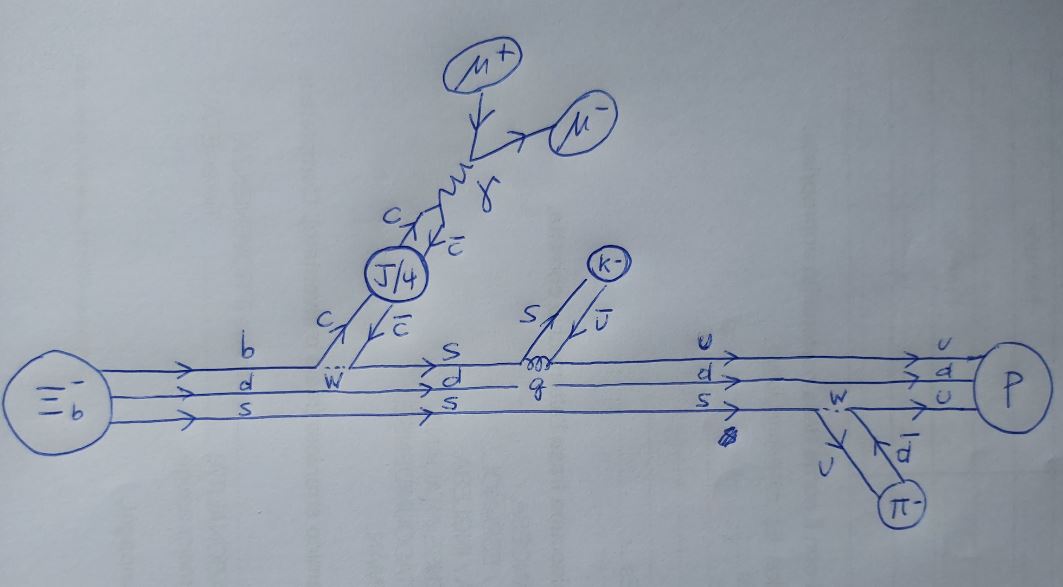
Wait, I can almost hear you say it: "Xi_b what? Let's move on, where's the sports section?" Ok, if you need to, please go. But do not underestimate excited Xi_b baryons. They are a helluva lot of fun to watch as they pop into existence and then decay in stages, as if stripping piece by piece, throwing out opaque layers of matter one by one, and finally exposing their naked beauty in full bloom.
Are you getting aroused yet? we are talking about a haDR-on here, don't be mistaken, but the matter is not less sexy than the stuff you'd get on the sports section anyway. For, you know, there is simply so much we still do not know about how quarks can create excited states of nuclear matter, that one cannot ignore any new development.
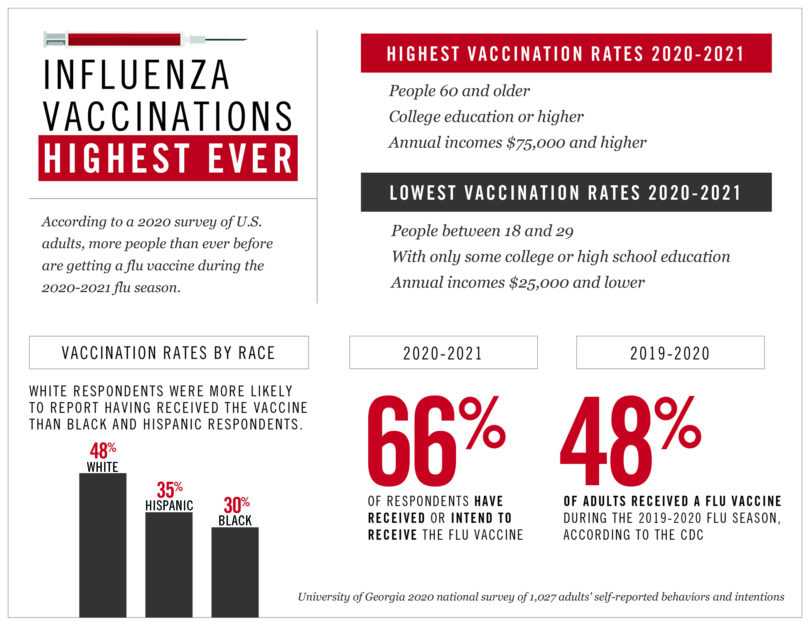
In past years there has been ongoing concern that not enough people got the annual flu vaccine.
Some of it was laziness, some of it was lack of education. There were few outright deniers that flu was a problem. Instead, it seemed to be the opposite. If someone had a bad cold they still said they had the flu, and some said they think they might have the flu, which led most doctors to remind people that if you think you have the flu, you don't have the flu.
The real vaccine deniers were more coastal elites who believed a discredited former doctor, Andrew Wakefield, who was interested in selling a competitor to existing vaccines, and used a tiny sample of hand-picked kids to claim that vaccines caused autism in a paper that was then retracted.
For much of 2020, it looked like media was trying to pivot the anti-vaccine movement from being predominantly left wing to one afflicting right. More right-wing people than left in America didn't want to wear masks, after all, so it seemed easy to claim they would be less likely to take a vaccine.
A small fish in central Texas, a freshwater mussel in the Mobile River basin, and another mussel in Alabama’s Coosa and Cahaba Rivers have something strange in common; they appeared on an EPA list of threatened species “likely to be adversely affected” by a popular herbicide named atrazine.
I don't see how could things get worse for the San Marcos gambusia, the Upland Combshell and the Southern Acornshell. They're all extinct. I lived in the southern US in the early 1970s and never saw a Southern Acornshell. It would have been impossible, it was gone by then.