I still believed in God (I am now an atheist) when I heard the following question at a seminar, first posed by Einstein, and was stunned by its elegance and depth: ‘If there is a God who created the entire universe and ALL of its laws of physics, does God follow God’s own laws? Or can God supersede his own laws, such as traveling faster than the speed of light and thus being able to be in two different places at the same time?’ Could the answer help us prove whether or not God exists or is this where scientific empiricism and religious faith intersect, with NO true answer? David Frost, 67, Los Angeles.
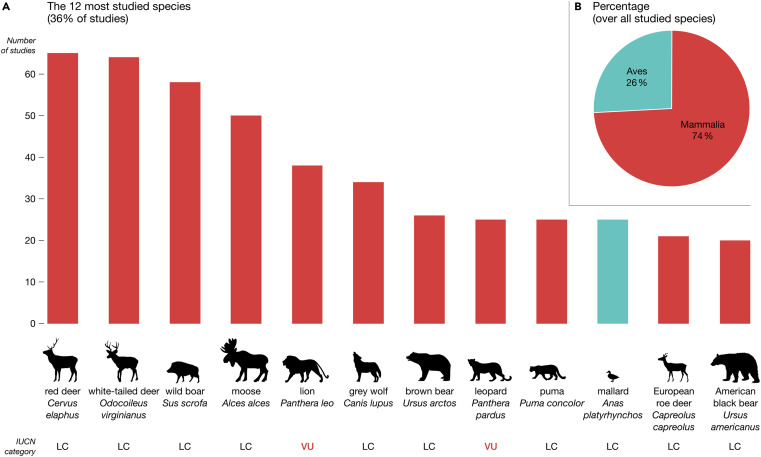
The Pennsylvania Game Commission manages 1.5 million acres of land for its citizens and all "public land owners" are able to use it for hiking, hunting and various activities.
Despite such an enormous responsibility, the Game Commission receives no General fund appropriations. The Game Commission and state biologists instead get to be stewards of nature thanks to nearly all of its $120,000,000 in funding coming from licenses like deer hunting.
Once upon a time, it was important that farmers - the first agricultural scientists - create seeds that were larger, more nutritious, and more resilient to environmental stress. Nature might bring rain, it might not, pests were going to eat their way through whole fields if they could.
As agriculture improved, civilization followed. Seeds such as wheat, rice and corn directly provide about 70% of the calories eaten by people every day. What isn't directly eaten is still contributing, either by providing feed for livestock or by being grown into fruits and vegetables.
Coca-Cola and Disney do not simply share being on Interbrand's Global Top Brands,
says a new paper, they also share linguistically feminine names, and that helps their success with men and women. In fact, the highest-ranking companies have, on average, more feminine names than lower-ranked companies, they claim.
Imagine you hire a plumber and he needs to work on your plumbing and instead of coming over to fix that he sends his cousin who owns a lawn service.
That is analogous to what is happening at EPA regarding a common herbicide (the second most popular in the U.S.) named atrazine.
There is nothing wrong with it scientifically, it is causing no harm, but EPA is still going to hand it over to a group like the US Fish and Wildlife Services and let them just decide whether or not it might harm endangered species. No science needed.
They are even blaming it for extinctions that occurred nearly 50 years ago.
The Forever War on Science story has been in development...forever...but this is the first time they introduced time travel.
'The right thing, the wrong thing, do it with authority is a common' is a common statement for leadership behavior.
Humans take comfort in confidence. Even in things like facts;
the faster the answer the more likely others will believe it.
[This is the second part of a two-part article on Cosmic Messenger astrophysics. For part 1, please click here.]We can also "see" showers of secondary particles from cosmic rays thanks to the Cherenkov light they produce. Cherenkov light is emitted when charged particles travel in a medium at speeds higher than the speed of light itself! Light, in fact, slows down a little when it traverses a medium; energetic particles do not, so they create a conic "shock wave" similar to the boom of supersonic airplanes.
In the age of the dinosaurs, you could have walked from one pole to another. At that time, the continents were all joined together, forming the supercontinent Pangea.
Yet they didn't.Though sauropodomorph dinosaurs first appeared in Argentina and Brazil about 230 million years ago, it took them 15,000,000 years to migrate to the northern hemisphere.
Do you think food is medicine? While Whole Foods imagery touted that in 2019, the coronavirus pandemic that began in Wuhan later that year punctured efforts to convince the public that health is a moral or economic issue - you owe it to your kids to buy overpriced food. SARS-CoV-2 and the COVID-19 pandemic showed that eating expensive onions won't save anyone from anything.
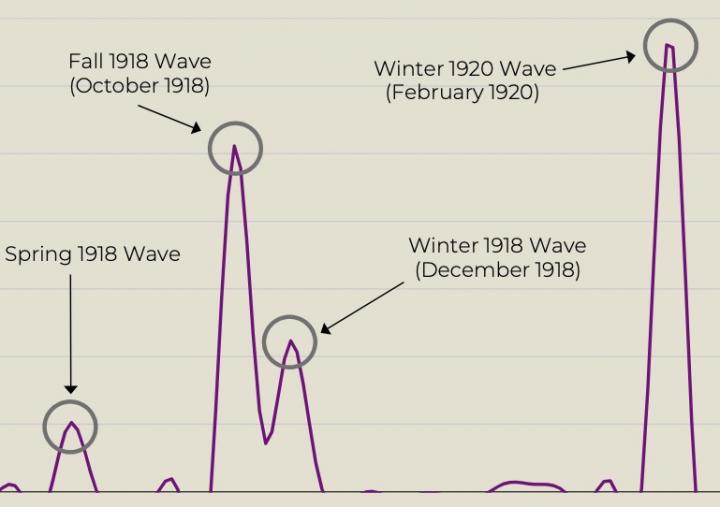
What may help save people is remembering the past rather than wishful thinking about the present. In this case, looking back at the 1918 Spanish flu pandemic which killed far more than COVID-19.
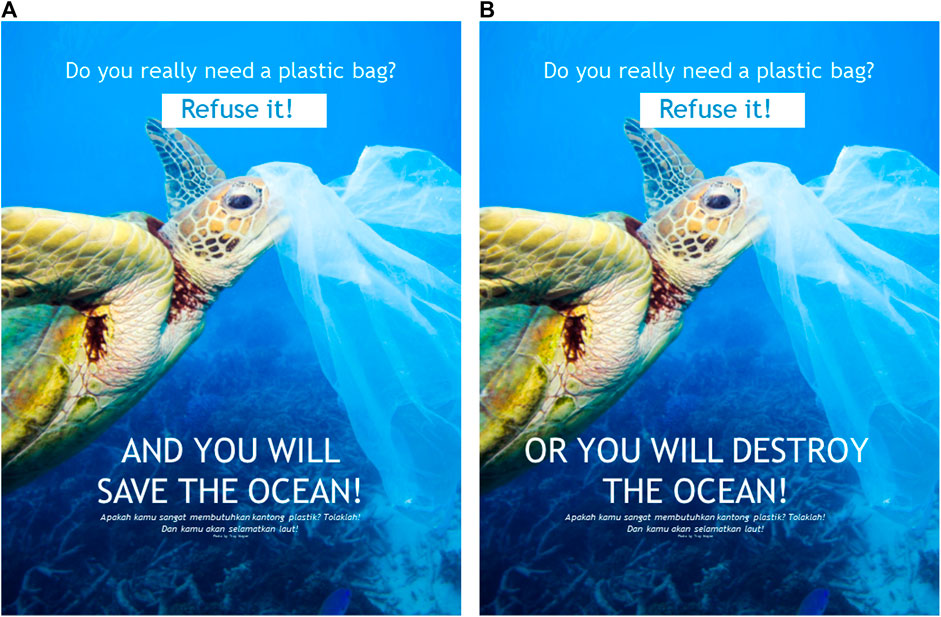
If a tourist doesn't know messing around with a coral reef is bad, they may try to touch them or pet turtles, but after being told by someone local that it has risks for the nature they are there to see they far less likely to do so.
A new paper found that such "nudges" works well. Which would mean we often don't need government 'ignore of the law is no excuse' type shaming policies to change behavior.