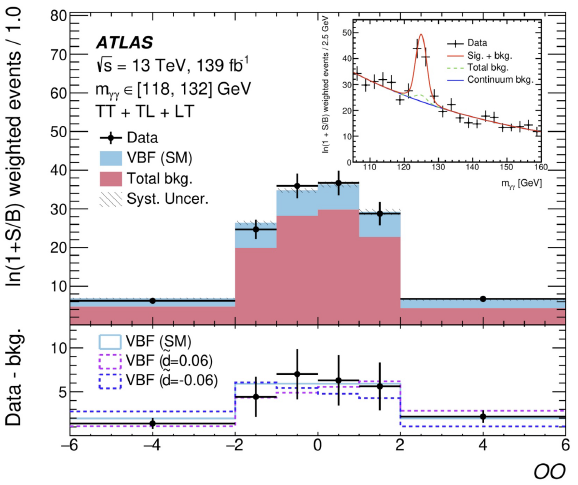
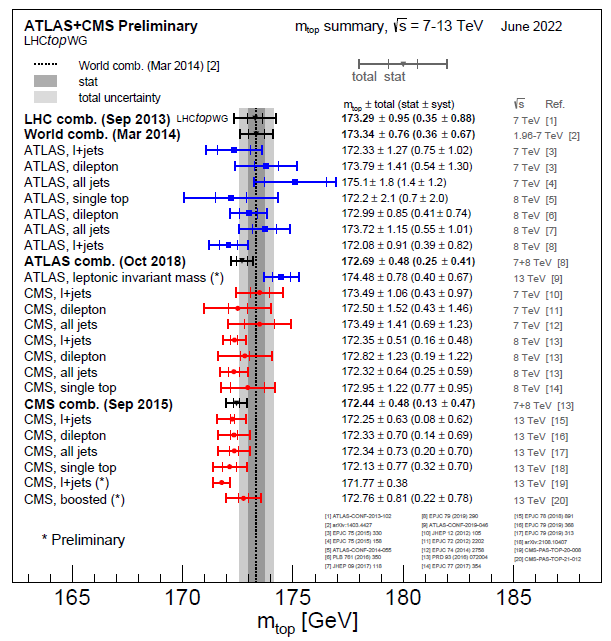
Bill Murray gave a nice summary of recent results from the ATLAS collaboration at the ICNFP conference this morning, and I will nit-pick a few graphs from his presentation to show the level of detail of investigations in subnuclear processes that the Large Hadron Collider (LHC) is providing these days, as seen from the lens of one of its two main microscopes, the wondrous ATLAS detector.
The LHC is taking data. What, again?
The internet creates and propagates data by default. Decades since its development, we now live in the Age of Big Data. From recommendation systems to drug discovery, big data has enabled unprecedented innovations. Yet, the downside of the growth of data, and the shift to digital, is that malware enjoys an exponentially growing attack surface.
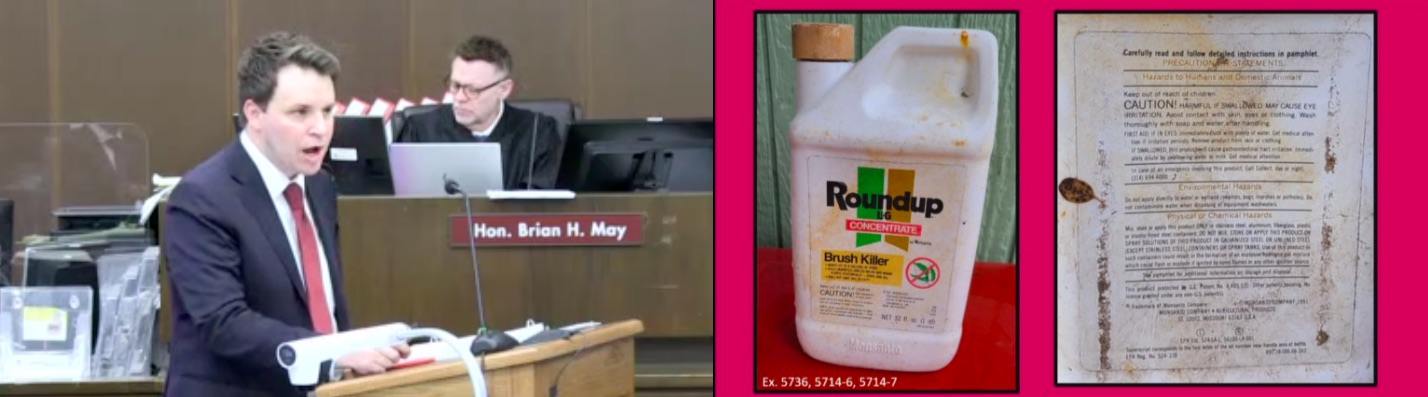
Roundup, and its important ingredient glyphosate, act on a biological pathway only found in plants. In the American legal system, science is basically irrelevant in a jury trial, though, so anyone can sue over anything. Only in an appeal will science in science and health lawsuits be important.
Yet sometimes the science is so clear no jury outside California is so opposed to evidence that they will find harm. That is why Monsanto has prevailed for a fifth time against claims that a compound that only acts in plants magically caused someone's cancer. And the only financial victory anti-science activists and their predatory lawyers got was gutted on appeal, because judges looked at the science rather than emotion.
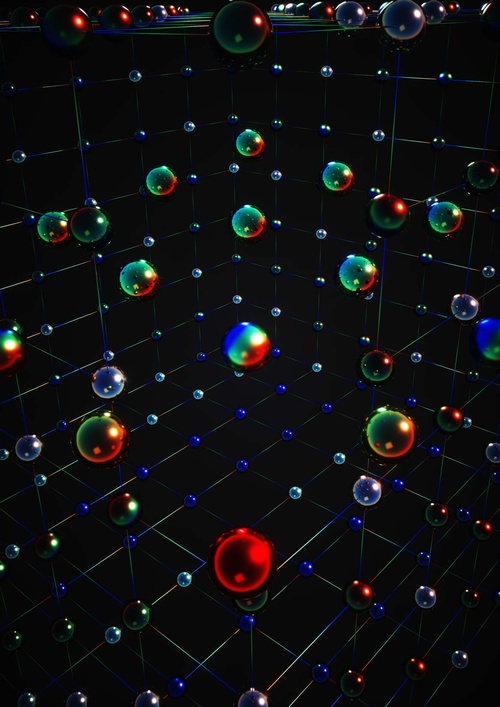
Quantum magnetism exploration is getting a boost from atoms about 3 billion times colder than interstellar space.
Space is cold, of course, but is warmed by the afterglow from the Big Bang. A Kyoto team instead
used lasers to cool its fermions, atoms of ytterbium, within about one-billionth of a degree of absolute zero, the unattainable temperature where all motion stops, far colder than interstellar space.
On average, happiness declines as we approach middle age, bottoming out in our 40s but then picking back up as we head into retirement, according to a number of studies. This so-called U-shaped curve of happiness is reassuring but, unfortunately, probably not true.
I arrived to Kolymbari, a nice seaside resort on the western coast of the Greek island of Crete, late yesterday night, and am now already immersed in the morning session of the XI edition of the International Conference on New Frontiers in Physics. This event, which takes place at the Orthodox Academy of Crete in Kolymbari since 2012, takes a rather broad view on advances in both experimental results and theory of fundamental physics.
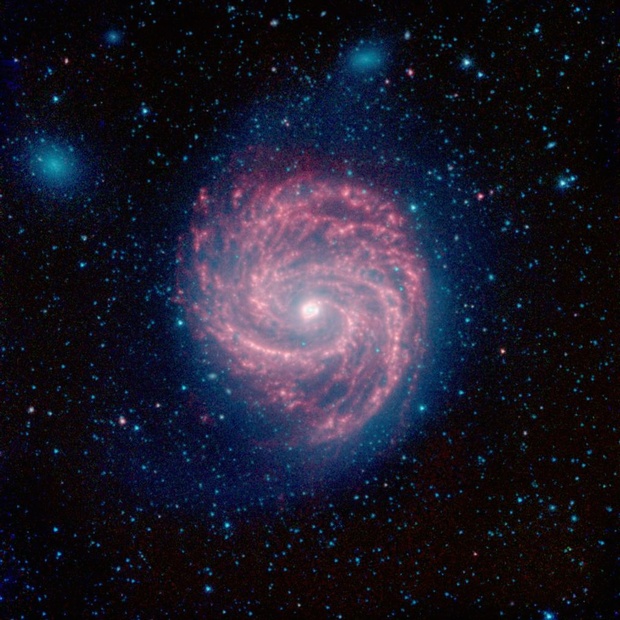
Scientists know very little about the matter that makes up the galaxies in the Universe. About 20% of the matter in galaxies is visible or baryonic: subatomic particles like protons, neutrons and electrons. The other 80%, referred to as “dark matter”, remains mysterious and unseen.
In fact, it may not exist at all. “Dark matter” is just a hypothesis. Physicists and astronomers may be chasing a phantom – but that doesn’t stop us from looking. Why? Because if dark matter isn’t real, then the behaviour of the stars, planets and galaxies makes little sense.
The teen years are a challenging time for people transitioning from adolescence to adulthood, especially if they have mental health issues.
The online posting, sending or sharing of hurtful content is like being trapped in a small town, except possibly the whole world sees it. So why would someone do it to themselves?
That's the puzzle of digital self-harm. Like older forms of self-harm (cutting, burning, hitting oneself), there is worry it will lead suicidal ideation and attempts, but since peers assume a third-party is the culprit, the dysphoric or abnormal reasons to post cruel, embarrassing or threatening content about themselves is compounded.
Not all that much to do with Hank’s recent blog about the Galileo document that isn’t, but a note about how Einstein could be somewhat “pig-headed”, similar misunderstandings and new developments in contemporary fundamental physics.
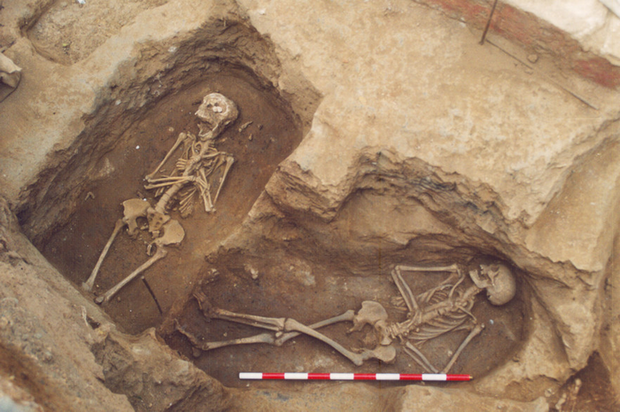
It is common today to have food, or even a feast, to memorialize the dead. It is a legacy from ancient times.
Across the Roman Empire, funerary rituals were conducted to ensure the protection of deities and the memory of the deceased. They were required by law.