
I recently watched the full two hours of this presentation [Evacuate Earth] and was disappointed in the fact that speculation rapidly degenerated into silliness, and ultimately pseudoscientific nonsense.
In virtually all the elements, the problem was simplistically framed within the context of physics, as if energy and travel in space were the only problems. There were certainly token references to genetic screening [despite the fact that it was largely incorrect and based on some fantasy assumptions]. Surprisingly there was mention of bacteria and then it simply got stupid. Just when I thought there would be a recognition about the difficulties in the microbiome, they concluded that bacteria "travel easy" because they can be kept frozen in a small container.
I guess it just never occurred to them that the bacteria already existed in a "container"; their own bodies. However, there wasn't even the illusion of an attempt to address the difficulties that such biological companions would present. Even daunting problems like the food supply were largely dismissed as if it were a temporary problem during space travel that would be readily resolved upon arrival on the new planet. The real silliness came from presuming to transport 250,000 humans, but no means to handle food plants/animals.
In short, programs like this are an embarrassment to science and simply promote the idea that idle speculation based on little more than wishful thinking are valid pursuits.
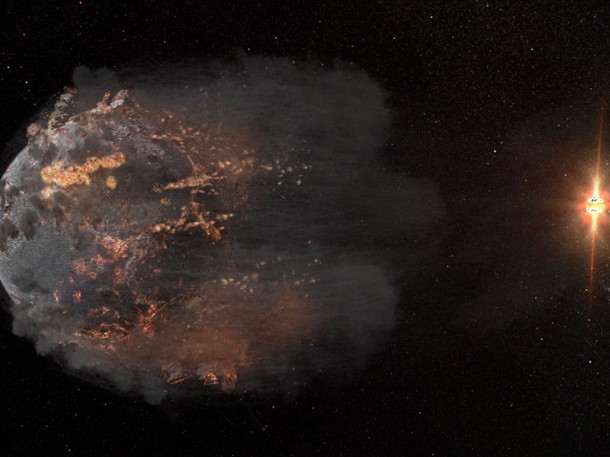
http://channel.nationalgeographic.com/channel/episodes/evacuate-earth/
http://channel.nationalgeographic.com/channel/galleries/end-of-the-world-evacuate-earth/at/starship-city-news-67073/
I suppose it wouldn't be so bad if it were presented as a speculative discussion, but when serious problems are under-stated. When huge gaps in our knowledge are glossed over as something we can readily solve if we simply focus on it. Perhaps the most disturbing undercurrent in the entire disaster scenario was that it didn't seem to occur to these scientists that their notion of a viable second Earth was little more than childish fantasy. The unmitigated arrogance of their scientific presumptions was as eye-opening as their ignorance.

In virtually all the elements, the problem was simplistically framed within the context of physics, as if energy and travel in space were the only problems. There were certainly token references to genetic screening [despite the fact that it was largely incorrect and based on some fantasy assumptions]. Surprisingly there was mention of bacteria and then it simply got stupid. Just when I thought there would be a recognition about the difficulties in the microbiome, they concluded that bacteria "travel easy" because they can be kept frozen in a small container.
I guess it just never occurred to them that the bacteria already existed in a "container"; their own bodies. However, there wasn't even the illusion of an attempt to address the difficulties that such biological companions would present. Even daunting problems like the food supply were largely dismissed as if it were a temporary problem during space travel that would be readily resolved upon arrival on the new planet. The real silliness came from presuming to transport 250,000 humans, but no means to handle food plants/animals.
In short, programs like this are an embarrassment to science and simply promote the idea that idle speculation based on little more than wishful thinking are valid pursuits.

http://channel.nationalgeographic.com/channel/episodes/evacuate-earth/
http://channel.nationalgeographic.com/channel/galleries/end-of-the-world-evacuate-earth/at/starship-city-news-67073/
I suppose it wouldn't be so bad if it were presented as a speculative discussion, but when serious problems are under-stated. When huge gaps in our knowledge are glossed over as something we can readily solve if we simply focus on it. Perhaps the most disturbing undercurrent in the entire disaster scenario was that it didn't seem to occur to these scientists that their notion of a viable second Earth was little more than childish fantasy. The unmitigated arrogance of their scientific presumptions was as eye-opening as their ignorance.





Hello Gerhard. I didn't notice this National Geo show and won't comment further on the odd notions the National Geographic Society has endorsed in recent TV history. I have no idea who is in charge and why. Maybe you and Hank can hash it out.
The History Channel also has its odd and unscientific ways. I recently stumbled upon their Mankind, The Story of All of Us series. Visually, it is quite entertaining, although one does tire of seeing people run in by a sword and heads being lopped and cleaved. I think it should be called Man-Unkind. A trove of interesting guns … and germs. I hope you like it ....