Fake Banner
    Steve Jobs' Death And The Meaning Of Life
    By Michael W. Taft | October 14th 2011 12:21 PM | 18 comments | Print | E-mail | Track Comments
    About Michael W.

    Michael W. Taft is a student of evolution, psychology, and the capacities of the human brain. A professional researcher and writer for more than...

    View Michael W.'s Profile
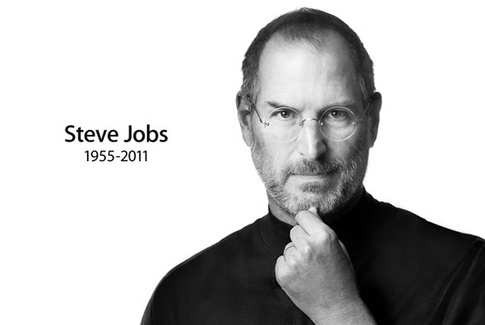
    On October 5th, Steve Jobs died. At first I was surprised at how choked up I got at his death—it’s not like I ever met him—until I realized that I wasn’t the only one. From special issues of The New Yorker and Wired magazines, to spontaneous memorials of flowers and candles at Apple stores, and front page articles everywhere, it seems that the world has taken a moment to mourn the loss of Jobs. The outpouring of sorrow and grief, in the era of Occupy Wall Street, may seem astonishing. Steve Jobs was, after all, a cantankerous stranger who ran a corporation, at a time when little love is lost for corporations. Why do we care? Why all the sorrow?

    The surprising answer to this question is: because we are living organisms who obey the dictates of evolution and natural selection. Life on earth is all about energy. Everything, from viruses to blue whales, metabolizes energy and uses it to reproduce itself, which is something that non-living systems cannot do. Your car can burn gas, but it cannot make new cars.

    The nervous systems of living organisms are optimized toward a central energy directive: gain energy resources (food), avoid the loss of energy resources (physical harm). If the system is running low on energy (“hungry”), the brain generates a strong drive to seek out new energy (“go get food”). If an external danger threatens to cause a loss of energy (for example, a predator), the brain generates a strong drive to either escape or destroy this threat (the fight-or-flight response). Just watch how you feel when somebody eats the last of the ice cream.

    The emotions of human beings serve the same purpose as do the basic drives: to motivate us to gather energy and reproduce ourselves. We derive the most happiness from things like eating (gather energy), sleeping (save energy), having sex (reproduce), and having children (reproduce). The feeling of happiness exists to push us towards the central goals of life, a sort of reward for fulfilling our biological duties.

    Sorrow is the opposite of happiness. It exists to let us know that we are failing at some aspect of the prime directive: failing to gain energy or succeed with reproduction. This is clear when you realize that the saddest thing that can happen to a human being is the death of their child—which represents the loss of their largest energy and reproductive investment.

    Beyond such personal emotions, as social animals we are programmed to understand that the fortunes of our group directly affect our own lives. When a member of our group excels or succeeds in some way, we feel happy because this exceptional individual is good for the group’s welfare. Think of the adulation we give to war heroes (who have defended our country) or, similarly, to sports stars (who bring honor to the teams many contemporary humans have enthusiastically adopted as their modern “tribes”). Because we identify with them as part of our group, their successes become, emotionally, our successes.

    When other members of our community die, we naturally feel sorrow at the loss, because the group has been diminished. And if this other person is considered to be a valuable member of the community in some way, this sorrow is much more marked. We realize on a subconscious level that our society has lost a valuable resource, a person who was making our lives better.

    Just before Steve Jobs died, Apple became the richest corporation on earth, surpassing even Exxon Mobil. This came about largely due to the brilliance of Jobs, whose contributions included co-creating the home computer itself, bringing the mouse and the graphic user interface out of the lab and into our daily work, and the iMac, the iPod, the iPhone, the iPad, the App Store, iTunes, and Pixar’s animated wonders. The look and feel of our lives today were first born in Jobs’ imagination. And at a time when the economy seems broken and nobody knows how to fix it, Jobs surged forward, generating new products, new wealth, and a vision of the technological future (as The Onion humorously eulogized). Regardless of how you feel about Apple’s products (or its fanboys), it’s impossible to deny that Jobs was an ultimate example of someone contributing to the group in a way that left us all better off.

    In one sense, the grief we feel is the sorrow a band of hunter-gatherers might feel if its prize spear-maker died. Our entire society is poorer when such a person dies, and not in just a metaphoric sense. Jobs was a crucial cultural resource—which explains the outpouring of sadness at his passing. As social organisms obeying the directives of energy and reproduction, we can’t help it.

    Read more from Michael W. Taft and co-author Peter Baumann at Ego.

    Comments

    Thank you for this very thoughtful and human perspective on the legacy of Steve Jobs. With everything (and it's been a lot) that I've recently read on the man, I think this really sums up the effect he had on people at large. It was so much more than his devices or the corporation he built. Other writers have talked about this or that aspect of his success or concentrated on his brilliance as an innovator. You went beyond that to capture the real connection that he forged with people all over the world.

    He's an odd example as a visionary as he didn't create the technologies but he somehow steered their presentation such that he made them accessible. The job he created for himself was "being Steve Jobs". Nobody created that job before or even has a similar role since. yet he did it perfectly. He was somehow responsible for nothing and everything of the products that Apple produced. He introduced an unexpected element of joy into using technology and did it in such a confident and definite way that millions of people bought into his vision. He gave them the expectation that technological products should be beautiful, functional and should excite the user with their details, quality and insights. I've owned Macs, iMacs, NextCubes and several generation of apple laptop "books". A Steve product always had some magic that covered over the flaws. The inescapable conclusion that people really CARED about this product. That detailed design matters - not just matters but is transcendant. Over the past decade his message went mainstream. People gave him and his company mindshare, sentiment and even affection. In the new Steve-less world, many are unsure how and who will now show them their technological future. That's a profound loss. Akin to a tribe losing their Shaman and the security that his interpretation and wisdom brought them. I am still sad about the death of a man I never met and I expect to remain so until someone picks up his baton.

    Shouldn't we also feel joy when somebody dies because a potential sexual rival has died and thus there's more chance of my DNA/genes being spread? You really need to read The Selfish Gene again.

    Gerhard Adam
    You really need to read The Selfish Gene again.
    It's good to have a sense of humor.... and that's a pretty funny reference.
    Steve Davis
    Good one Gerhard.
    I wonder if Richard realises that he just turned himself into a caricature.
    As I was reading this well-written article the thought crossed my mind that all is not lost, that people are still capable of expressing great truths despite the blind alley of the selfish gene hypothesis, and then along came Richard who brought me back to reality with a thud.
    Science advances funeral by funeral. 
    vongehr
    Why do we care? Why all the sorrow?
    Because we are irrational consumers who fall for advertising/PR/Spin
    Life on earth is all about energy. Everything,
    Nonsense - life is defined via entropy, not energy. Using E=mc^2 I have all the energy I would ever want in a single one of my turds.
    Apple became the richest corporation on earth ... due to the brilliance of Jobs ... when the economy seems broken and nobody knows how to fix it, Jobs surged forward
    So did the guys with the big bonuses on Wall street, those brilliant people, those Jesuses.
    Regardless of how you feel about Apple’s products (or its fanboys), it’s impossible to deny that Jobs was an ultimate example of someone contributing to the group in a way that left us all better off.
    Wow - regardless of how you feel about the results (or the supporters), it's impossible to deny that (enter whatever guy gathered supporters enough) was an ultimate example of contributing to the group in a way that left us all better off. What a dangerous nonsense.
    Here is an eulogy fitting for Jobs.
    MichaelTaft
    Nonsense - life is defined via entropy, not energy. Using E=mc^2 I have all the energy I would ever want in a single one of my turds.

    There are various definitions of life (none of them unequivocal), but the one you're probably referring to is based on Edwin Schroedinger's book What Is Life?, in which he uses the term negative entropy (as a synonym for free energy) to define the chief characteristic of life.

    I wasn't trying to “define life,” but instead was making the simple point that we all need to harvest energy through metabolism in order to keep living. As a physicist, it's probably clear to you that it's actually not all that easy to extract “all the energy [you] would ever want” from your shit. It would be tough for you to try to live off that. You might want to just eat some food instead.


    Unfortunately, this well meaning article went awry by starting with a preface, typical wac-wing distortion when Taft said, “The outpouring of sorrow and grief, in the era of Occupy Wall Street, may seem astonishing (OWS)” as if they are oppisites, and OWS antigonistic towards Jobs and Apple, when in fact they are on the same team. OWS is against Financial Corporations that produce nothing. Jobs and Apple produce a product, computers, albeit manufactured outside the U.S., a tempting topic to discuss but not right now. OWS is against fraud and about restoring the rule of law in finance. This has nothing to do with Jobs and Apple unless they deside to become hedge funds. Is that possible?
    After Taft’s initial blunder, any potential merit in the article, quickly faded away. It became filled with sentimental slop, backed by what some might call ‘popular science’, and went awry by trying to portrait the two ideas as opponents, instead of comrades. OWS is a righteous cause. Only a narrow minded, self centered pathetic sod (code for: Tea Party leaning sycophants) would think otherwise. The valient attempt to link jobs to natural selection on a vesceral level, after awhile, started to sound like Nazi talk.
    Jobs was a fortunate and intellegent man whom, to me at least, would see the merit in fighting financial corporations who feed on the US public and then accept bail out money from the public they victimize. Jobs was not one of them and must be turning over in his grave. It is scary that Mr. Tafts article is the first search item to display in google when you search “Steve Jobs died”. Your covert message does not go unnoticed. No hiding in broad daylight on this one.

    Hank
    OWS is against fraud and about restoring the rule of law in finance. This has nothing to do with Jobs and Apple unless they deside to become hedge funds. Is that possible?
    This is optimistic spin on your part.  Jobs was a confirmed stock options criminal, he just didn't go to jail because the stock did not go down (which fanboys defend, though 'cheating is okay if the stock goes up' does not seem to be in the Occupy Wall Street play book), a terrible father, a tyrant who took credit for everything everyone at Apple did and had no problem building his company on the oppressive conditions of Chinese labor.

    I don't see that an iphone is 'something' where a hedge fund is not. It is a useless extravagance, basically a fancy toaster.  Can I live without ever making toast?  Sure I can.

    I have nothing against Jobs, I am a huge fan of capitalism and he was a brilliant capitalist, but he is exactly what OWS should be protesting - a multi-billionaire who gave nothing to charity and found every possible loophole to not pay taxes while using clever marketing to convince people they should overpay for what he made.
    Want more no-nonsense, independent science? Buy Science Left Behind
    Thank you for your response:

    I stand corrected, didn't know Jobs was nefarious. Must come with the territory as a member of the billionaires club. That kind of money must be a drug. When more than enough is never enough, how can you satiate? Always looking for the next big fix must be quite a game. I abhore the behavior. "More than enough should be enough.'

    Ditto on the Chinese labor.

    Albeit an extravagance, the iPhone is a 'something' purely based on its entertainment value alone. Entertainment has been part of humanity since forever, in one way or another, so I give the iphone a pass. Besides humans need distraction; however, it is true, no indispensible utilitarian value resides within the iPhone.

    One of OWS's clear and present issues is to make easier the process for citizens to withdraw his/her money (cash) deposits; as is the case with Bank of America. But as individually speaking, you can never regulate someones heart and get them to donate and be charitable.

    Peace

    MichaelTaft
    Wow. Only six comments to a perfect Godwin. Very impressive, and I wasn’t even trying. ;)

    It's unfortunate how often people mistakenly hear talk of natural selection as having some kind of fascist overtones. The Christian right in America often attempts to connect Darwin and the Nazis, and to use that false connection to chip away at the credibility and respectability of the theory of evolution. Obviously, Darwin cannot be held responsible for the criminals who twisted his ideas to forward their agenda.

    You’re off base about OWS, btw. I’m a fan.

    Thanks for alerting me to the fact that the article was number one on Google for a while. I probably found that scarier than you did! :)
    Bravo, and ditto on just about all feelings! It will always be impossible to walk in anothers' shoes and to truly understand anothers' feelings and emotions. In as much as we have in common we have twice the difference. Mr. Jobs was truly a great man and an inspiration to all. I understand he was an orphan, although his natural mother didn't want to give him up, but her father kinda' made her, and wouldn't let her ever be with his father, who called her father a "tyrant". This is just the story I heard. There had to be some difficult moments in his life. It seems weird kinda' for so many to go through so much, and just die too early. I can say, at least he was fortunate enough to taste life with such success, even if for that short moment!

    SynapticNulship
    it seems that the world has taken a moment to mourn the loss of Jobs.
    If you cherry pick what you read about his death, sure. I'm not mourning him. Mostly I am sad that people die from cancer still and I hope we can get better treatments out there during my lifetime (especially if I ever get cancer).

    When other members of our community die, we naturally feel sorrow at the loss, because the group has been diminished. And if this other person is considered to be a valuable member of the community in some way, this sorrow is much more marked. We realize on a subconscious level that our society has lost a valuable resource, a person who was making our lives better.
    Or maybe some people just get way too attached to celebrities. We cry for protagonists in movies too. Are fictional characters members of our community?

    Your question is of course interesting--why some people have sorrow for a corporate celebrity--but your "energy" based explanation is built up on statements with no evidence or research links provided.  For instance, this statement makes no sense:

    The nervous systems of living organisms are optimized toward a central energy directive: gain energy resources (food), avoid the loss of energy resources (physical harm).
    So you make this premise that all organisms have a goal, which sounds unbelievable to me. And what about organisms which don't have nervous systems? Then you say that this goal is to gain energy. Well that means that all organisms would be constantly getting huge and fighting over every scrap of edible material constantly, and although there are a lot of obese people around, it's certainly not a full-on "gain energy" directive.

    So it turns out that the goal is not actually to gain energy, as you actually say in the next sentence:
    If the system is running low on energy (“hungry”), the brain generates a strong drive to seek out new energy (“go get food”).
    So shouldn't your organism goal actually be to maintain the proper range of energy? Hmmm...maybe you're just talking about run of the mill homeostasis....

    To be honest, as it stands, your article sounds like it's pushing some weird combination of Scientology and Celestine Prophecy bunk.
    MichaelTaft
    I'm talking about metabolism and homeostasis, yeah. As well as reproduction. It's all very run of the mill, as you say, and yet it's part of what makes us tick.
    Steve Davis
    Michael, I think we've learned something here - the mention of Steve Jobs can produce nit-pickers of the highest calibre! 
    MichaelTaft
    Looks like an interesting book. I'll check it out. Thanks.
    "he was just a guy, you know?" - Hitchhiker's Guide to the Galaxy

    i sense Princess Diana death worship syndrome

    Rick Ryals
    What the heck happened to my post?