




Insects eating plant roots change the chemical composition of the leaves, causing the plant to release volatile signals into the air. This can convince aboveground insects to select another food plant in order to avoid competition and to escape from poisonous defense compounds in the plant.
Apparently the communication doesn't stop there.
Those same plant insects are also able to leave 'voicemail' messages in the soil. Herbivorous insects store their voicemails via their effects on soil fungi. The new research shows that insects leave a specific legacy that remains in the soil after they have fed on a plant. And future plants growing on that same spot can pick up these signals from the soil and pass them on to other insects. Those messages are really specific: the new plant can tell whether the former one was suffering from leaf-eating caterpillars or from root-eating insects.
"The new plants are actually decoding a 'voicemail' message from the past to the next generation of plant-feeding insects, and their enemies," says NIOO researcher and first author Olga Kostenko. "The insects are re-living the past."
Insect "voicemail" involves following insects feeding on plant leaves. This triggers the plant to react, the soil fungi community to change, and the next generation of plants and insects to pick up the message. Credit: Olga Kostenko / NIOO-KNAW
This message from the past strongly influences the growth and possibly the behavior of these bugs. Today's insect community is influenced by the messages from past seasons.
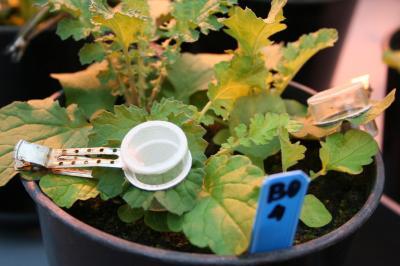
The researchers grew ragwort plants in a greenhouse and exposed them to leaf-eating caterpillars or root-feeding beetle larvae. Then they grew new plants in the same soil and exposed them to insects again. "What we discovered is that the composition of fungi in the soil changed greatly and depended on whether the insect had been feeding on roots or leaves," explains Kostenko. "These changes in fungal community, in turn, affected the growth and chemistry of the next batch of plants and therefore the insects on those plants."
Growth and palatability of new plants in the same soil thus mirrored the condition of the previous plant. In this way, a new plant can pass down the soil legacy or message from the past to caterpillars and their enemies.
"How long are these voicemail messages kept in the soil? That's what I also would like to know!" adds Kostenko. "We're working on this, and on the question of how widespread this phenomenon is in nature."



Comments