Banner
E. Coli Linked To Diabetic Foot Infections Gets Worldwide Analysis

Diabetic foot infections are a serious complications of diabetes and a leading cause of lower-limb...
Social Media Is A Faster Source For Unemployment Data Than Government

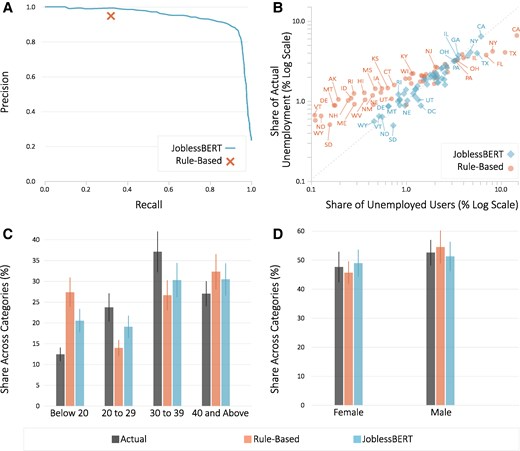
Government unemployment data today are what Nielsen TV ratings were decades ago - a flawed metric...

Gestational Diabetes Up 36% In The Last Decade - But Black Women Are Healthiest

Gestational diabetes, a form of glucose intolerance during pregnancy, occurs primarily in women...
Object-Based Processing: Numbers Confuse How We Perceive Spaces

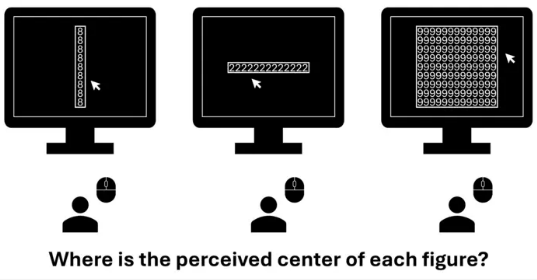
Researchers recently studied the relationship between numerical information in our vision, and...

User picture.
News StaffRSS Feed of this column.

News Releases From All Over The World, Right To You... Read More »

Blogroll

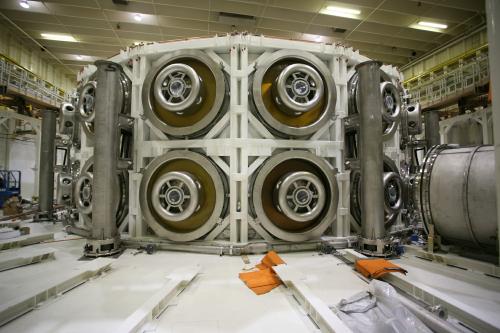
Sandia National Laboratories’ Z machine, the world’s largest producer of X-rays, shook the ground for several hundred yards in every direction for the first time since July 2006, when the 22-year-old facility was gutted to undergo a complete refurbishment at a total project cost of $90 million.

Z has been overbooked in recent years with requests for experiment time from national labs, universities, and the international community. The facility is in demand because of Z’s capability to subject materials to immense pressures, compress spherical capsules to produce thermonuclear fusion reactions, fire objects much faster than a rifle bullet, and produce data for models of nuclear weapons effects — as well as, more arcanely, the conditions surrounding black holes in space.

A Florida State University researcher has helped solve a scientific mystery that stumped chemists for nearly seven decades. In so doing, his team’s findings may lead to the development of more-powerful computer memories and lasers.

Naresh S. Dalal, the Dirac Professor of Chemistry and Biochemistry at FSU, recently collaborated with three colleagues, Jorge Lasave, Sergio Koval and Ricardo Migoni, all of the Universidad Nacional de Rosario in Argentina, to determine why a certain type of crystal known as ammonium dihydrogen phosphate, or ADP, behaves the way it does.

“ADP was discovered in 1938,” Dalal said. “It was observed to have some unusual electrical properties that weren’t fully understood -- and for nearly 70 years, scientists have been perplexed by these properties.

From absorbable sutures to gel-like cold-and-flu capsules, polymers have been used for years in the human body to help heal what ails us.

Today, scientists are pioneering the development of new “polymer drugs”--long-chained molecules that have therapeutic benefits because of their chemical composition and high molecular weight. The potential benefits of these novel drugs range from the more precise targeting of cancer-fighting chemotherapy treatments, to the sequestering and removal of toxins in the body.

Kristi Kiick, associate professor of materials science and engineering at the University of Delaware, recently published an article on polymer therapeutics in the prestigious journal Science.

Terrorists are leveraging information technology to learn how to create devastating weapons cheaply and quickly - and the West is now having to learn to keep up.

Since the start of the Iraq War, improvised explosive devices, or IEDs, have accounted for nearly half of the combat deaths reported by U.S. coalition forces. The death toll underscores a grim paradox of the ongoing conflict: during the last four and a half years the United States and its allies have fielded the most advanced and complex weaponry ever developed, but egg timers and toy remote controls in the hands of knowledgeable terrorists can do just as much damage.

Military analysts and counterterrorism experts say that this war is radically different from previous ones and must be thought of in an entirely new light.

Ubiquitin is a small protein, which can be attached to other cellular proteins. A study headed by the Junior Group of Dr. Daniel Krappmann (GSF - National Research Center for Environment and Health, Institute of Toxicology) in collaboration with Dr. Jürgen Ruland (TU Munich) and Dr. Claus Scheidereit (Max-Delbrück-Center , Berlin) now reports a novel finding about ubiquitination as a key event for the activation of an immune response.

The acquired immune response is triggered after specific engagement of foreign peptides (antigens) by receptor molecules on white blood cell (lymphocytes). Cellular signaling pathways are responsible for the activation of lymphocytes.

With the latest advances in treatment, doctors say they can successfully neutralize the HIV virus. The so-called ‘combination therapy’ prevents the HIV virus from mutating and spreading, allowing patients to rebuild their immune system to the same levels as the rest of the population.

Professor Jens Lundgren from the University of Copenhagen, together with other members of the research group EuroSIDA, have conducted a study, which demonstrates that the immune system of all HIV-infected patients can be restored and normalized. The only stipulation is that patients begin and continue to follow their course of treatment.

Viruses are small organisms that have no independent metabolism. Consequently, when they enter the body they attack living cells and adopt their metabolism.