Banner
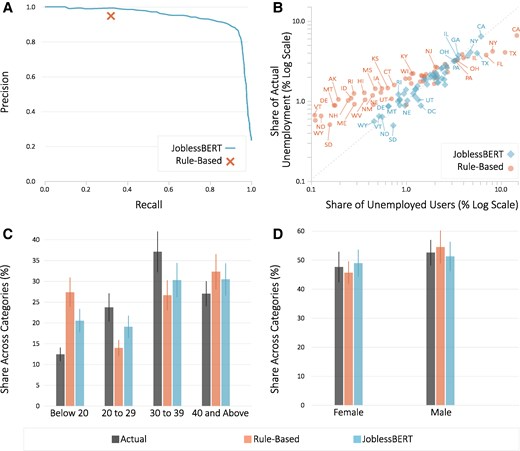
Social Media Is A Faster Source For Unemployment Data Than Government

Government unemployment data today are what Nielsen TV ratings were decades ago - a flawed metric...

Gestational Diabetes Up 36% In The Last Decade - But Black Women Are Healthiest

Gestational diabetes, a form of glucose intolerance during pregnancy, occurs primarily in women...
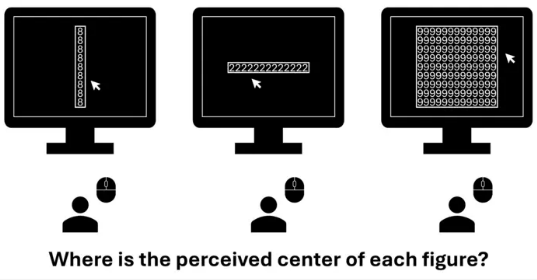
Object-Based Processing: Numbers Confuse How We Perceive Spaces

Researchers recently studied the relationship between numerical information in our vision, and...
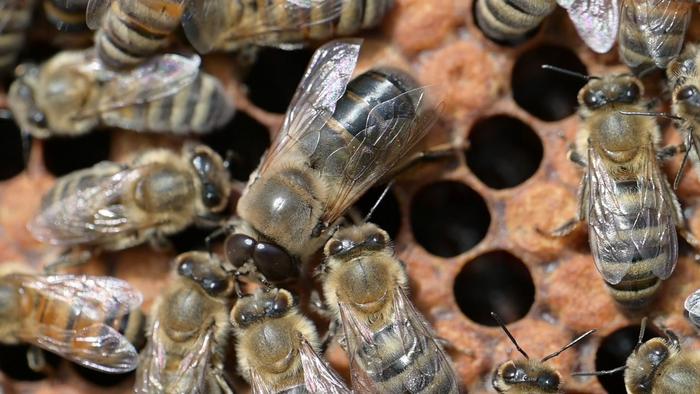
Males Are Genetically Wired To Beg Females For Food

Bees have the reputation of being incredibly organized and spending their days making sure our...

User picture.
News StaffRSS Feed of this column.

News Releases From All Over The World, Right To You... Read More »

Blogroll

97 million Americans are overweight or obese. Obesity is considered an epidemic these days. Could a virus be behind it?

Scientists have presented a new study showing infection with the adenovirus-36 (Ad-36) virus, long recognized as a cause of respiratory and eye infections in humans, may be a contributing factor.

Their laboratory experiments they showed that infection with Ad-36 transforms adult stem cells obtained from fat tissue into fat cells. Stem cells not exposed to the virus, in contrast, were unchanged.

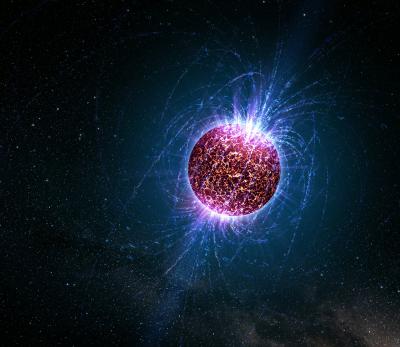
Located in the constellation Ursa Minor, and nicknamed Calvera after the villain in the movie "The Magnificent Seven", the new discovery will be only the eighth known "isolated neutron star", if confirmed, and the closest.

An isolated neutron star is one that does not have an associated supernova remnant, binary companion, or radio pulsations.

They chose that name for a special reason. "The seven previously known isolated neutron stars are known collectively as 'The Magnificent Seven' within the community and so the name Calvera is a bit of an inside joke on our part," says co-discoverer Derek Fox of Penn State. A paper describing the research will be published in the Astrophysical Journal.

Scientists conducting an experiment beneath the mountains of Italy have reached a clearer understanding of the sun's heart -- and of a mysterious class of subatomic particles born there.

The researchers, working as part of an international collaboration at the underground Gran Sasso National Laboratory near L'Aquila, Italy, have made the first real-time observation of low-energy solar neutrinos, which are fundamental particles created by nuclear reactions that stream in vast numbers from the sun's core.

Their measurements will be published in an upcoming edition of Physics Letters B and reports a direct measurement of the 7Be solar neutrino signal rate performed with the Borexino low background liquid scintillator detector.

Stem cells transplanted into the brains of mice generate more numerous and more mature nerve cells if the brain cells called astrocytes are not activated. This discovery at the Sahlgrenska Academy is an important step forward for stem cell research.

The study was performed by a research team at the Center for Brain Repair and Rehabilitation at the Sahlgrenska Academy.

The transplantation of stem cells and activation of the body's own stem cells could be a future treatment for several neurological disorders.

The discovery that eukaryotes, bacteria, and archaea coexisted 2.7 billion years ago came from chemical examination of shale samples, loaded with oily lipid remains of archaea found in a deep Canadian gold mine near Timmins, Ontario, about 400 miles north of Toronto. Previously it was thought that the three domains of life branched off around three billion years ago but being more specific was not possible.

Fabien Kenig, associate professor of earth and environmental sciences at the University of Illinois at Chicago, and his former doctoral student Gregory Ventura, spent nearly five years carefully analyzing the shale samples, originally to compare what they found with an earlier Australian study suggesting the presence of eukaryotes some 2.7 billion years ago.

Scientists know that information travels between brain cells along hairlike extensions called axons. For the first time, researchers have found that axons don’t just transmit information – they can turn the signal up or down with the right stimulation.

This finding may help scientists develop treatments for psychiatric disorders such as depression and schizophrenia in which it is thought that different parts of the brain do not communicate correctly with each other.