
Banner
The Scorched Cherry Twig And Other Christmas Miracles Get A Science Look

Bleeding hosts and stigmatizations are the best-known medieval miracles but less known ones, like ...

$0.50 Pantoprazole For Stomach Bleeding In ICU Patients Could Save Families Thousands Of Dollars

The inexpensive medication pantoprazole prevents potentially serious stomach bleeding in critically...
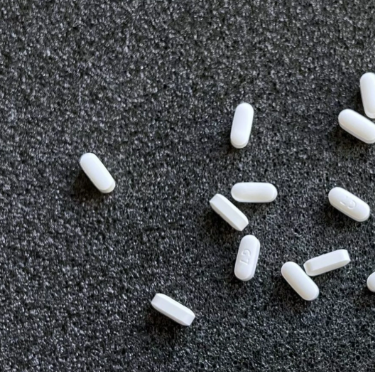
Metformin Diabetes Drug Used Off-Label Also Reduces Irregular Heartbeats

Adults with atrial fibrillation (AFib) who are not diabetic but are overweight and took the diabetes...

Your Predator: Badlands Future - Optical Camouflage, Now Made By Bacteria

In the various 'Predator' films, the alien hunter can see across various spectra while enabling...

User picture.
News StaffRSS Feed of this column.

News Releases From All Over The World, Right To You... Read More »

Blogroll

Taking part in group psychotherapy can help men who have erectile dysfunction to overcome their problem, and adding sildenafil to group therapy was more effective that sildenafil alone. In addition, group psychotherapy was more effective than taking sildenafil on its own, a Cochrane Systematic Review has found.

Normal sexual function relies on the coordination of psychological, endocrine, vascular and neurological factor. Recent research has increased attention on the role of psychological issues. In particular, depression, low self-esteem, anxiety and other psychosocial stresses can play a large role in erectile dysfunction.

Engineers at the University of Pennsylvania have taken a step toward simplifying the creation of nanostructures by identifying the first inorganic material to phase separate with near-perfect order at the nanometer scale.

The finding provides an atomically tuneable nanocomposite “workbench” that is cheap and easy to produce and provides a super-lattice foundation potentially suitable for building nanostructures.

Alerted by an unusual diffraction effect of a common ceramic material, researchers used imaging to identify a two-phase structural pattern ideal as the first step towards nanodevice construction.

A thumb’s up for “I’m good.” The rubbing of a pointed forefinger at another for “shame on you.” The infamous and ubiquitous middle finger salute for—well, you know. Such gestures that convey meaning without speech are used and recognized by nearly everyone in our society, but to someone from a foreign country, they may be incomprehensible.

The opposite is true as well. Plop an American in a foreign land and he or she may be clueless to the common gestures of that particular culture. This raises a provocative question—does culture influence the brain"

A new method which will allow more effective voice discrimination has been developed by researchers at the University of Hertfordshire.

Dr Aladdin Ariyaeeinia at the University’s School of Electronic Communication & Electrical Engineering and his team have been conducting research into voice biometrics (speaker recognition) for over 10 years. The process has various potential applications such as verifying individuals’ identities when they try to access cash machines or try to bank or shop online.

The team’s most recent development is a new approach to speaker change detection, a process which captures when speakers change in a given conversational audio stream which could have very useful applications in criminal investigations and in managing audio-visual recordings.

A new study of bottomland hardwood forests in the southeastern United States suggests that the increased growth of vines may change the landscape of these forests.

Researchers charting the growth of vines in two forests in South Carolina found up to a 10-fold increase in the number of vines in just two decades. Vines commonly found in both forests include grapevines, trumpet vine, poison ivy and Virginia creeper.

Primetime crime drama meets reality in forensic research taking place at the Midwest Forensics Resource Center at Iowa State University.

Ames Laboratory scientists are using the new Direct Analysis in Real Time mass spectrometry interface, which has made a guest appearance on the popular crime show "CSI: New York," to build a library of ink mass spectra using samples from the US Secret Service. The mass spectra library will help identify inks on fraudulent documents and other crime evidence.

DART mass spectrometry analyzes ink by creating a stream of warm gas containing excited-state helium atoms or nitrogen molecules in the DART source. The gas stream is pointed at an ink sample, and the gas and excited-state species evaporate and ionize molecules from the sample.