

Banner
The Scorched Cherry Twig And Other Christmas Miracles Get A Science Look

Bleeding hosts and stigmatizations are the best-known medieval miracles but less known ones, like ...

$0.50 Pantoprazole For Stomach Bleeding In ICU Patients Could Save Families Thousands Of Dollars

The inexpensive medication pantoprazole prevents potentially serious stomach bleeding in critically...
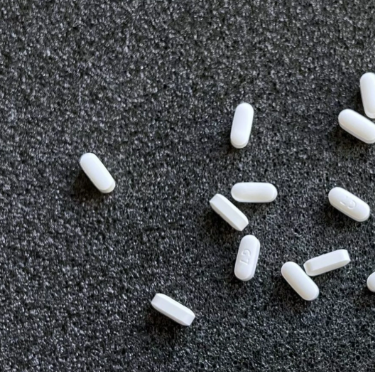
Metformin Diabetes Drug Used Off-Label Also Reduces Irregular Heartbeats

Adults with atrial fibrillation (AFib) who are not diabetic but are overweight and took the diabetes...

Your Predator: Badlands Future - Optical Camouflage, Now Made By Bacteria

In the various 'Predator' films, the alien hunter can see across various spectra while enabling...

User picture.
News StaffRSS Feed of this column.

News Releases From All Over The World, Right To You... Read More »

Blogroll

Researchers visiting South Sudan identified a new genus of bat after discovering a rare specimen and determining the bat was the same as one originally captured in nearby Democratic Republic of the Congo in 1939 and named Glauconycteris superba but that it did not fit with other bats in the genus Glauconycteris.

They placed this bat into a new genus - Niumbaha. The word means "rare" or "unusual" in Zande, the language of the Azande people in Western Equatoria State, where the bat was captured. The bat is just the fifth specimen of its kind ever collected, and the first in South Sudan, which declared independence in 2011. 

Seemingly benign differences in genetic code  can predispose people to chemotherapy-induced peripheral neuropathy, a condition that is hard to predict and often debilitating enough to cause cancer patients to stop their treatment early, a Mayo Clinic study has found.

Chemotherapy-induced peripheral neuropathy affects an estimated 20 to 30 percent of cancer patients treated with chemotherapy agents. The symptoms can be as mild as a light tingling or numbness, but can progress to a loss of feeling in the hands and feet, or to the point where patients can no longer walk normally and are left with a permanent feeling of numbness or pain. Currently, there is no way to predict which patients undergoing chemotherapy will develop this side effect or to what degree.

Some assume that evolution only occurs gradually, over hundreds or thousands of years, but scientists have shown otherwise numerous times and now a new paper in Ecology Letters affirms that environmental change can drive hard-wired evolutionary changes in animal species in a matter of generations.

Researchers found significant genetically transmitted changes in laboratory populations of soil mites in just 15 generations leading to a doubling of the age at which the mites reached adulthood and large changes in population size. The results  demonstrate that evolution can be a game-changer, even in the short-term.

An analysis of how carbon is trapped and released by iron-rich volcanic magma offers clues about our early atmospheric evolution and also that of other terrestrial bodies.

The composition of a planet's atmosphere starts far beneath the surface. When mantle material melts to form magma, it traps subsurface carbon. As magma moves upward toward the surface and pressure decreases, that carbon is released as a gas. On Earth, carbon is trapped in magma as carbonate and degassed as carbon dioxide, a greenhouse gas that helps Earth's atmosphere trap heat from the sun. But how carbon is transferred from underground to the atmosphere in other planets — and how that might influence greenhouse conditions — wasn't well understood.

Discovery of a new protein that controls the presence of the Vel blood group antigen on our red blood cells will make it possible to use simple DNA testing to find blood donors for patients who lack the Vel antigen and need a blood transfusion, say researchers. 

The world produces a lot of food, enough to feed billions more than are living right now. There is a distribution issue, which will be solved as science engineers more crops that can grow in more local conditions, but one way to make more food available right now will also save people money - reducing food waste.

4 out of every 10 pounds produced in the United States alone goes to waste, claimed  John Floros, Ph.D.,  dean of the College of Agriculture at Kansas State University, in a keynote talk at the American Chemical Society meeting.






