Banner
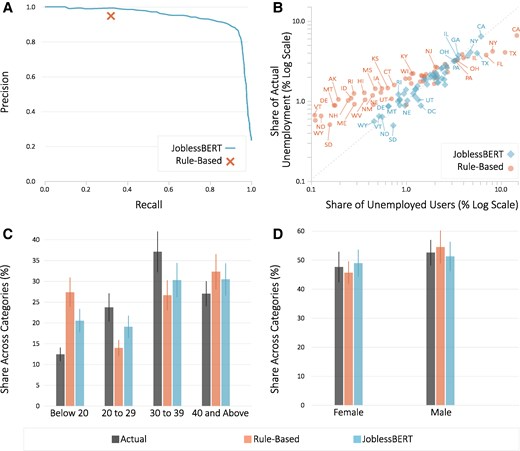
Social Media Is A Faster Source For Unemployment Data Than Government

Government unemployment data today are what Nielsen TV ratings were decades ago - a flawed metric...

Gestational Diabetes Up 36% In The Last Decade - But Black Women Are Healthiest

Gestational diabetes, a form of glucose intolerance during pregnancy, occurs primarily in women...

Object-Based Processing: Numbers Confuse How We Perceive Spaces

Researchers recently studied the relationship between numerical information in our vision, and...

Males Are Genetically Wired To Beg Females For Food

Bees have the reputation of being incredibly organized and spending their days making sure our...

User picture.
News StaffRSS Feed of this column.

News Releases From All Over The World, Right To You... Read More »

Blogroll
A new approach to invisibility cloaking goes beyond transformation optics and those tiresome Harry Potter analogies. It is instead for us at sea to shield floating objects, like oil rigs and ships, from rough waves and is based on the influence of the ocean floor's topography on the various "layers" of ocean water.

Reza Alam, assistant professor of mechanical engineering at the University of California, Berkeley, will describe at the American Physical Society's (APS) Division of Fluid Dynamics (DFD) meeting how the variation of density in ocean water can be used to cloak floating objects against incident surface waves
Work-hour caps for surgical residents designed to lessen complication rates have not accomplished that. Instead, the period after work-hour limits were introduced saw an uptick in complication rates , according to findings which raise concerns that limiting residents' work hours isn't really a benefit.

The analysis was designed to evaluate the patient safety impact of rules limiting the hours worked by residents, a measure introduced in 2003. The goal of the limits, a maximum of 88 hours per week, was to reduce the risk of errors and injury related to resident fatigue.

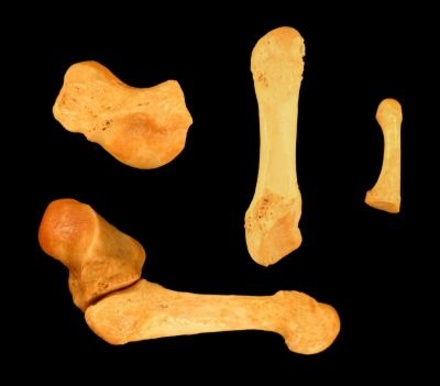
An international team of researchers has resolved the evolutionary relationships of Necrolestes patagonensis, the so-called “grave robber” because of its burrowing and underground lifestyle. This much-debated fossil mammal from South America has been a paleontological riddle for 121 years but a recent fossil discovery and comparative anatomical analysis helped researchers to correctly place the strange 16-million-year-old Necrolestes, with its upturned snout and large limbs for digging, in the mammal evolutionary tree.

A new annual analysis has again attempted to determine whether society can achieve something similar to the a Rousseaunian social contract. In order to do this, the economists carried out an experiment that reproduced in a laboratory setting some of the important characteristics of the welfare state. 
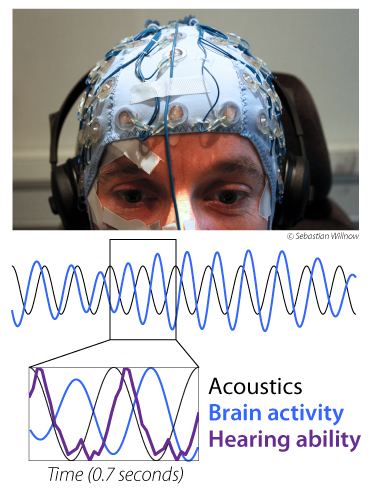
We know brain activity changes many times over the course of a day. When listening, this oscillation synchronizes to the sounds we are hearing. Not only that, say researchers from the Max Planck Institute for Human Cognitive and Brain Sciences, this oscillation influences the way we listen.

Hearing abilities also oscillate and depend on the exact timing of one’s brain rhythms. This discovery that sound, brain, and behavior are so intimately coupled will help us to learn more about listening abilities in hearing loss and perhaps people who stutter.
Though breast cancer death rates have been in decline for 20 years, black women had higher death rates than other demographics in the newest Centers for Disease Control report covering 2005-2009. Breast cancer remains the most common cancer and is the second leading cause of cancer death among U.S. women, about 40,000 deaths annually.