Banner
Object-Based Processing: Numbers Confuse How We Perceive Spaces

Researchers recently studied the relationship between numerical information in our vision, and...

Males Are Genetically Wired To Beg Females For Food

Bees have the reputation of being incredibly organized and spending their days making sure our...

The Scorched Cherry Twig And Other Christmas Miracles Get A Science Look

Bleeding hosts and stigmatizations are the best-known medieval miracles but less known ones, like ...

$0.50 Pantoprazole For Stomach Bleeding In ICU Patients Could Save Families Thousands Of Dollars

The inexpensive medication pantoprazole prevents potentially serious stomach bleeding in critically...

User picture.
News StaffRSS Feed of this column.

News Releases From All Over The World, Right To You... Read More »

Blogroll

Plants have an immune system that resists infection, yet 10% of the world's agricultural production is lost annually to diseases caused by bacteria, fungi, and viruses. Understanding how disease resistance works may help combat this scourge.

In a new study published online this week in the open-access journal PLoS Biology, Tessa Burch-Smith, Savithramma Dinesh-Kumar, and colleagues show how one aspect of the plant immune system is defined by the gene-for-gene hypothesis: a plant Resistance (R) gene encodes a protein that specifically recognizes and protects against one pathogen or strain of a pathogen carrying a corresponding Avirulence (Avr) gene.

In tobacco and its relatives, the N resistance protein confers resistance to infection by the Tobacco mosaic virus (TMV).

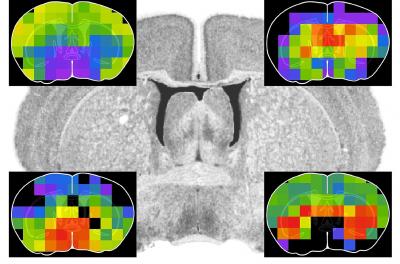
The Allen Brain Atlas, a genome-wide map of the mouse brain on the Internet, has been hailed as “Google of the brain.” The atlas now has a companion or the brain’s working molecules, a sort of pop-up book of the proteins, or proteome map, that those genes express.

The protein map is “the first to apply quantitative proteomics to imaging,” said Richard D. Smith, Battelle Fellow at the Department of Energy’s Pacific Northwest National Laboratory, who led the mapping effort with Desmond Smith of UCLA’s David Geffen School of Medicine.


Caption: Abundance profiles of four different proteins compiled from 1 millimeter cubes (voxels) in a mouse brain.

Stem cell technique helps women grow their own implants

Daily Mail - Women have grown their own breast implants through pioneering stem cell treatment, it emerged yesterday. Scientists harvested the stem cells from the women's own fat and encouraged them to form breast tissue...

Global-warming skeptics cite being 'treated like a pariah'

There's science in love, you know, and that means there's science in Valentine's Day. Science on Valentine's Day is like cold fusion instead of ethanol. Completely wonderful. And we have it all right here.

Not sure who to date? Garth Sundem answers it in The Valentine's Day Man-O-Meter. Be sure to take it as gospel because he never just makes stuff up.
There's science in love, you know, and that means there's science in Valentine's Day. Science on Valentine's Day is like cold fusion instead of ethanol. Completely wonderful. And we have it all right here.

VK Raina, leading glaciologist and former ADG of the Geological Society of India, told the Hindustan Times that out of 9,575 glaciers in India, till date, research has been conducted only on about 50. Nearly 200 years data has shown that nothing abnormal has occurred in any of these glaciers.

It is simple. The issue of glacial retreat is being sensationalised by a few individuals, the septuagenarian Raina claimed.

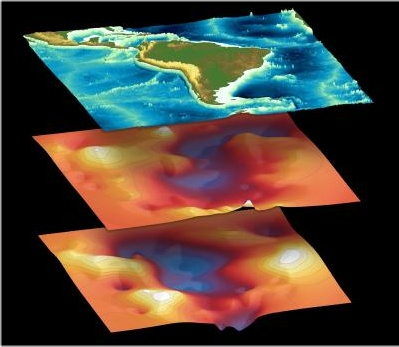
New research challenges traditional perceptions of contemporary climate as sole determiner of richness of species.

The climate is changing! But how does that affect nature? New research challenges traditional perceptions of contemporary climate as sole determiner of richness of species.

An international research team led by Professor Carsten Rahbek from Department of Biology, University of Copenhagen, questions traditional beliefs that contemporary climate alone determines richness of species, that is, how life is distributed on earth. The current issue of Science magazine highlights the research in Editor’s choice.