
Banner
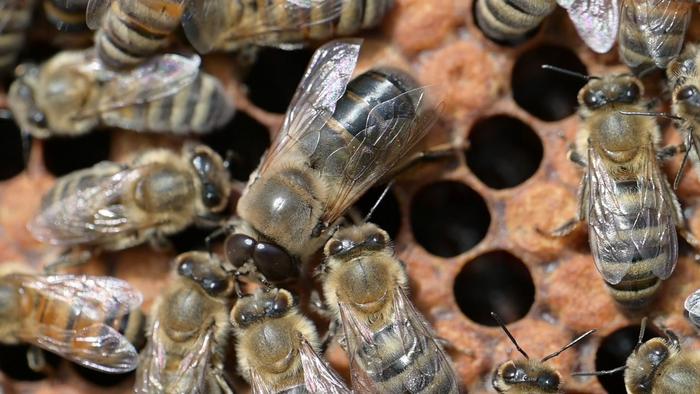
Males Are Genetically Wired To Beg Females For Food

Bees have the reputation of being incredibly organized and spending their days making sure our...

The Scorched Cherry Twig And Other Christmas Miracles Get A Science Look

Bleeding hosts and stigmatizations are the best-known medieval miracles but less known ones, like ...

$0.50 Pantoprazole For Stomach Bleeding In ICU Patients Could Save Families Thousands Of Dollars

The inexpensive medication pantoprazole prevents potentially serious stomach bleeding in critically...

Metformin Diabetes Drug Used Off-Label Also Reduces Irregular Heartbeats

Adults with atrial fibrillation (AFib) who are not diabetic but are overweight and took the diabetes...

User picture.
News StaffRSS Feed of this column.

News Releases From All Over The World, Right To You... Read More »

Blogroll

Humpback dolphin swimming in the waters off northern Australia are a new species   previously unknown to science, according to a team of researchers 

To determine the number of distinct species in the family of humpback dolphins (animals named for a peculiar hump just below the dorsal fin), the research team examined the evolutionary history of this family of marine mammals using both physical features and genetic data.  While the Atlantic humpback dolphin is a recognized species, this work provides the best evidence to date to split the Indo-Pacific humpback dolphin into three species, one of which is completely new to science.

In 1855, a specimen of the brain of mathematician Carl Friedrich Gauss was taken and preserved. But the over 150-year-old slice of his brain, which scientists had long been examining in the belief that it was Gauss's brain, turns out to not be his brain at all.

Instead, the preserved specimens of the brains of Gauss and Göttingen physician Conrad Heinrich Fuchs, a medical scholar and founder of the University of Göttingen's anatomical pathology collection, were switched, probably soon after the death of both men in 1855, says  Renate Schweizer, a neuroscientist at Biomedizinische NMR Forschungs GmbH at the Max Planck Institute for Biophysical Chemistry.

After oxygen in the atmosphere and ocean rose about 600 million years ago, earth got the first proliferation of animal life. Between then and now, numerous short lived biotic events took place when oxygen concentrations in the ocean dipped episodically.

Engaging in some Do It Yourself projects or gardening can cut the risk of a heart attack/stroke and prolong life by as much as 30 per cent among the 60+ age group, indicates a new paper. 

They might seem like routine activities but they are as good as exercise, and more fun, which is ideal for older people who don't often do that much formal exercise, according to the scholars who based their findings on almost 4,000 sixty-year-olds in Stockholm, Sweden, who had their cardiovascular health tracked for around 12 years. At the start of the study, participants took part in a health check, which included information on lifestyle, such as diet, smoking, and alcohol intake, and how physically active they were.

Protecting carbon-storing forests in the developing world may be easier than mobilizing government bureaucracies; a recent paper finds that local communities, using simple tools like ropes and sticks, can produce forest carbon data on par with results by government employees using high-tech devices.  

Centuries of economic hypotheses have been based on the premise of rational actors: when given a choice between two items, people select the one they value more. But as with many simple premises, this one has a flaw in that it is demonstrably untrue.

Yet that was never really the case. Too many exceptions mean a rule was never a rule anyway - there are lots of examples where people act against their own apparent interests. One of these biases — the mere fact of possessing something raises its value to its owner — is known as the "endowment effect."  

A new paper seeks to address whether this bias is truly universal and speculates that it may have been present in humanity's evolutionary past.



