
Banner
The Scorched Cherry Twig And Other Christmas Miracles Get A Science Look

Bleeding hosts and stigmatizations are the best-known medieval miracles but less known ones, like ...

$0.50 Pantoprazole For Stomach Bleeding In ICU Patients Could Save Families Thousands Of Dollars

The inexpensive medication pantoprazole prevents potentially serious stomach bleeding in critically...
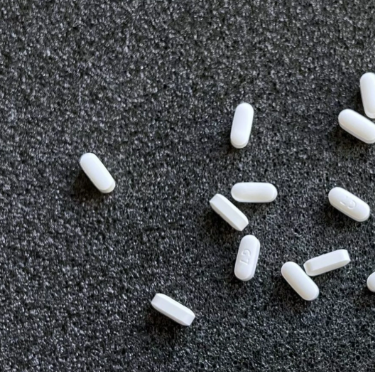
Metformin Diabetes Drug Used Off-Label Also Reduces Irregular Heartbeats

Adults with atrial fibrillation (AFib) who are not diabetic but are overweight and took the diabetes...

Your Predator: Badlands Future - Optical Camouflage, Now Made By Bacteria

In the various 'Predator' films, the alien hunter can see across various spectra while enabling...

User picture.
News StaffRSS Feed of this column.

News Releases From All Over The World, Right To You... Read More »

Blogroll

U.S. medical schools have made significant progress to strengthen their management of clinical conflicts of interest but a new study concludes most schools still lag behind national standards.

The Institute on Medicine as a Profession (IMAP) study, which compared changes in schools' policies in a dozen areas from 2008 to 2011, reveals that institutions are racing from the bottom to the middle, not to the top. In 2011, nearly two-thirds of medical schools still lacked policies to limit ties to industry in at least one area explored, including gifts, meals, drug samples, and payments for travel, consulting, and speaking.

Tiny crystals of zircon, a mineral found in the igneous rock rhyolites, from the Snake River Plain in the Yellowstone hotspot has solidified evidence for a new way of looking at the life cycle of super-volcanic eruptions.

The pattern emerging from new and previous research completed in the last five years is that another super-eruption from the still-alive Yellowstone volcanic field is less likely for the next few million years than previously thought. The last eruption 640,000 years ago created the Yellowstone Caldera and the Lava Creek Tuff in what is now Yellowstone National Park.

Resident European shrimps may be beating back invaders from America, which means Europe has fared better on this battlefront than it has against the Californian grey squirrel and American crayfish. 

The researchers mapped the occurrence of the interloper and found it only existed where native shrimps were absent or rare. When native shrimps were common, the American shrimp simply could not establish and it disappeared. 

Chemists recently achieved a breakthrough in efforts to develop an economical means of harnessing artificial photosynthesis by narrowing the voltage gap between the two crucial processes of oxidation and reduction, according to a new paper.

The team reports it has come within two-tenths of the photovoltage required to mimic oxidation and reduction respectively using unique photoanodes and photocathodes the team developed using novel nanowire components and coatings. Narrowing the gap using economical chemical components, the group moves researchers closer to using the man-made reaction for unique applications such as solar energy harvesting and storage.

Normally muscles contract in order to support the body, but in a rare condition known as cataplexy the body's muscles "fall asleep" and become involuntarily paralyzed. Cataplexy is incapacitating because it leaves the affected individual awake, but either fully or partially paralyzed. It is one of the bizarre symptoms of the sleep disorder called narcolepsy.

Observational studies have reported that statins improve outcomes of various infections. Ventilator-associated pneumonia (VAP) is the most common infection in the intensive care unit (ICU) and is diagnosed in approximately 8 to 28 percent of ICU patients receiving mechanical ventilation.

Ventilator-associated pneumonia is associated with increased mortality rates and high health care costs. New treatments are needed to improve the outcomes of VAP, according to background information in the article.



