Banner
The Scorched Cherry Twig And Other Christmas Miracles Get A Science Look

Bleeding hosts and stigmatizations are the best-known medieval miracles but less known ones, like ...

$0.50 Pantoprazole For Stomach Bleeding In ICU Patients Could Save Families Thousands Of Dollars

The inexpensive medication pantoprazole prevents potentially serious stomach bleeding in critically...

Metformin Diabetes Drug Used Off-Label Also Reduces Irregular Heartbeats

Adults with atrial fibrillation (AFib) who are not diabetic but are overweight and took the diabetes...

Your Predator: Badlands Future - Optical Camouflage, Now Made By Bacteria

In the various 'Predator' films, the alien hunter can see across various spectra while enabling...

User picture.
News StaffRSS Feed of this column.

News Releases From All Over The World, Right To You... Read More »

Blogroll

Ice ages and warm periods have alternated fairly regularly in the Earth's history: 90,000 of every 100,000 years in the past had vast areas of North America, Europe and Asia being buried under thick ice sheets.

Eventually, the pendulum swings back, it gets warmer and the ice masses melt. 

There's solid evidence of this 100,000-year cycle in glacial moraines, marine sediments and arctic ice, but a plausible explanation for it is harder to find.  

Researchers have described
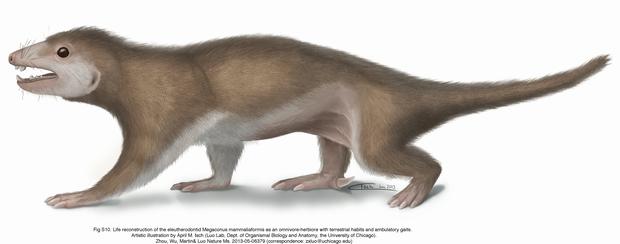
Megaconus mammaliaformis, an unusual mammal that lived about 165 million years ago.

Previously, all that was known about this long-extinct mammal was a few little teeth with striking cusps on their occlusal surfaces. "Paleontologists have been wondering for over a hundred years what the animal that went with these teeth might have looked like," said Prof. Dr. Thomas Martin from the Steinmann-Institut of the University of Bonn. But locals then found a completely preserved skeleton of the enigmatic mammal in Northeast China, which was then acquired by the Paleontological Museum of Liaoning in Shenyang.

A plastic material already used in absorbable surgical sutures could also administer antibiotics to patients with brain infections, scientists report in a new study. Use of the material, placed directly on the brain's surface, could reduce the need for weeks of costly hospital stays now required for such treatment, they say in the journal ACS Chemical Neuroscience.

Detectives of both the amateur and occupational variety know that the best way to solve a mystery is to visit the scene where it began and look for clues.

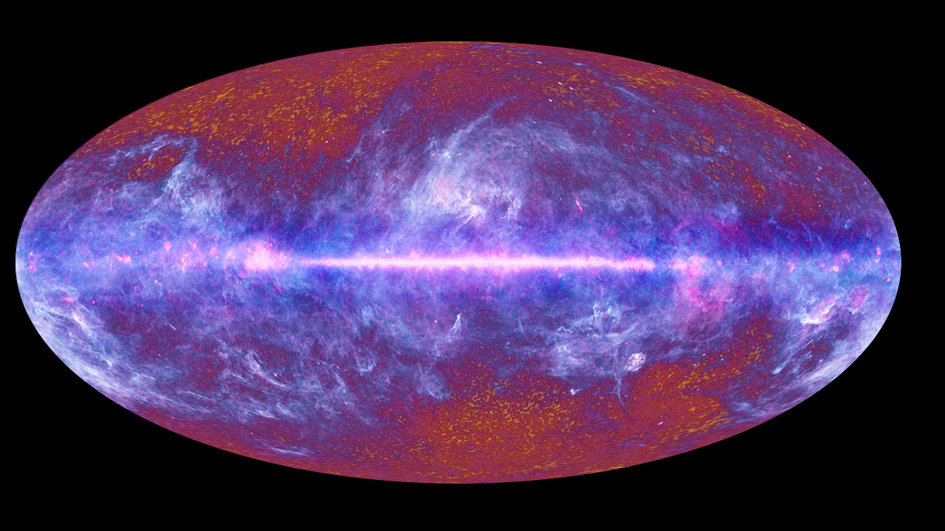
Cosmological detectives do that too, by trying to peer as far back to the Big Bang as possible. A new analysis of cosmic microwave background (CMB) radiation data has taken the furthest look back through time yet – 100 years to 300,000 years after the Big Bang - and provided tantalizing new hints of clues as to what might have happened.

An international team has found evidence of substantial overlap for genetic risk factors shared between bipolar disorder, major depressive disorder and schizophrenia and less overlap between those conditions and autism and attention deficit-hyperactivity disorder (ADHD).

The root causes of psychiatric illnesses are not known. Instead, for the past 125 years, clinicians have based diagnosis on a collection of symptoms observed in patients, something medical science has long left behind - and so the race has been on to find biological links.

Here's a development that could have significant implications for electrochemistry, biochemistry, electrical engineering and many other fields: a Nature Materials paper is about computer simulations which find that the electrical conductivity of many materials increases with a strong electrical field in a universal way. 

Electrical conductivity is a measure of how strongly a given material conducts the flow of electric current and is generally understood in terms of Ohm's law, which states that the conductivity is independent of the magnitude of an applied electric field, i.e. the voltage per meter. This law is widely obeyed in weak applied fields, which means that most material samples can be ascribed a definite electrical resistance, measured in Ohms.