

Banner
Object-Based Processing: Numbers Confuse How We Perceive Spaces

Researchers recently studied the relationship between numerical information in our vision, and...
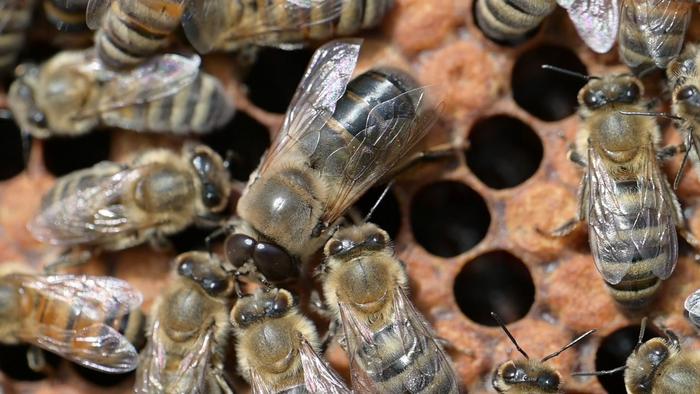
Males Are Genetically Wired To Beg Females For Food

Bees have the reputation of being incredibly organized and spending their days making sure our...

The Scorched Cherry Twig And Other Christmas Miracles Get A Science Look

Bleeding hosts and stigmatizations are the best-known medieval miracles but less known ones, like ...

$0.50 Pantoprazole For Stomach Bleeding In ICU Patients Could Save Families Thousands Of Dollars

The inexpensive medication pantoprazole prevents potentially serious stomach bleeding in critically...

User picture.
News StaffRSS Feed of this column.

News Releases From All Over The World, Right To You... Read More »

Blogroll

People who see the world as essentially fair can just maintain this perception through a diminished sense of moral outrage, according to a study by researchers in New York University's Department of Psychology. The findings appear in the March issue of the journal Psychological Science, which is published by the Association for Psychological Science.

Psychologists have long studied system-justification theory, which posits that people adopt belief systems that justify existing political, economic, and social situations or inequities in order to make themselves feel better about the status quo. Moreover, in order to maintain their perceptions of the world as just, people resist changes that would increase the overall amount of fairness and equality in the system.

The function of an enzyme in the brain – strongly linked to a number of major brain diseases such as Alzheimer's, schizophrenia and bi-polar disorder – has been identified for the first time by researchers at the University of Bristol, UK.

These findings, published today in Neuron, will help in the understanding of how memories are laid down and what goes wrong in these disorders.

The research showed how controlling the activity of glycogen synthase kinase-3 (GSK3) might prevent a memory being erased by improving the strength of connections between neurons in the brain, thus allowing better consolidation of new information.

Professor Collingridge from the University of Bristol said: "While GSK3 has previously been implicated in major neurological disorders, until now its rol

Using a state-of-the-art technique to map neurons in the spinal cord of a larval zebrafish, Cornell University scientists have found a surprising pattern of activity that regulates the speed of the fish’s movement. The research may have long-term implications for treating injured human spinal cords and Parkinson’s disease, where movements slow down and become erratic.

The study, "A Topographic Map of Recruitment in Spinal Cord," published in the March 1 issue of the journal Nature, maps how neurons in the bottom of the fish’s spinal cord become active during slow movements, while cells further up the spinal cord activate as movements speed up.

Researchers have used the world's thinnest material to create a new type of technology, which could be used to make super-fast electronic components and speed up the development of drugs.

Physicists at The University of Manchester and The Max-Planck Institute in Germany have created a new kind of a membrane that is only one atom thick.

It's believed this super-small structure can be used to sieve gases, make ultra-fast electronic switches and image individual molecules with unprecedented accuracy.

The findings of the research team is published today (Thursday 1 March 2007) in the journal Nature.

Two years ago, scientists discovered a new class of materials that can be viewed as individual atomic planes pulled out of bulk crystals.

These one-atom-thick materials and in

A new study suggests that the iron-rich winter runoff from Pacific Northwest streams and rivers, combined with the wide continental shelf, form a potent mechanism for fertilizing the nearshore Pacific Ocean, leading to robust phytoplankton production and fisheries.

The study, by three Oregon State University oceanographers, was just published by the American Geophysical Union in its journal, Geophysical Research Letters.

West coast scientists have observed that ocean chlorophyll levels, phytoplankton production and fish populations generally increase in the Pacific Ocean the farther north you go (from southern California to northern Washington).

A new vaccine delivery system using microspheres of a biodegradable polymer may not only reduce the need for booster shots in some cases, but also appears to stimulate an immune response that traditional vaccines do not. Researchers from Iowa State University report their findings today at the ASM Biodefense and Emerging Disease Research Meeting.

"Current vaccines are good at producing antibodies that block entry into the cell. In the case of some diseases, such as malaria or tuberculosis, antibody vaccines just aren't effective," says Jenny Wilson-Welder, a lead researcher on the study.








